


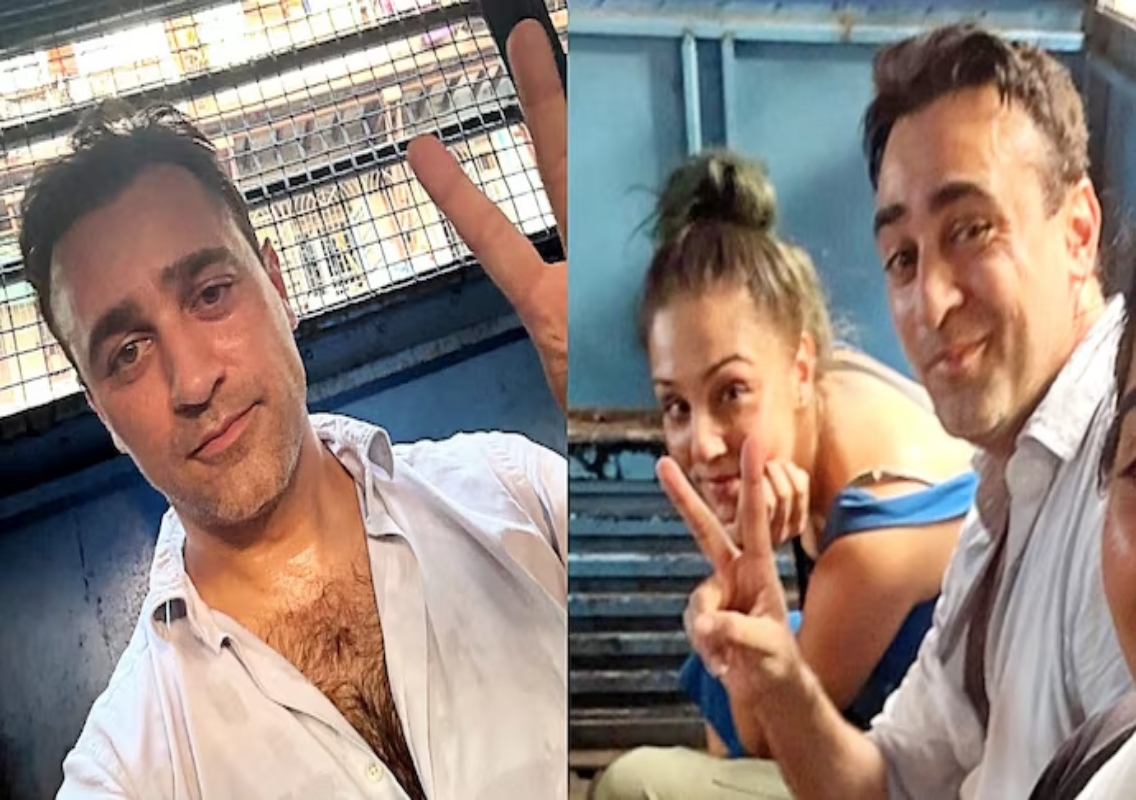


Mumbai: Actor Imran Khan has reportedly been asked by Mumbai Police to leave India by October 28 following his participation in a protest against Chief Election Commissioner Gyanesh Kumar on October 10. The notice comes amid a controversy over the actor’s reported US citizenship and his participation in the demonstration.
According to reports, Mumbai Police issued the notice on Thursday under provisions relating to immigration and foreign nationals. The action reportedly follows the actor’s detention during the protest at August Kranti Maidan in Mumbai.
Imran, the nephew of Bollywood actor Aamir Khan, had joined the demonstration alongside his partner, actor Lekha Washington, and his cousin, Zayn Marie Khan. All three were detained by police during the protest.
The development has brought renewed attention to the actor’s citizenship status, the circumstances surrounding the police action and the debate over participation in political demonstrations.
Why Mumbai Police Issued the Notice
According to India Today, the notice requires Imran Khan to leave India by October 28. Reports indicate that the action was initiated under relevant immigration provisions because the actor is reportedly a US citizen and had participated in a political protest.
The precise legal basis and further details of the notice were not elaborated upon in the available report.
Imran’s citizenship status had come under scrutiny earlier after BJP leader and former MP Kirit Somaiya called for action against the actor following his participation in the demonstration.
Somaiya had asked Mumbai Police to verify the actor’s citizenship and questioned whether a foreign national should participate in a political agitation.
The latest development follows those demands and places the actor’s reported citizenship status at the centre of the controversy.
Imran Khan’s Response to the Protest
Before the latest notice, Imran had explained his participation in the demonstration by saying that he attended as a Mumbai resident and citizen rather than as a representative of any political organisation.
Speaking to the media, the actor said he had no specific demands and was present as someone who lived in the city. He also questioned restrictions on freedom of movement and what he described as the suppression of people’s voices.
Imran said he was not affiliated with any organisation and had attended in his individual capacity.
Following his detention on October 10, the actor shared a photograph from inside a police van on social media with the caption, “Apparently, I am going for a ride.”
The incident attracted attention among fans, with many drawing comparisons between his participation in the protest and his popular character Jai Singh Rathore, also known as Ranjhore, from his debut film Jaane Tu Ya Jaane Na.
What Was the Anti-CEC Protest About?
The demonstration was held at Mumbai’s August Kranti Maidan on October 10, with participants demanding the resignation of Chief Election Commissioner Gyanesh Kumar.
The protest was linked to concerns surrounding the Special Intensive Revision (SIR) of electoral rolls and allegations of voter-list manipulation. The gathering was called in support of demands raised by the Campaign for Judicial Accountability and Reforms.
Author Tushar Gandhi, the great-grandson of Mahatma Gandhi, was among those associated with the protest. He was also detained while travelling to the proposed demonstration site and was later released.
Mumbai Police said August Kranti Maidan was not a designated protest venue under a Bombay High Court order. Authorities took preventive action to maintain law and order as demonstrators assembled at the location.
More than 400 people were detained during the wider protest-related police action in Mumbai, according to earlier reports.
Imran, Lekha Washington and Zayn Marie Khan were among those detained during the demonstration.
Kirit Somaiya Had Earlier Demanded Deportation
The controversy surrounding Imran’s participation intensified after BJP leader and former MP Kirit Somaiya demanded his deportation.
Somaiya called on Mumbai Police to verify the actor’s citizenship, arguing that his reported US citizenship raised questions about his participation in a political agitation.
The actor’s citizenship had also been discussed publicly in the past. In a 2011 statement quoted by India Today, Imran said he was trying to obtain an Indian passport and that official proceedings were underway.
At the time, he said he could not vote in India because he was not an Indian citizen, while adding that he participated in voter-awareness activities because he felt connected to the country.
The earlier statement has resurfaced in the current controversy as questions over his citizenship status and the reported notice have gained attention.
Lekha Washington and Zayn Marie Khan Were Also Detained
Imran attended the protest with his partner, Lekha Washington, and cousin, Zayn Marie Khan. Both were detained alongside him during the police action.
In the days following the incident, Washington spoke publicly about the detention and alleged that she and Zayn had been grabbed and bruised during the episode. The three were later released.
Videos of the detention and subsequent interactions with police circulated on social media, attracting public attention and prompting discussion about the handling of protesters.
The latest notice, however, specifically concerns Imran Khan and his reported citizenship status.
What Happens Next?
The notice reportedly gives Imran Khan until October 28 to leave India. The development follows his detention during the anti-CEC protest and earlier demands by Somaiya for the authorities to examine his citizenship.
The available report does not provide further details about whether the actor plans to challenge the notice or what steps he may take next.
The case has brought together questions surrounding immigration rules, the participation of foreign nationals in political demonstrations and the handling of protests in Mumbai.
Further developments will depend on the actor’s response and any additional information released by the authorities regarding the notice and its legal basis.