







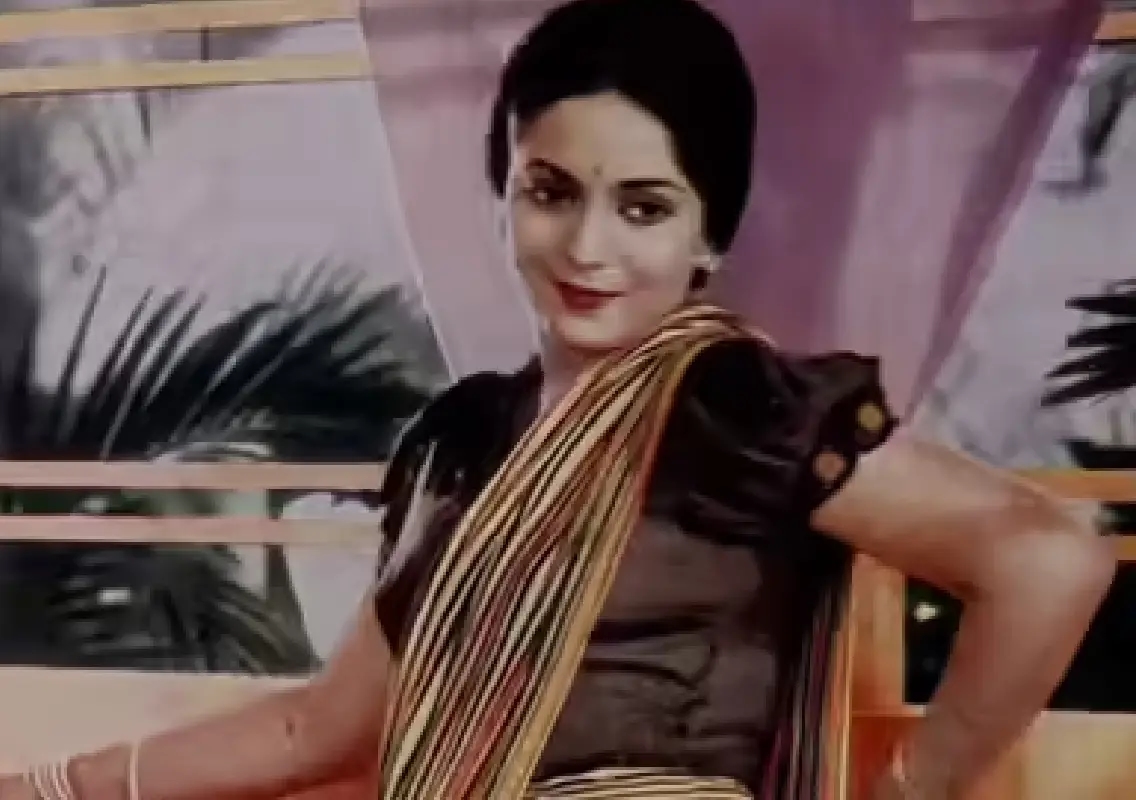


The journey of Leela Chitnis remains one of Indian cinema’s most inspiring yet poignant stories. Known as the ‘Duchess of Depression’ and regarded as Bollywood’s first graduate actress, she transformed how women were portrayed on screen during an era dominated by glamour and melodrama.
From Dharwad roots to Bombay Talkies fame
Born on September 9, 1909, in Dharwad, Leela grew up in an academically inclined Marathi Brahmin family. Her father, an English professor, instilled discipline and a deep respect for education.
After an early marriage and years abroad, she returned to Mumbai following a difficult divorce. Supporting four sons as a school teacher, she stepped into cinema with Gentleman Daku (1937). She soon rose to prominence, eventually replacing Devika Rani at Bombay Talkies.
Her on-screen pairing with Ashok Kumar in films such as Bandhan (1940) and Jhoola (1941) earned widespread acclaim. She also became the first Indian actress to endorse Lux, previously associated only with Hollywood stars.
Setting the benchmark for screen motherhood
As cinema evolved, Leela transitioned gracefully into motherly roles, bringing emotional depth and quiet strength to films like Awaara (1951) and Guide (1965). Long before Nirupa Roy became synonymous with the sacrificial mother, Leela had already portrayed maternal characters with dignity and realism.
Despite her professional success, her final years were marked by solitude. She passed away on July 14, 2003, in Danbury, Connecticut, far from the industry she once shaped.
Her legacy endures as a reminder that education, courage and grace can redefine both art and society.