







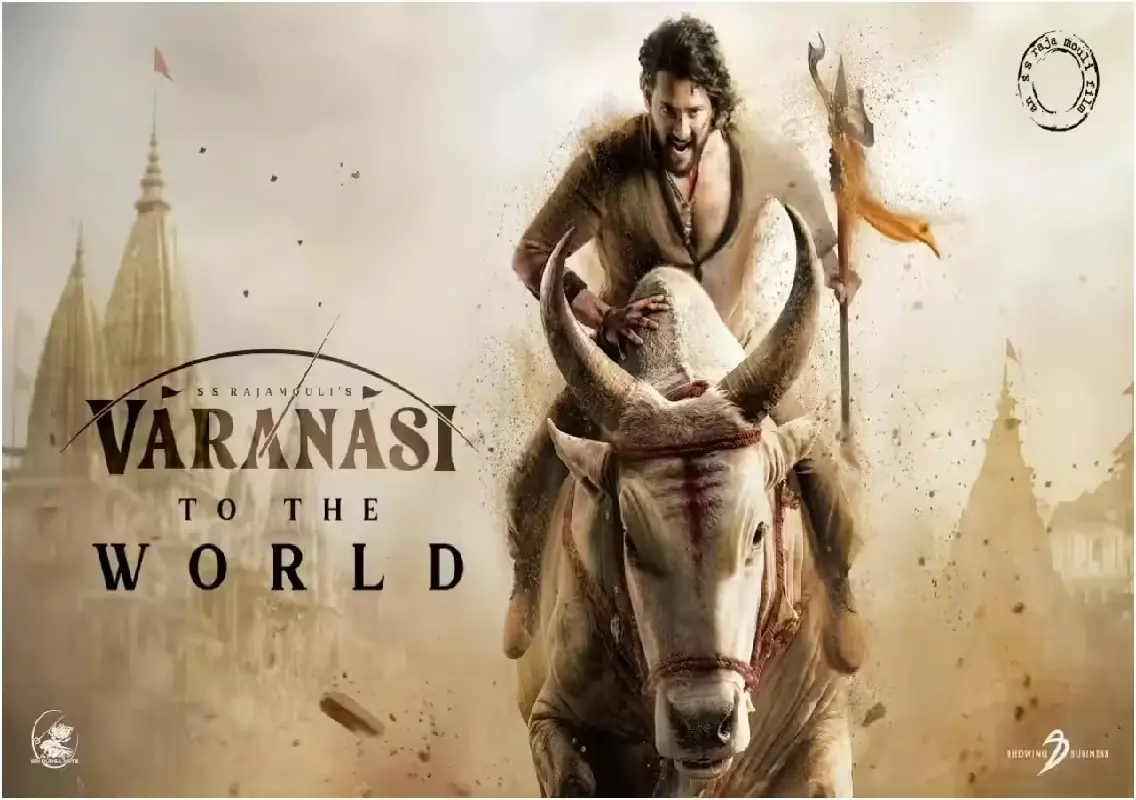


Hyderabad: Exactly a month ago, ace filmmaker SS Rajamouli officially unveiled the world of his next ambitious project, Varanasi, at a grand event held in the city. The announcement immediately sent waves of excitement across the Indian film industry and among fans worldwide. The film stars Mahesh Babu in the lead role, alongside Priyanka Chopra and Prithviraj Sukumaran, marking a high-profile collaboration that has already raised expectations to extraordinary levels. Slated for a global theatrical release in the summer of 2027, Varanasi will be released in multiple languages, reinforcing its positioning as a true pan-Indian and international spectacle.
A film surrounded by anticipation
Despite the release being more than a year away, Varanasi has already become one of the most discussed upcoming Indian films. Industry insiders believe that the combination of Rajamouli’s proven track record, Mahesh Babu’s massive fan following and the inclusion of globally recognised actors has created unprecedented buzz at an early stage of production.
Trade circles suggest that while official details about the storyline are being tightly guarded, the film is expected to explore themes on a grand scale, much like Rajamouli’s previous works. The director’s ability to blend strong emotional narratives with large-scale visuals has made his projects highly bankable, both in theatres and on digital platforms.
Digital rights talks begin well ahead of release
Amid the growing excitement around the film’s theatrical prospects, discussions around its post-theatrical digital rights have already begun. This early interest itself reflects the confidence that streaming platforms have in the project’s potential reach and longevity.
According to recent Telugu media reports, streaming giant Netflix has shown strong interest in acquiring the digital rights of Varanasi. While there has been no official confirmation from the filmmakers or the platform, industry buzz suggests that negotiations are underway and progressing positively.
A price higher than Pushpa 2?
What has particularly caught the attention of the trade is the reported valuation being quoted for Varanasi. Sources indicate that the makers are seeking a price nearly 25 per cent higher than that of Pushpa 2 – The Rule, which reportedly fetched around ₹275 crore for its OTT rights, making it the biggest digital deal for an Indian film so far.
If these figures materialise, Varanasi could set a new benchmark in the Indian OTT space. Analysts note that such pricing reflects not just star value, but also the trust in Rajamouli’s brand, which has consistently delivered films with repeat viewing potential on streaming platforms.
Netflix’s strong association with Rajamouli
Netflix’s interest in Varanasi is being viewed as a continuation of its successful association with Rajamouli’s previous blockbuster RRR. After its digital premiere, RRR went on to trend globally on the platform for several months, introducing international audiences to Indian cinema on an unprecedented scale.
Unlike RRR, where Netflix acquired only the Hindi version while other language rights were split among different platforms, reports suggest that the streamer is keen to lock in all language versions of Varanasi. This move would allow Netflix to maximise global reach and streamline its marketing strategy across territories.
Pan-Indian films and the OTT gold rush
The growing competition among streaming platforms for big-ticket pan-Indian films has significantly pushed up digital rights valuations in recent years. Films led by major stars and backed by proven directors are increasingly being seen as long-term assets rather than one-time premieres.
Industry experts point out that a Rajamouli film, in particular, enjoys extended shelf life due to its scale, technical finesse and strong narrative hooks. This makes such projects attractive investments for OTT platforms aiming to retain subscribers and expand into new markets.
What this means for the makers
For the producers of Varanasi, a record-breaking OTT deal would provide substantial financial security even before the film hits theatres. Such pre-release revenue streams allow makers to focus on production quality, marketing and global distribution without the pressure of immediate box office recovery.
At the same time, the team is reportedly keen on preserving the film’s theatrical experience, which remains central to Rajamouli’s filmmaking philosophy. Any digital agreement is expected to include a clear theatrical window to ensure that cinema audiences get priority access.
Conclusion
While official announcements regarding the OTT deal are still awaited, the buzz surrounding Varanasi’s digital rights highlights the extraordinary expectations riding on the film. With SS Rajamouli at the helm and a stellar cast leading the narrative, the project is already being seen as a potential game-changer for both Indian cinema and the OTT ecosystem. If the reported figures hold true, Varanasi may well rewrite the rules of digital film valuations in India.