


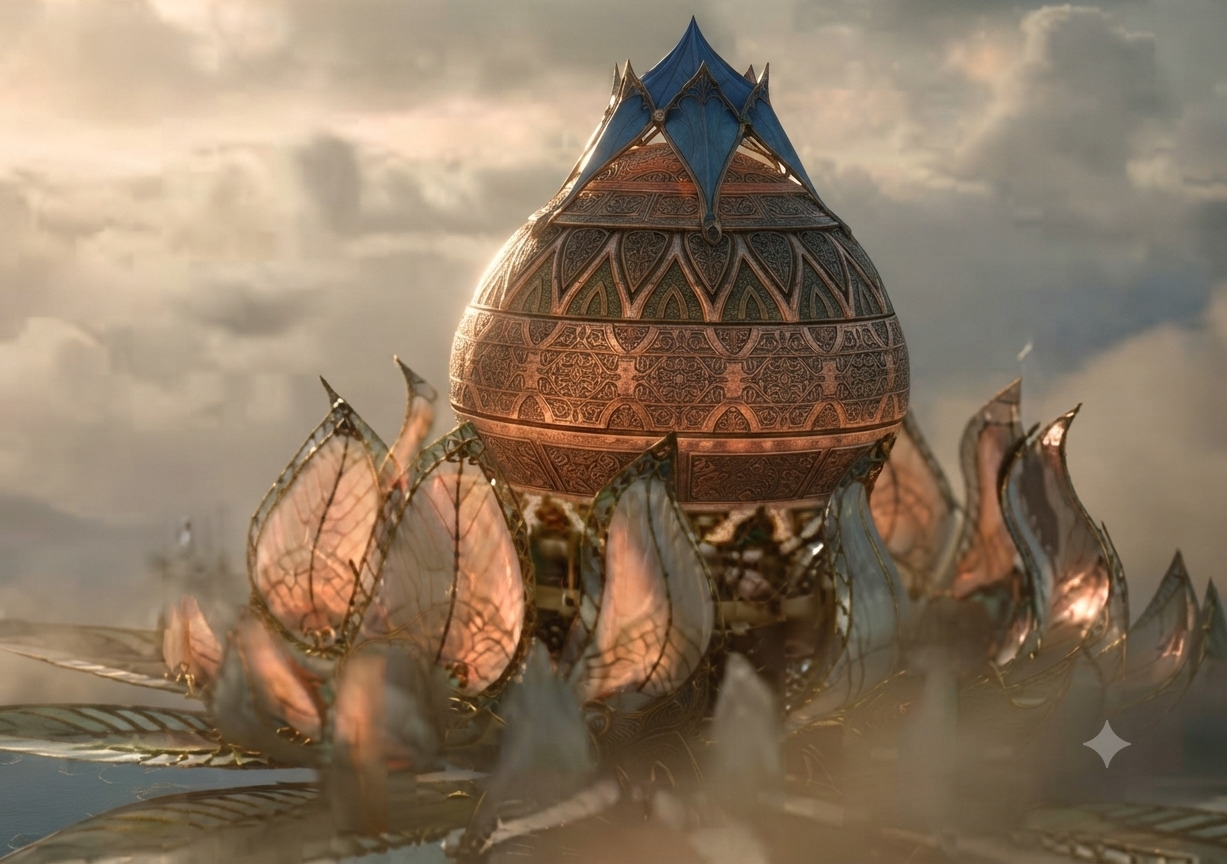


Mumbai: Flying chariots, life-restoring herbs, shape-shifting abilities and powerful celestial weapons are among the extraordinary elements expected to feature in director Nitesh Tiwari’s upcoming epic Ramayana: Rise of a Legend. Starring Ranbir Kapoor as Lord Rama and Sai Pallavi as Goddess Sita, the film aims to bring the mystical world of the Treta Yuga to the big screen through large-scale visuals and advanced visual effects.
Based on the ancient epic attributed to sage Valmiki, the film explores a world in which divine powers, extraordinary feats of devotion and supernatural weapons play important roles in the battle between good and evil.
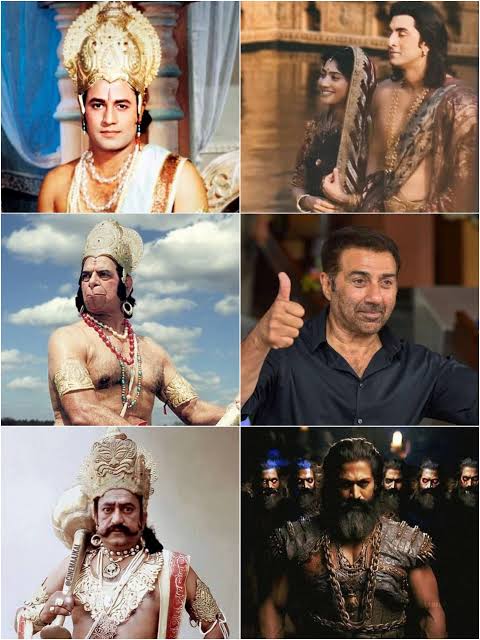
Alongside Ranbir Kapoor and Sai Pallavi, the cast includes Sunny Deol as Lord Hanuman, Ravie Dubey as Lakshman and Yash as Ravana. Kunal Kapoor plays Lord Indra, the king of the gods.
Beyond its central characters and familiar storyline, the Ramayana contains several remarkable objects and events that have fascinated audiences for generations. From the flying Pushpak Viman to Hanuman’s journey with the Sanjeevani mountain, these elements are expected to be among the visual highlights of the cinematic adaptation.
Pushpak Viman: The legendary flying chariot
One of the most fascinating objects in the Ramayana is the Pushpak Viman, a celestial flying chariot associated with Ravana and Lord Rama.
According to the epic tradition, the magnificent vehicle was created by Vishwakarma, the divine architect, for Lord Brahma. It later came into the possession of Kubera, the god of wealth and Ravana’s half-brother. Ravana seized the chariot after defeating Kubera and used it as a symbol of his power.
The Pushpak Viman is described as having extraordinary capabilities, including the ability to travel at the speed of thought and expand to accommodate its passengers. Its role in the epic becomes particularly significant during Sita’s abduction.
When Ravana carries Sita away in the flying chariot, the elderly vulture king Jatayu attempts to stop him. He attacks Ravana and damages his vehicle in a courageous effort to rescue Sita, but is ultimately defeated.
The chariot later acquires a different significance after Ravana’s defeat. Lord Rama, Sita and Lakshman use it to return to Ayodhya, marking the end of their exile and the beginning of their homecoming.
Its ability to fly and its association with powerful rulers make the Pushpak Viman one of the most visually striking elements of the epic.
Sanjeevani Booti: Hanuman’s mountain-lifting feat
Another celebrated episode involves the Sanjeevani Booti, the life-restoring herb associated with Lord Hanuman’s devotion and strength.
During the war in Lanka, Lakshman is gravely wounded. The herb is identified as essential to saving his life, and Hanuman is entrusted with the task of bringing it from the Dronagiri mountain.
However, unable to identify the precise medicinal plant among the herbs growing there, Hanuman chooses an extraordinary solution. Rather than risk returning without the required herb, he lifts the entire mountain and carries it towards the battlefield.
The episode is remembered as one of the most powerful demonstrations of Hanuman’s devotion to Lord Rama and his willingness to overcome any obstacle to protect those he serves.
The image of Hanuman flying across the sky with a mountain in his hand has remained an enduring part of Indian religious and cultural storytelling. It also offers filmmakers an opportunity to create one of the most spectacular sequences in an adaptation of the epic.
Hanuman’s supernatural powers and changing size
Hanuman’s ability to lift the mountain is part of a wider portrayal of his extraordinary strength and supernatural abilities.
In traditional accounts, he possesses the Ashta Siddhis, or eight spiritual powers. Among them are Anima, the ability to become extremely small, and Mahima, the ability to expand to an immense size.
These abilities are associated with some of his most memorable actions in the Ramayana.
When Hanuman enters Lanka in search of Sita, he reduces his size to avoid attracting attention and slipping past the city’s guards. His mission requires him to move discreetly through Ravana’s kingdom while searching for the captive Goddess Sita.
Later, his enormous strength and ability to assume a gigantic form become important during the conflict with Ravana’s forces. His leap across the ocean to reach Lanka is another celebrated feat, demonstrating the extraordinary scale of his powers.
The contrast between his small form during the search for Sita and his immense form during acts of strength makes Hanuman one of the epic’s most visually distinctive characters.
Celestial astras and the battle for Lanka
The war in Lanka is not fought only with conventional weapons. The epic describes several astras, or celestial weapons, whose destructive powers are linked to divine authority and the spiritual abilities of those who wield them.
Among the most formidable is the Brahmastra, a weapon associated with Lord Brahma. It is portrayed as possessing immense destructive power and is used in accounts of the battle between Rama’s forces and Ravana’s army.
The weapon is also connected with the principle of restraint. Its power is not meant to be used indiscriminately, and the epic places importance on the responsibility that comes with possessing such formidable weapons. Describing it as comparable to a weapon of mass destruction can help modern audiences understand its scale, although it remains a divine weapon within the epic’s religious and literary framework.
Another important weapon is the Nagapasha. Associated with supernatural serpent bonds, it is used by Indrajit, Ravana’s son, to bind Lord Rama and Lakshman during the battle. The weapon temporarily incapacitates the brothers, creating a major challenge for their army.
The film’s trailer also features Lord Indra’s Vajra, with Kunal Kapoor portraying the king of the gods holding the powerful weapon. Traditionally associated with Indra, the Vajra is a symbol of divine authority and strength.
Together, these weapons add another dimension to the epic’s depiction of warfare, where victory depends not only on physical strength but also on courage, strategy and spiritual power.
Maricha’s golden deer and Ravana’s ten heads
The Ramayana also features supernatural illusions that influence the course of the story. One of the most important is the transformation of the demon Maricha into a golden deer, known as the Suvarna Mruga.
The beautiful and unusual appearance of the deer attracts Sita’s attention. She asks Rama to capture it, prompting him to move away from their dwelling in the forest. Lakshman also leaves after hearing what appears to be Rama’s distress call.
With both brothers away, Ravana gets an opportunity to abduct Sita. The episode becomes a turning point in the narrative, eventually leading to the search for her and the war in Lanka.
Illusion and deception also play a role in the battles involving Indrajit. The warrior is known for using supernatural abilities and fighting while remaining invisible, making him a formidable opponent for Rama’s army.
Ravana’s most recognisable feature is his ten-headed form, which gives him the name Dashanan. The ten heads are traditionally associated with his vast knowledge and mastery of the Vedas and Shastras. They also serve as a powerful visual representation of his formidable personality, ambition and pride.
Ramayana prepares for a grand cinematic presentation
With Ramayana: Rise of a Legend, Nitesh Tiwari is set to bring these familiar episodes and supernatural elements to a new generation of viewers. The film’s scale offers opportunities to recreate some of the epic’s most memorable images, including the Pushpak Viman, Hanuman carrying the mountain, the celestial weapons and Ravana’s ten-headed appearance.
The challenge for the filmmakers will be to combine visual spectacle with the emotional and philosophical foundations of the ancient story. The Ramayana is not remembered only for its extraordinary feats and battles, but also for its themes of duty, devotion, sacrifice, loyalty and the triumph of good over evil.
The film is scheduled for a theatrical release on November 5, 2026. With Ranbir Kapoor, Sai Pallavi, Sunny Deol and Yash leading the cast, the adaptation is expected to introduce the epic’s legendary world to audiences on a large cinematic scale.