







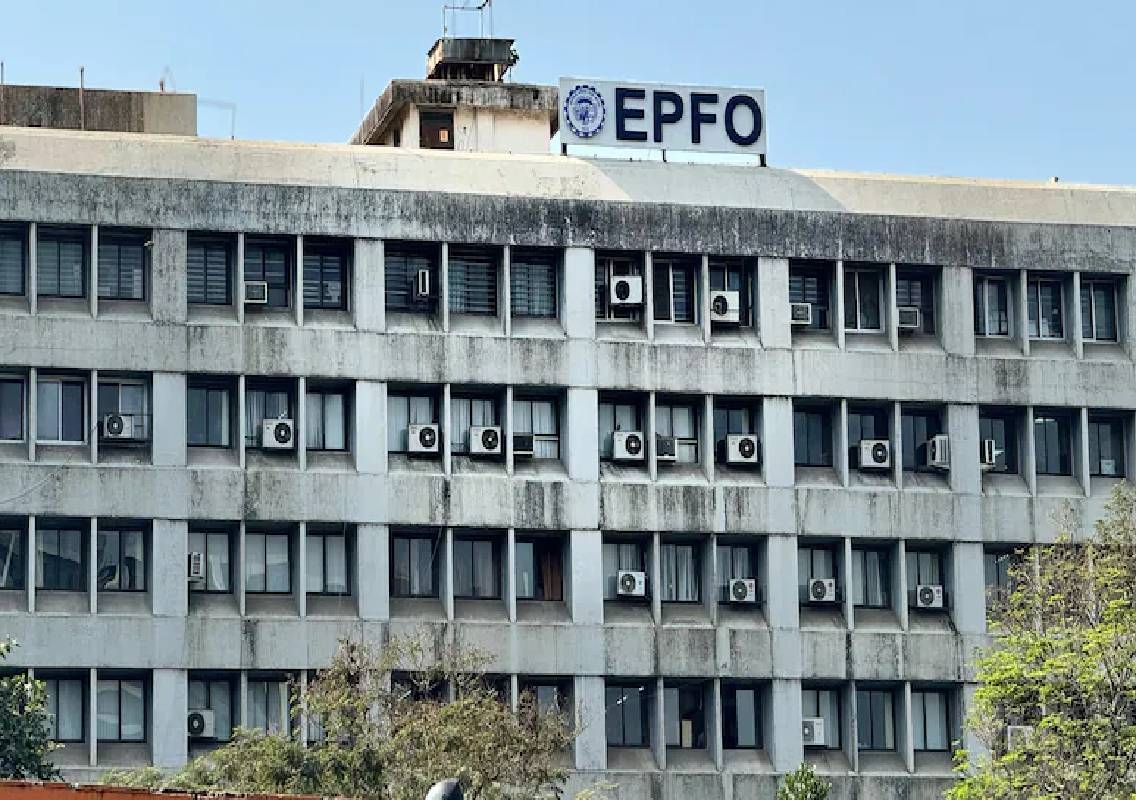


New Delhi: The Employees’ Provident Fund (EPF) is one of India’s most important retirement savings schemes for salaried employees, with both employers and employees contributing a portion of the employee’s salary every month. While building an EPF corpus is essential for financial security, the Employees’ Provident Fund Organisation (EPFO) has stressed the importance of registering a nominee to ensure the savings are transferred smoothly to eligible beneficiaries in the event of the member’s death.
An EPF nomination helps simplify the claim process for family members and enables quicker settlement of provident fund, pension and insurance benefits.
What happens if no nominee is registered?
According to EPFO rules, the absence of a nominee does not result in the loss of EPF savings or associated benefits. However, it can significantly delay the claim settlement process.
If an EPF member dies without registering a nominee, the accumulated provident fund balance and insurance benefits remain payable. In such cases, eligible family members or legal heirs must submit the prescribed documents to establish their entitlement before the claim can be processed.
Where no nomination exists, all eligible family members are entitled to an equal share of the EPF benefits as per EPFO regulations. If there are no eligible family members or legal heirs, the accumulated corpus is released to the person who is legally entitled to receive the amount.
While EPFO generally processes claims with complete documentation within seven days, the absence of a registered nominee can result in additional verification and a longer settlement period.
Inoperative EPF accounts
EPFO has also cautioned subscribers and their families about inoperative accounts. According to the organisation, an EPF account becomes inoperative if it remains unclaimed for three years.
To avoid unnecessary delays in accessing retirement savings and related benefits, eligible family members and legal heirs are advised to submit claims as early as possible after becoming eligible.
Who qualifies as an eligible family member?
EPFO’s definition of an eligible family member differs for male and female subscribers.
For male EPF members, eligible family members include the wife, children (whether married or unmarried), parents, son’s widow and the son’s children.
For female EPF members, the eligible family includes the husband, husband’s parents, children (whether married or unmarried), parents, son’s widow and the son’s children.
These family members are eligible to receive an equal share of the EPF benefits if no nominee has been registered.
EPFO’s e-nomination facility
To make the nomination process easier, EPFO provides an online e-nomination facility through its member portal. Registering an e-nomination enables eligible beneficiaries to claim EPF, Employees’ Pension Scheme (EPS) and Employees’ Deposit Linked Insurance (EDLI) benefits without the need to visit EPFO offices physically.
To complete the e-nomination process, subscribers must have an Aadhaar-linked Universal Account Number (UAN), a mobile number linked with Aadhaar, and updated personal information, including their photograph and address, on the EPFO portal. Members are also required to provide the nominee’s Aadhaar details, bank account information and photograph.
Why adding a nominee matters
Although EPFO ensures that eligible family members do not lose their rightful benefits if no nominee has been registered, completing the nomination process helps avoid legal and administrative hurdles. An e-nomination allows faster claim processing, reduces paperwork and ensures retirement savings, pension and insurance benefits reach beneficiaries with minimal delay.
For salaried employees, keeping EPF records updated, including nomination details, remains an important step in long-term financial planning and securing their family’s financial future.