







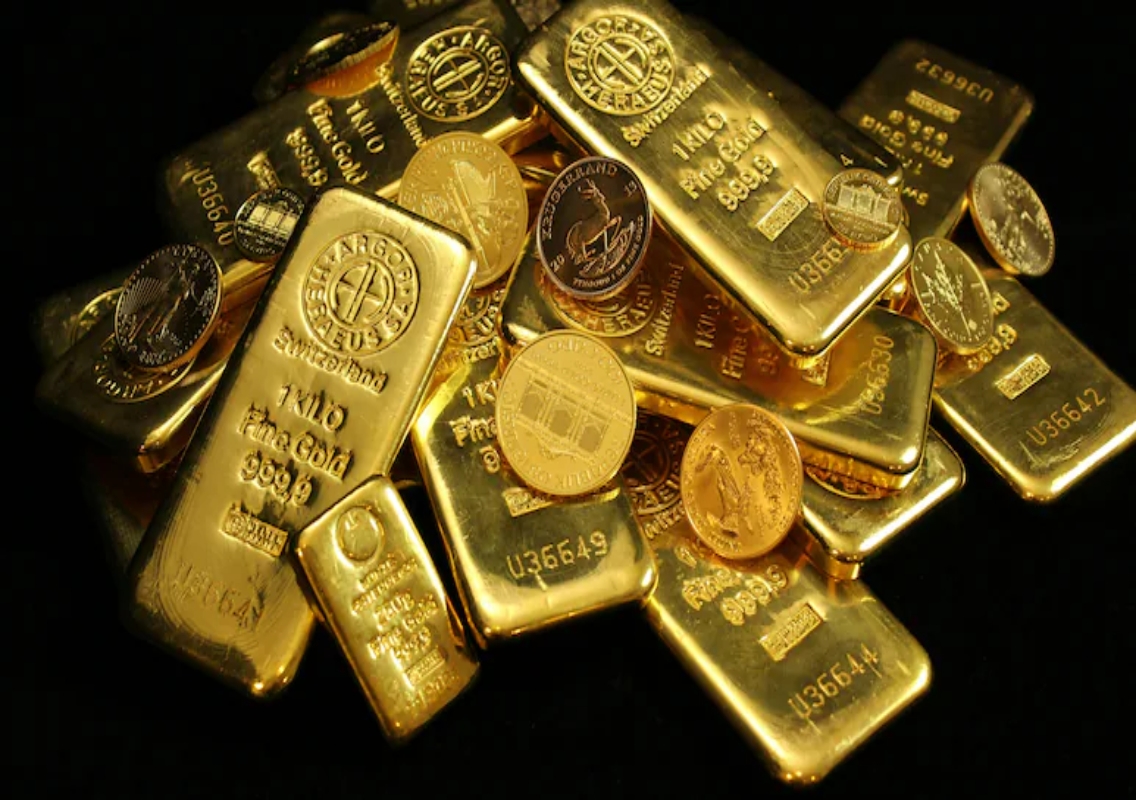


New Delhi: Gold prices have corrected by more than 24% from their record highs in January 2026, prompting investors to reconsider whether the precious metal offers an opportunity to enter the market at lower levels. Rising oil prices, higher US Treasury yields and expectations of further interest rate tightening by the US Federal Reserve have contributed to the recent decline.
Despite the correction, gold continues to attract attention as a portfolio diversification option during periods of economic and geopolitical uncertainty. Investors who want exposure to the precious metal without purchasing physical jewellery or coins may consider gold exchange-traded funds (ETFs), which track domestic gold prices.
According to a report by NDTV Profit, experts cited in the article believe the recent volatility does not necessarily indicate a deterioration in gold’s longer-term investment rationale. Mirae Asset Mutual Fund has also maintained that gold can continue to play a role in portfolio diversification.
However, a sharp fall in prices does not guarantee an immediate recovery. Investors need to assess their financial goals, risk tolerance, investment horizon and existing asset allocation before deciding whether to invest.
Why have gold prices corrected sharply?
Gold reached record levels in January 2026 before experiencing a significant correction. The recent decline has been attributed to several macroeconomic factors, including higher crude oil prices, rising US Treasury yields and expectations that the Federal Reserve could maintain or tighten monetary policy.
Higher interest rates and bond yields can reduce the relative appeal of gold because the metal does not generate interest income. When investors can earn more from interest-bearing assets, the opportunity cost of holding gold increases.
Rising oil prices can also complicate the inflation outlook. If energy costs remain elevated, central banks may have less room to reduce interest rates, which can influence investor demand for precious metals.
Currency movements are another consideration for Indian investors. Domestic gold prices are influenced not only by international bullion prices but also by the rupee-dollar exchange rate, import duties and other local market factors.
The correction may make gold more affordable than it was at its peak, but investors should not assume that the lowest price has already been reached. Gold can remain volatile, and further declines are possible.
Should investors consider gold ETFs now?
Gold ETFs offer a way to invest in gold without buying, storing or insuring physical metal. These funds generally hold physical gold of high purity and issue units that trade on stock exchanges, with their prices linked to the underlying gold value.
For investors who want gold primarily as a financial asset rather than for jewellery or personal use, ETFs can offer several practical advantages.
- No physical storage: Investors do not need to arrange secure storage for jewellery, coins or bars.
- Convenient transactions: ETF units can be bought and sold through a stockbroker during market trading hours.
- Greater transparency: Prices and fund information are available through market and fund disclosures.
- Portfolio diversification: Gold exposure can complement equities and debt investments, although it does not eliminate investment risk.
- No jewellery-making charges: Investors avoid the making charges associated with gold ornaments, though ETF-related expenses still apply.
Gold ETFs typically require a demat and trading account. Investors should also check the fund’s expense ratio, trading liquidity, bid-ask spread and how closely its market price tracks its net asset value.
A fund’s returns may differ slightly from the underlying gold price because of expenses and tracking differences. Brokerage and other applicable transaction charges can also reduce the investor’s overall return.
How much gold should be in a portfolio?
Financial experts commonly discuss a gold allocation of around 10–15% as a diversification strategy, according to the NDTV Profit report. The appropriate proportion, however, varies with an investor’s financial circumstances and existing investments.
Gold is generally used to diversify a portfolio rather than replace its other components. Equities may provide long-term growth potential, while debt instruments can contribute income and stability. Gold has different price drivers and can help diversify exposure, but its value can fluctuate significantly.
An investor who already holds substantial gold through jewellery, coins or other investments should consider that exposure before purchasing additional ETF units. Counting only financial investments while ignoring existing physical gold may result in a larger overall allocation than intended.
Investors should also distinguish between long-term allocation and short-term speculation. Buying gold simply because its price has fallen can be risky if the investor needs the money soon or cannot tolerate further losses.
A planned allocation, based on financial goals and reviewed periodically, may be more useful than attempting to identify the exact bottom of the market.
Gold ETFs versus physical gold
The choice between physical gold and an ETF depends largely on the purpose of the purchase.
Physical gold may be appropriate for buyers who want jewellery for personal use, family occasions or cultural reasons. However, jewellery purchases generally attract 3% GST, along with making charges and other costs that can affect the effective purchase price.
Gold ETFs are designed primarily for financial exposure to gold. They avoid the need to store the metal personally and do not attract GST on the purchase of ETF units in the same way that physical gold purchases do. Investors must nevertheless account for brokerage, fund expenses and other applicable charges.
The two forms of gold also differ in their resale process. Physical jewellery may be valued according to purity, weight and the jeweller’s buyback policy. ETF investors sell their units through the market, with the realised price depending on trading conditions and the underlying gold value.
Neither option guarantees a profit. Physical gold may offer personal utility beyond investment returns, while ETFs may be more convenient for investors seeking market-linked exposure without holding the metal directly.
How are gold ETFs taxed in India?
Taxation is an important factor when comparing gold investment options. Under the rules applicable to gold ETFs, the holding period determines whether a capital gain is treated as short-term or long-term.
Short-term capital gains: Gains from gold ETF units sold within 12 months of purchase are generally taxed at the investor’s applicable income tax slab rate.
Long-term capital gains: Gains from units held for more than 12 months are generally taxed at 12.5% without indexation, under the capital gains rules introduced for transfers on or after July 23, 2024. Applicable surcharge and cess may increase the final tax liability.
For example, an investor who realises a taxable long-term capital gain of ₹20,000 would have a basic tax calculation of ₹2,500 at a 12.5% rate, before any applicable surcharge and cess. The actual liability depends on the investor’s circumstances and the tax rules in force when the units are sold.
Tax is generally calculated on the realised gain rather than the full sale proceeds. Investors should retain purchase records and sale statements to calculate gains correctly.
Gold ETFs and gold mutual funds are not necessarily taxed in the same way. Gold mutual funds, which typically invest in gold ETFs, have a different holding-period threshold for long-term capital gains. Investors should verify the rules for the specific product before investing or selling.
Tax regulations can change, so professional advice may be appropriate for investors with complex portfolios or significant capital gains.
What could ₹1 lakh invested in gold become?
The NDTV Profit report illustrates the potential effect of compounding using an assumed annual return of 10%.
Under this hypothetical calculation, an investment of ₹1 lakh held for five years would grow to approximately ₹1.61 lakh, producing an estimated gain of ₹61,051.
This is a mathematical illustration, not a forecast of gold’s future performance. Gold does not deliver a fixed annual return, and its price may rise or fall during the investment period. Actual returns could be substantially higher or lower, and expenses and taxes may reduce the amount ultimately received.
Investors should therefore avoid treating historical averages or hypothetical calculations as guaranteed outcomes.
What should investors consider before investing?
The correction of more than 24% from gold’s January peak has brought the metal back into focus, but the decision to invest should depend on more than the size of the decline.
Investors should assess whether gold is missing from their portfolio, how long they can remain invested, whether they can withstand further price volatility and whether they need access to the money in the near term. They should also compare the costs and tax treatment of ETFs with other available gold investment options.
For those seeking exposure to gold without physical ownership, ETFs can offer a convenient route. However, a price correction is not a reliable signal that a recovery is imminent.
Gold may continue to serve as a diversification tool, but a balanced portfolio should reflect the investor’s goals, liquidity needs and risk appetite rather than a short-term market prediction.