







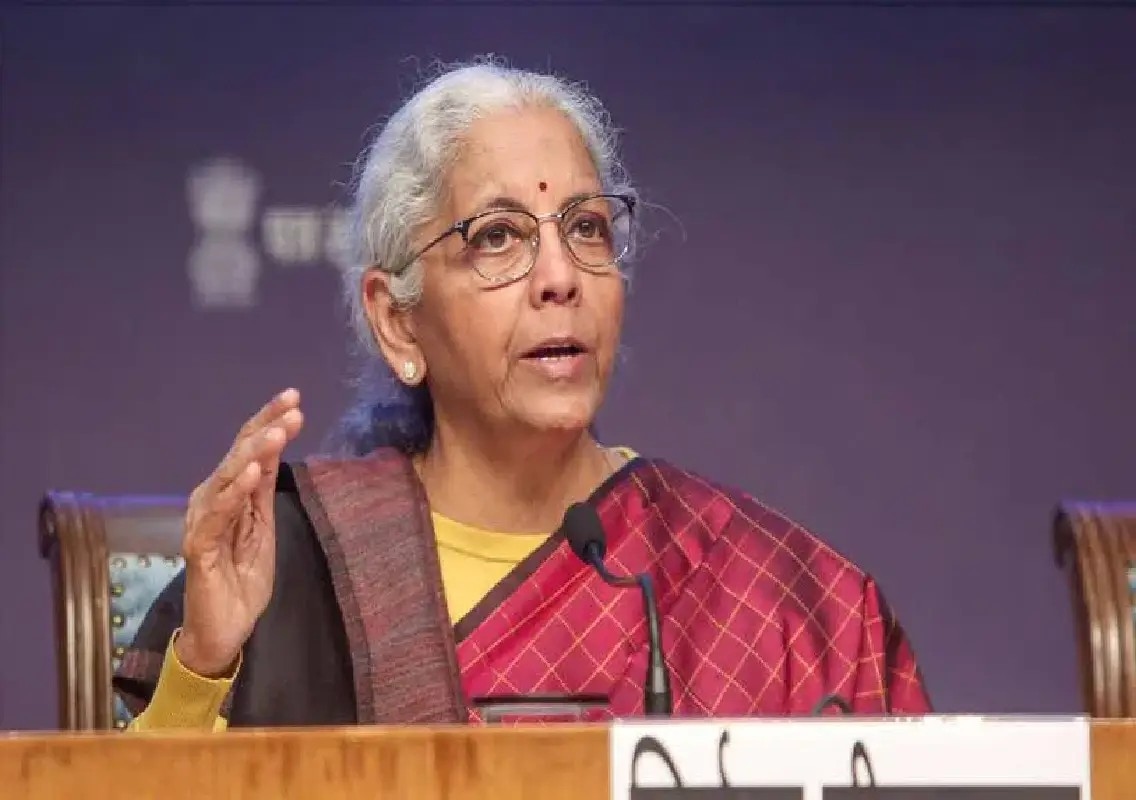


New Delhi: Finance Minister Nirmala Sitharaman has said India successfully managed the economic impact of the West Asia crisis while retaining its position as the world’s fastest-growing major economy. She attributed the country’s resilience to strong domestic consumption, prudent economic management and expanding trade partnerships, including free trade agreements.
Economy remained on strong footing
In an interview with French newspaper Le Figaro, Sitharaman said India maintained robust economic growth despite the challenges posed by the West Asia crisis that began on February 28.
She highlighted the country’s strong domestic demand and ongoing trade initiatives as key factors supporting economic stability.
According to the Finance Minister, India’s growing middle class continues to be a major driver of consumption, strengthening the domestic economy even amid global uncertainties.
Focus on conserving key resources
Sitharaman referred to Prime Minister Narendra Modi’s appeal on May 10, urging citizens to reduce unnecessary international travel, postpone gold purchases for a year, and minimise fuel and cooking oil consumption.
Summarising the government’s approach, she said the focus was on preserving the “three Fs“—fuel, fertiliser, and foreign exchange.
She explained that reducing fuel consumption through measures such as carpooling helps conserve valuable foreign exchange reserves, as imports are paid for in foreign currencies, particularly the US dollar.
Fertiliser subsidies maintained
The Finance Minister said the government continued to provide substantial subsidies on fertilisers despite the increased burden on public finances.
She noted that subsidies can amount to ₹2,700 on a fertiliser bag costing around ₹3,000, ensuring that farmers do not bear the impact of higher import costs.
According to Sitharaman, while these subsidies require significant foreign exchange expenditure, they are essential to support the agricultural sector.
Appeal to limit gold imports
Sitharaman also spoke about the cultural importance of gold in Indian households while explaining the government’s appeal to reduce gold purchases during the crisis.
She said gold holds religious and social significance in India and is commonly purchased for family savings and marriages.
However, she noted that importing gold requires foreign currency, making it important to moderate purchases during periods of economic pressure.
India-France economic cooperation
Separately, Sitharaman and French Minister of Economy, Finance, Industrial, Energy and Digital Sovereignty Roland Lescure co-chaired the India-France Economic and Financial Dialogue (EFD) in Aix-en-Provence.
The discussions focused on strengthening bilateral cooperation in critical minerals, economic sovereignty, financial sector collaboration and security-related economic policies.
Expanding strategic partnership
According to an official statement, both countries explored new opportunities to deepen economic engagement under the broader India-France strategic partnership.
The dialogue also aimed to strengthen cooperation through outcome-oriented initiatives and regular high-level engagements as bilateral economic ties continue to expand.