







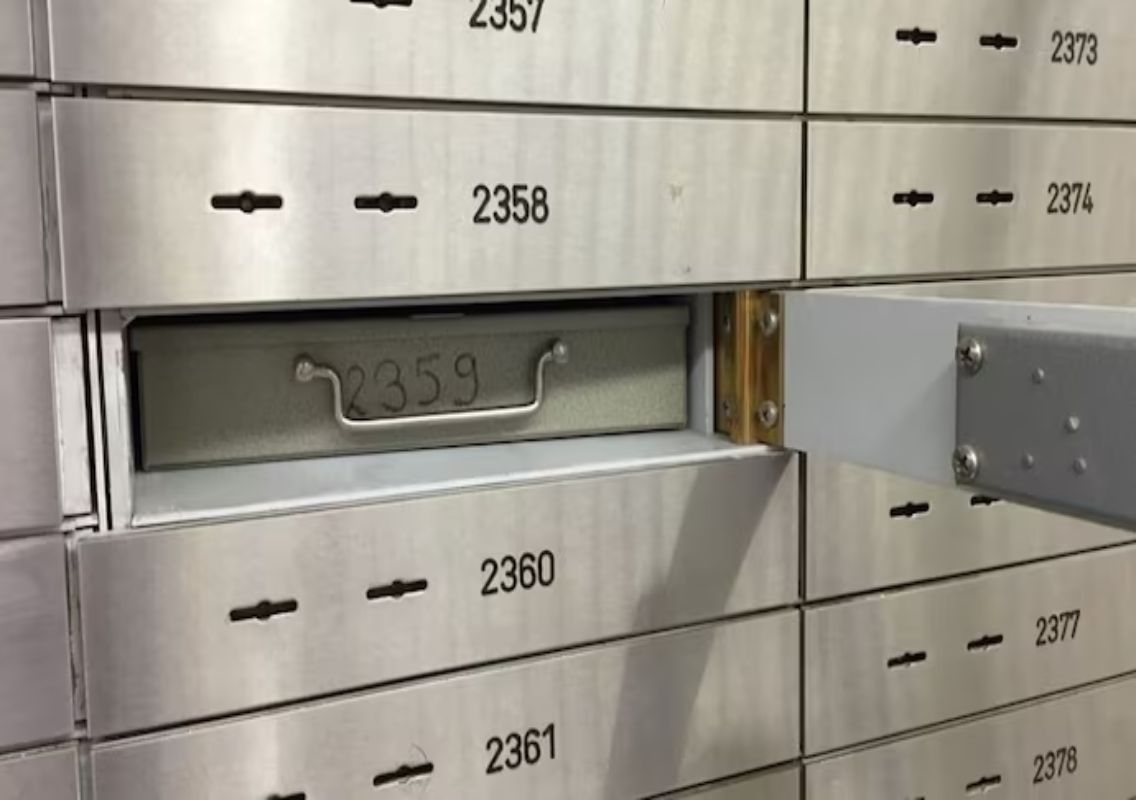


Kanpur: A bank locker is often considered one of the safest places to keep jewellery and other valuables. But a case involving a woman in Kanpur, who alleged that jewellery and valuables worth around ₹50 lakh had disappeared from her locker, has raised important questions about what banks are actually responsible for when valuables go missing. Police have registered an FIR and are examining locker access records, CCTV footage and other documents.
The case also highlights a crucial point for bank customers: keeping valuables in a bank locker does not mean the bank automatically guarantees the full value of everything stored inside it.
Under Reserve Bank of India (RBI) rules, banks have responsibilities relating to locker security, unauthorised access, record-keeping and surveillance. However, there are limits to the compensation a customer can receive if valuables are lost because of a bank’s negligence.
What happened in the Kanpur bank locker case?
The woman had opened the locker in 2003 at the then State Bank of Travancore’s Swaroop Nagar branch in Kanpur. The bank subsequently became part of the State Bank of India (SBI) following the 2017 merger of several associate banks.
After her husband’s death, the woman reportedly moved to Lucknow and stopped visiting the branch regularly. However, locker charges continued to be deducted from her bank account.
When she eventually returned to the branch and opened the locker, she alleged that it was empty. Jewellery and other valuables worth approximately ₹50 lakh were reportedly missing.
Police have registered an FIR against the branch manager and other bank employees. Investigators are examining records showing that the locker had previously been accessed, along with CCTV footage and other documents. At this stage, it remains unclear who accessed the locker and what happened to the missing valuables.
The investigation will therefore be important in establishing whether the locker was accessed without the customer’s knowledge and whether there was any lapse in the bank’s security procedures.
What is a bank responsible for?
RBI rules require banks to take reasonable measures to protect locker facilities against theft, burglary, robbery and unauthorised access.
Banks must maintain records of locker operations, including the date and time of access. They are also required to send customers an SMS or email by the end of the day confirming the locker operation.
If there is a suspected theft or security breach, the bank is required to preserve relevant CCTV footage until the investigation and dispute have been resolved.
These requirements could become particularly important in the Kanpur case.
For example, if records establish that someone accessed the locker without the customer’s authorisation, investigators would need to determine how the access took place and whether the bank followed the required security procedures.
However, there is an important limitation: banks generally do not maintain an inventory of the items customers place inside their lockers. Therefore, the bank may know when a locker was accessed but may not have an independent record of exactly what was stored inside it.
Does the bank have to pay ₹50 lakh if jewellery goes missing?
Not necessarily.
This is perhaps the most important point for locker holders.
Under RBI’s locker framework, when a loss is attributable to the bank’s negligence or shortcomings in cases such as theft, burglary, robbery or fraud by bank employees, the bank’s liability is capped at 100 times the annual locker rent.
For example, if a customer pays annual locker rent of ₹3,000, the applicable liability under this framework would be ₹3 lakh.
That means a customer who claims to have lost jewellery worth ₹50 lakh cannot automatically expect compensation of ₹50 lakh from the bank merely because the valuables were kept in a bank locker.
The amount of compensation and the value of the missing property can therefore be dramatically different.
This is why a bank locker should not be confused with an insurance policy.
How can customers prove what was inside?
Another challenge arises when a customer has to establish the ownership and value of missing valuables.
Banks do not maintain an inventory of the contents of individual lockers. If jewellery disappears, the customer may therefore need to provide independent evidence showing what was kept inside and how much it was worth.
Documents that could potentially help include:
- Jewellery purchase bills
- Valuation certificates
- Photographs of the jewellery
- Insurance documents
- Old receipts and records
- Documents establishing inheritance or ownership
This can become particularly difficult for jewellery that was inherited, received as a wedding gift or purchased many years ago.
For example, a customer may have substantial family jewellery but no recent purchase invoice. Photographs, previous valuations or insurance records could then become important in establishing the existence and approximate value of the items.
The Kanpur case therefore serves as a reminder that documentation should not be kept only inside the locker containing the valuables.
What happens to lockers that remain unused?
The Kanpur case also highlights the issue of lockers that remain unused for long periods.
Under RBI rules, banks can take steps to break open an inoperative locker if it has remained unused for seven years and the locker-holder cannot be located. Banks must follow the prescribed procedure, including providing notice to the customer, before taking such action.
This becomes particularly relevant when customers move to another city, stop visiting a branch or fail to update their contact details.
The Kanpur locker was originally opened with State Bank of Travancore and the bank later became part of SBI. Investigators will need to establish how the locker was handled over the years and whether the relevant records and procedures were properly maintained.
For customers, the broader lesson is simple: do not forget about a locker just because the annual rent continues to be automatically deducted from your account.
Is keeping jewellery in a bank locker still safe?
Despite the Kanpur case, the incident does not establish that bank lockers are generally unsafe.
A bank locker can still provide a secure location for storing valuable items. However, customers need to understand what a locker does and does not protect.
The bank is responsible for maintaining the security of the locker facility and preventing unauthorised access within the framework of RBI rules. But it does not automatically insure the full value of the items placed inside the locker.
Customers holding expensive jewellery should therefore consider taking additional precautions.
Keep a separate record
Maintain photographs, purchase bills and valuation documents for valuable jewellery. These records should be stored somewhere outside the locker.
Keep contact details updated
Make sure the bank has your current mobile number and email address. This is important because banks send alerts relating to locker operations.
Check unexpected alerts immediately
If you receive an SMS or email indicating that your locker has been operated when you did not visit the bank, contact the bank immediately and report the matter.
Consider insurance
Customers with high-value jewellery may also consider appropriate insurance rather than relying entirely on the bank locker for financial protection.
What does the Kanpur case mean for locker holders?
The investigation into the Kanpur woman’s missing jewellery is still underway. Authorities will have to establish who accessed the locker, whether the access was authorised and whether any bank employee or security failure was involved.
The case nevertheless highlights a significant distinction that many customers may overlook.
A bank locker provides a secure storage facility, but it is not equivalent to insurance for the contents stored inside it. Even where a bank is found responsible for a loss, RBI’s framework places a limit on its liability.
For customers storing jewellery worth several lakh rupees or more, maintaining independent proof of ownership and value is therefore essential.
The Kanpur case is a reminder that the safest approach is not simply to put valuable jewellery inside a locker and forget about it. Customers should keep proper records, monitor locker-operation alerts, maintain updated contact details and understand the bank’s actual liability.
Ultimately, a bank may protect the locker, but that does not necessarily mean it guarantees the full value of everything inside it.