







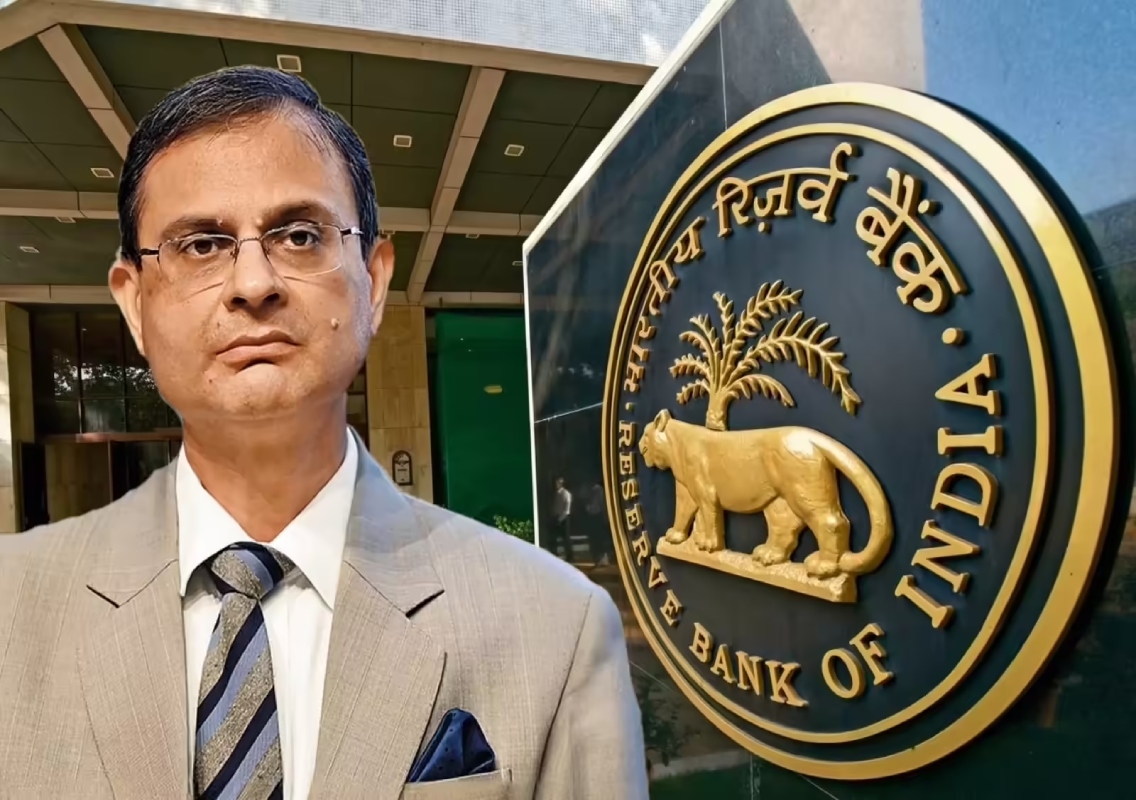


New Delhi: The Reserve Bank of India (RBI) has raised the benchmark repo rate by 25 basis points to 5.5%, marking the first increase in the key policy rate since February 2023. The decision by the Monetary Policy Committee (MPC) comes as inflationary pressures have broadened and global risks have increased.
Along with the rate hike, the RBI has changed its monetary policy stance to “calibrated tightening”, signalling that rate cuts are off the table in the near term. The decision was broadly in line with market expectations, with economists widely anticipating a 25-basis-point increase.
RBI Governor Sanjay Malhotra said signs of inflation becoming more generalised are now visible, with both headline and core inflation rising. The central bank also raised its projection for India’s real GDP growth in FY27 to 7.1% from 6.7% earlier.
RBI raises repo rate after more than three years
The latest decision reverses the rate-cutting cycle that began in 2025. The RBI had reduced the repo rate by a cumulative 125 basis points in 2025, bringing it down from 6.5% to 5.25%, before maintaining the rate through subsequent policy reviews.
The last repo rate hike came in February 2023, when the RBI increased it by 25 basis points to 6.5%. The rate remained unchanged through 2023-24 before the central bank began easing monetary policy in 2025.
With the latest increase, the repo rate now stands at 5.5%. The move is significant for borrowers and financial markets because changes in the RBI’s policy rate influence lending rates, deposit rates and the broader cost of credit.
Policy stance changed to calibrated tightening
One of the most important announcements was the change in the RBI’s monetary policy stance to calibrated tightening.
Governor Malhotra said the change underscores that, under current conditions, rate cuts are not being considered in the near term. Four of the six MPC members voted in favour of the stance decision, according to the RBI Governor’s address.
The stance is particularly important for financial markets because investors will now look beyond the 25-basis-point increase to assess whether additional rate hikes could follow.
Before the meeting, analysts had warned that the guidance accompanying the rate decision could have a greater impact on markets than the hike itself. A 25-basis-point increase had largely been priced in, while a more aggressive policy signal could put additional pressure on equities and bonds.
Inflation concerns prompt RBI action
Inflation has emerged as a key reason behind the RBI’s decision to tighten monetary policy.
Consumer price inflation rose to 4.82% in August, up from 4.45% in July, and has remained above the RBI’s 4% target for three consecutive months. Price pressures have also become broader, with nearly half of the consumer price index basket reportedly trading above the central bank’s target threshold.
The RBI has also raised its FY27 core inflation projection to 4.4% from 4.3% earlier. Governor Malhotra highlighted signs that inflation is becoming more widespread rather than being confined to a few categories.
External factors are adding to the inflation challenge. The ongoing conflict in West Asia has disrupted supply chains, while elevated crude oil prices pose a risk of imported inflation. Malhotra said supply-chain disruptions caused by the conflict could put pressure on domestic economic activity going forward.
Weather-related risks are another concern. Analysts have pointed to the possible impact of El Niño on agricultural production and Rabi crops, while deficient monsoon rainfall could add to food-price pressures.
RBI raises FY27 GDP growth forecast
Despite the tighter monetary policy stance, the RBI has upgraded its economic growth outlook.
Real GDP growth for FY27 has been projected at 7.1%, compared with 6.7% earlier. The same 7.1% projection has been retained for the first quarter of FY28.
The combination of stronger growth expectations and rising inflation gives the RBI greater room to focus on price stability.
The central bank is therefore attempting to balance two competing priorities: maintaining economic momentum while preventing inflation from becoming entrenched.
Governor Malhotra’s comments on supply-chain disruptions indicate that the RBI is also closely monitoring how global developments could affect domestic growth in the months ahead.
What the repo rate hike means for borrowers
A higher repo rate can eventually translate into higher borrowing costs for consumers and businesses, although the speed and extent of transmission varies between lenders and loan products.
Home loan and other floating-rate borrowers could face higher equated monthly instalments if banks and financial institutions pass on the increase to lending rates.
For prospective borrowers, the new policy environment could mean that loans become more expensive if the tightening cycle continues.
Depositors, however, could potentially benefit from higher interest rates on some fixed deposits and other savings products if banks raise deposit rates in response to changing liquidity and lending conditions.
The impact will ultimately depend on how individual banks respond to the RBI’s decision.
Stock markets focus on RBI guidance
The policy decision is also important for equity and bond markets.
Ahead of the announcement, market participants expected volatility in rate-sensitive sectors such as banks, automobiles and real estate. The market had largely priced in a 25-basis-point hike, making the RBI’s future guidance a key factor for investors.
Analysts had suggested that a one-off 25-basis-point hike accompanied by less aggressive guidance could limit the negative impact on equities. A signal of repeated rate increases, on the other hand, could push bond yields higher and increase pressure on rate-sensitive stocks.
The shift to calibrated tightening makes the RBI’s next policy communications particularly important for investors trying to determine whether October’s hike represents the beginning of a sustained tightening cycle.
RBI’s policy direction now in focus
The October MPC decision marks an important change in India’s monetary policy landscape. After cutting rates by 125 basis points in 2025 and maintaining the repo rate at 5.25% for several months, the RBI has now moved towards tighter policy as inflation risks have increased.
The 25-basis-point hike to 5.5%, combined with the move to calibrated tightening, indicates that controlling inflation has become a higher priority for the central bank.
At the same time, the RBI’s stronger 7.1% FY27 growth projection suggests that policymakers remain confident about the underlying strength of the Indian economy.
For borrowers, investors and businesses, the next few months will be crucial. Inflation data, crude oil prices, global monetary policy and developments in the West Asia conflict will determine whether the RBI needs to tighten policy further or can hold the repo rate at its new level.