


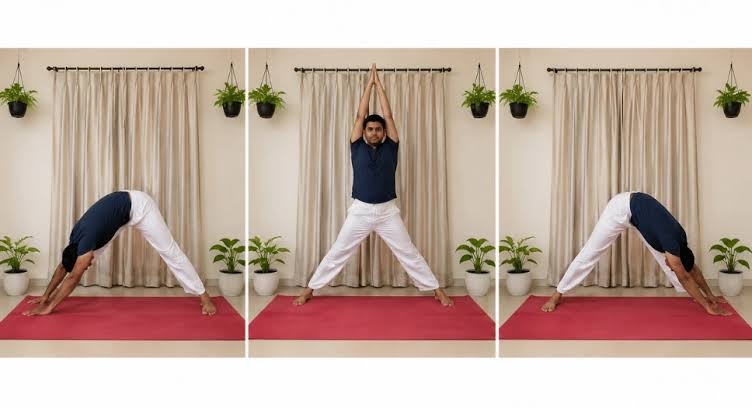


Back pain is a common problem that affects people across age groups. Poor posture, prolonged sitting, lack of physical activity, injuries and stress can all contribute to discomfort and stiffness. While treatment depends on the underlying cause, gentle physical activity and stretching may help improve mobility and manage persistent lower back pain.
Yoga is one approach that combines stretching, muscle strengthening, balance and relaxation. Certain yoga poses target the muscles surrounding the spine, hips and legs, helping improve flexibility and support better posture.
The American College of Physicians (ACP) includes yoga among the recommended non-drug approaches for people with chronic lower back pain. Its clinical guidelines suggest that yoga can help improve pain and function, with benefits comparable to other recommended therapies for some patients.
Standing yoga poses can be particularly useful because they engage several muscle groups while encouraging balance and body awareness. They can also be adapted to suit different flexibility levels.
Here are six standing yoga poses that may help support back health and ease muscular tension.
1. Mountain Pose (Tadasana)
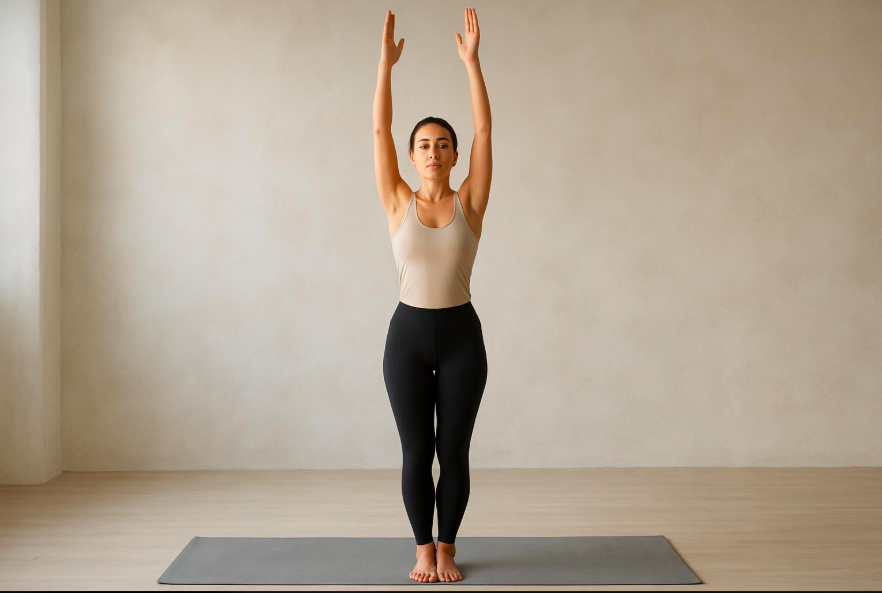
Mountain Pose is a foundational standing yoga posture that encourages proper alignment and awareness of body position. It may help people become more conscious of their posture, particularly if they spend long hours sitting or standing incorrectly.
To practise the pose:
- Stand upright with your feet hip-width apart and distribute your weight evenly across both feet.
- Lengthen your spine without arching your lower back.
- Raise both arms overhead.
- Hold your left wrist with your right hand and gently lean towards the right.
- Return to the centre and repeat on the opposite side.
The gentle side stretch targets the muscles along the ribs and sides of the lower back. Avoid leaning too far or forcing the movement.
2. Forward Fold (Uttanasana)
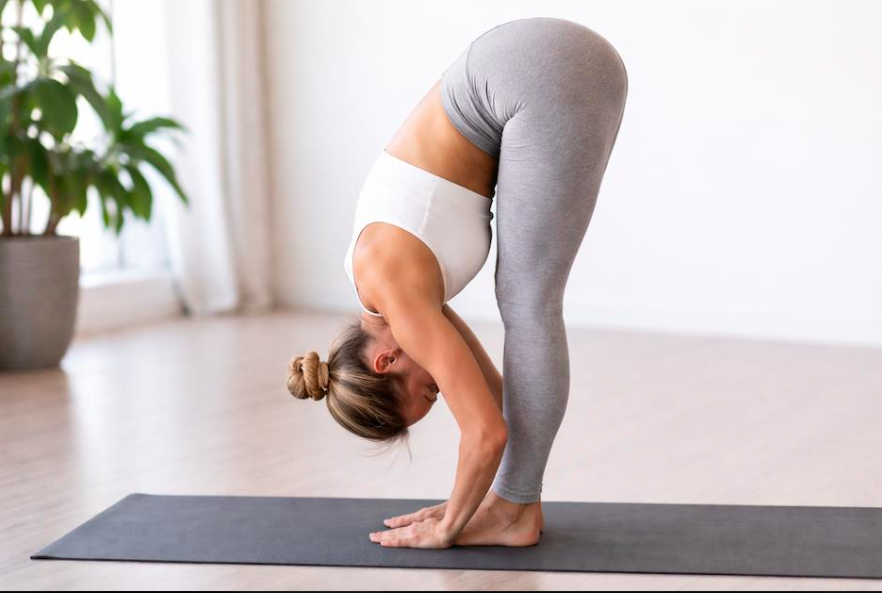
Forward Fold stretches the hamstrings and muscles along the back of the body. Tight hamstrings can sometimes contribute to restricted movement around the pelvis, making gentle stretching useful for improving flexibility.
To perform this pose:
- Begin in Mountain Pose with your feet comfortably apart.
- Slowly bend forward from your hips rather than rounding your lower back.
- Allow your head and neck to relax.
- Keep your knees slightly bent, especially if your hamstrings feel tight.
- Rest your hands on your thighs, shins or the floor, depending on your flexibility.
Hold the position briefly while breathing normally, then slowly return to standing.
People with back pain should avoid forcing a deep forward bend. Those with sciatica symptoms or a diagnosed spinal disc problem should seek professional advice before attempting this posture.
3. Chair Pose (Utkatasana)
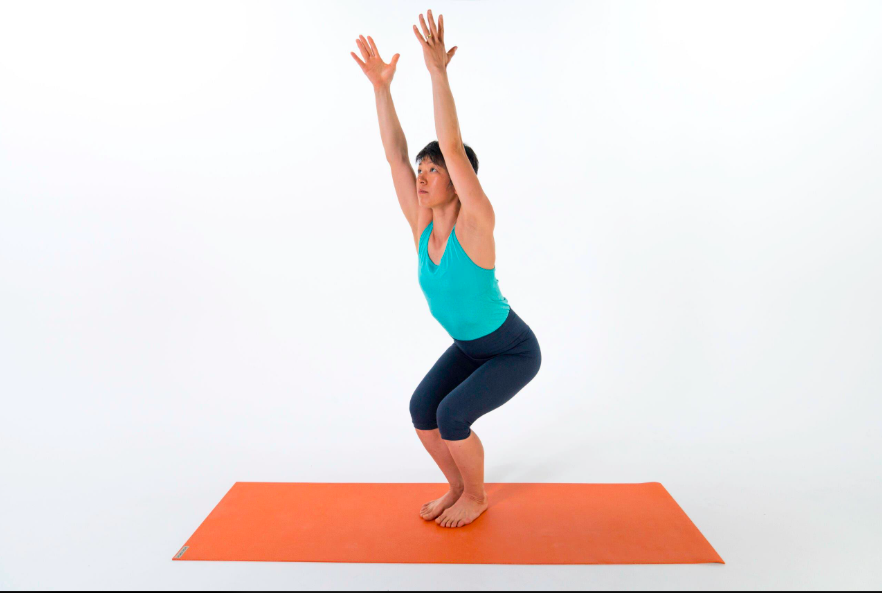
Chair Pose strengthens the thighs, hips and core muscles, which contribute to stability during everyday movements. Developing strength in these areas can help support the lower back.
To practise:
- Stand with your feet together or slightly apart.
- Bend your knees and lower your hips as though sitting on an imaginary chair.
- Raise your arms overhead, keeping them comfortable.
- Keep your chest lifted and spine in a neutral position.
- Hold the posture for a few breaths before slowly straightening your legs.
The key is to avoid excessively arching or rounding the lower back. People who experience knee discomfort can reduce the depth of the bend or practise near a wall for support.
4. Warrior II (Virabhadrasana II)
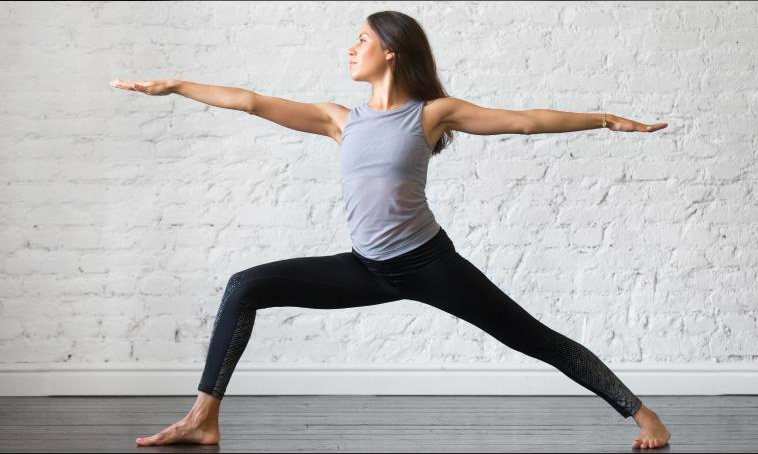
Warrior II is a standing posture that builds strength and stability in the legs while engaging the core. It also encourages better control of the pelvis and torso.
To perform the pose:
- Stand with your feet wide apart.
- Turn your right foot outwards and slightly turn your left foot inwards.
- Bend your right knee while keeping your left leg extended.
- Stretch both arms out to the sides at shoulder height.
- Keep your torso upright and look towards your right hand.
- Hold for a few breaths before changing sides.
The pose works the thighs, hips and abdominal muscles. These muscle groups help stabilise the body and support the spine during movement.
Avoid allowing the front knee to collapse inwards or extending the bend beyond what feels comfortable.
5. Triangle Pose (Trikonasana)
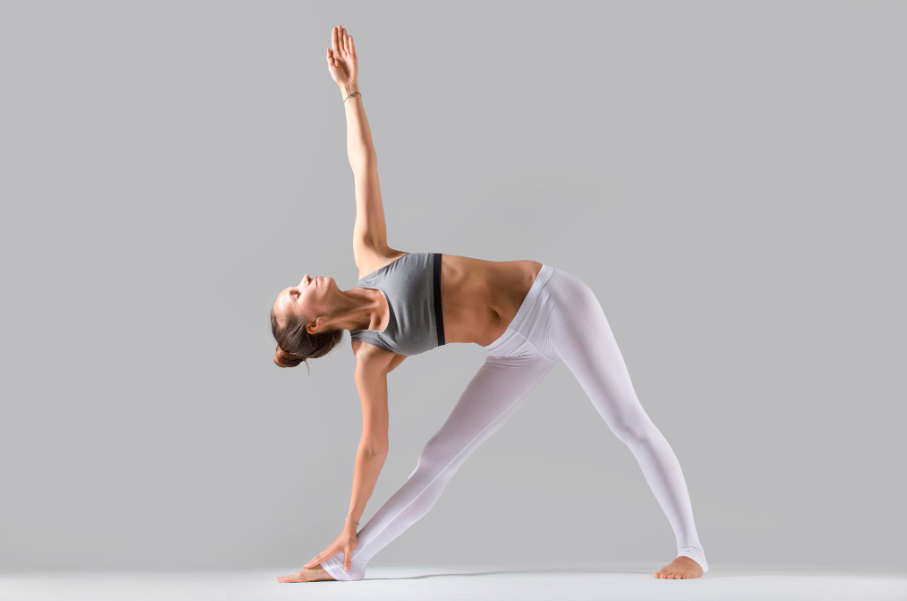
Triangle Pose stretches the sides of the torso, hips and legs. It encourages spinal mobility and helps improve flexibility in the muscles around the waist and lower back.
To practise:
- Stand with your feet wide apart.
- Turn your right foot outwards and extend both arms sideways.
- Slowly reach your right hand towards your right shin, ankle or a yoga block.
- Extend your left arm upwards if comfortable.
- Keep your chest open and avoid twisting your body excessively.
- Return to the starting position and repeat on the other side.
The objective is to create a gentle stretch along the side of the body rather than reach the floor at any cost.
People with back discomfort should keep the movement controlled and avoid pushing their torso into an uncomfortable position.
6. Tree Pose (Vrksasana)
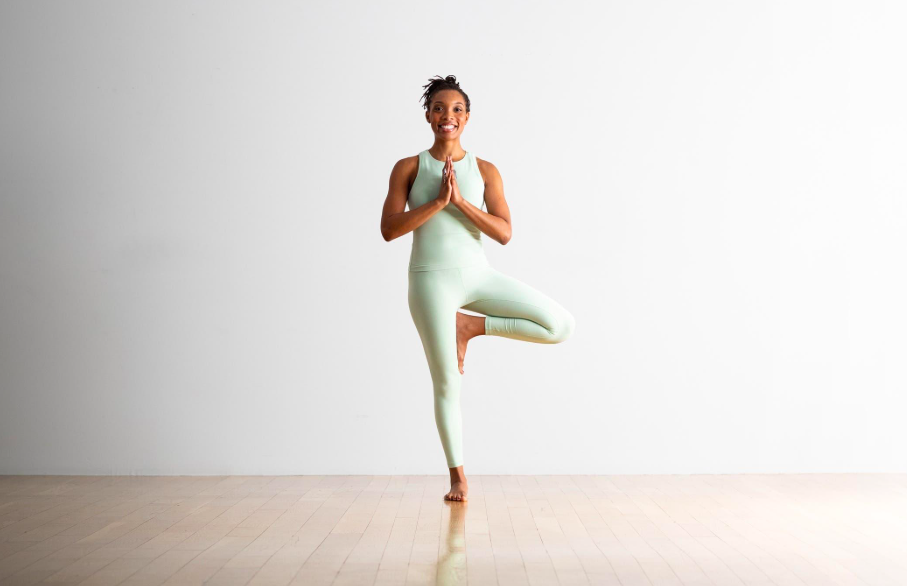
Tree Pose is primarily a balance exercise that strengthens the legs and encourages body awareness. Maintaining balance requires coordination between the feet, hips and core muscles.
To perform the pose:
- Stand upright with your feet together.
- Shift your weight onto your left foot.
- Place the sole of your right foot against your left ankle or inner calf.
- Avoid placing the foot directly against the knee joint.
- Bring your hands together in front of your chest or raise them overhead.
- Hold briefly while maintaining steady breathing.
- Repeat on the other side.
Beginners can keep one hand against a wall or chair for support.
Although Tree Pose does not directly stretch the lower back, it helps develop balance and stability, which are important components of overall movement and posture.
Safety precautions when practising yoga for back pain
Yoga should be adapted to individual needs, particularly when someone is already experiencing back discomfort. A posture that feels comfortable for one person may aggravate symptoms in another.
A few precautions can make the practice safer:
- Avoid forcing movements: Stop if a pose causes sharp pain, increased discomfort or pain spreading down the leg.
- Modify forward bends: Keep your knees slightly bent or use a wall or yoga blocks for support if your hamstrings are tight.
- Be careful with spinal conditions: People with a diagnosed herniated disc or an active sciatica flare-up should consult a doctor or physiotherapist before attempting deep forward folds.
- Use support: Beginners and people with balance difficulties can practise near a wall or sturdy chair.
- Move gradually: Start with gentle movements and increase the duration only if your body tolerates them comfortably.
People experiencing persistent or worsening back pain should seek medical assessment rather than relying exclusively on yoga.
Seek urgent medical attention if back pain is accompanied by new leg weakness, numbness around the groin or genital area, or changes in bladder or bowel control. These symptoms can indicate a serious spinal problem.
Can regular yoga help with back pain?
Practising suitable yoga poses regularly may help improve flexibility, strengthen supporting muscles and develop better movement habits. The breathing and relaxation techniques used in yoga may also help people manage stress, which can influence how they experience chronic pain.
However, yoga is not a cure for every type of back pain. The cause of the discomfort, a person’s medical history and their physical capabilities all influence which exercises are appropriate.
Starting with gentle versions of these six standing poses and gradually building a routine can support mobility and general back health. Anyone with chronic back problems should discuss an appropriate exercise plan with a healthcare professional.