







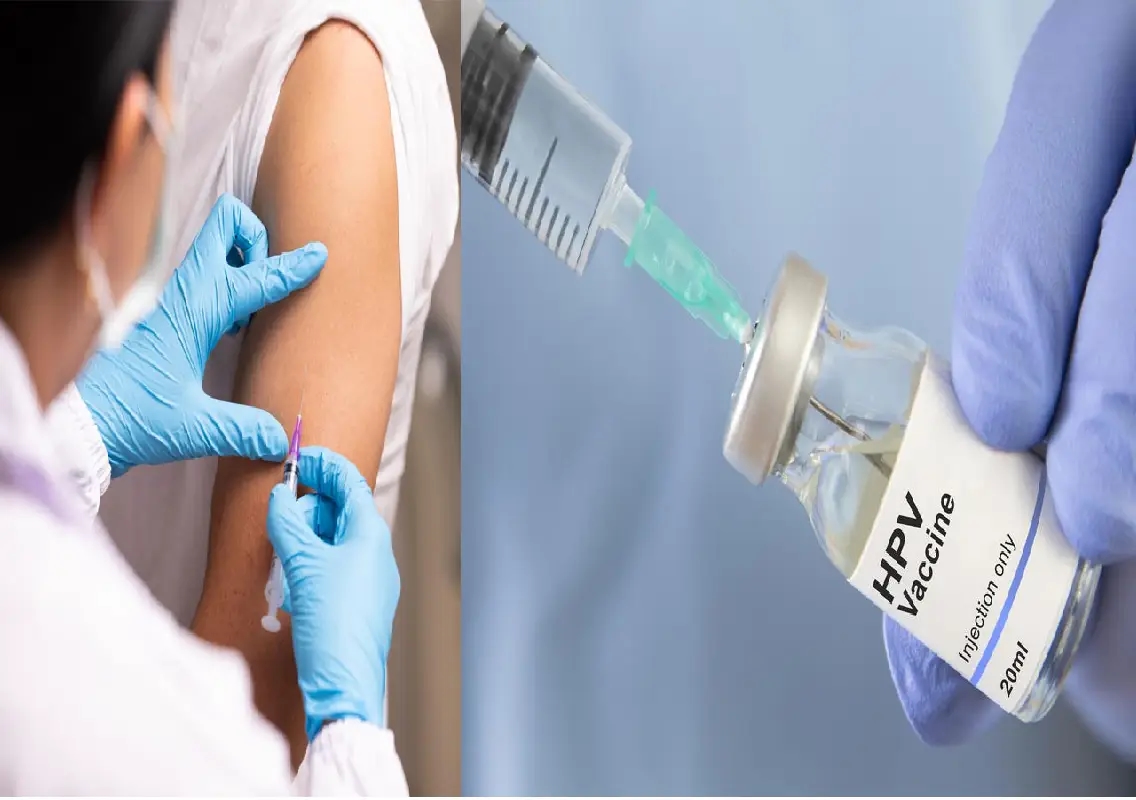


The Union government is set to launch a nationwide single-dose Human Papillomavirus (HPV) vaccination campaign for 14-year-old girls in a major push to reduce India’s high burden of cervical cancer, the second most common cancer among women in the country.
Cervical cancer accounts for a significant share of cancer-related illness and deaths among Indian women, with an estimated 1.25 lakh new cases and around 75,000 deaths reported annually. India alone contributes nearly one-fifth of the global cervical cancer burden, making preventive strategies such as vaccination a public health priority.
Who is eligible and how will it work?
The 90-day vaccination campaign, expected to roll out shortly, will be open to all 14-year-old girls across the country. Eligible beneficiaries will be required to book slots at government health centres through the U-WIN vaccine management platform, similar to the Co-WIN system used during the Covid-19 pandemic.
HPV is a common sexually transmitted infection, but only certain high-risk strains lead to cancer. Vaccination during the teenage years — ideally before sexual activity begins — results in stronger and longer-lasting immunity.
After the initial 90-day drive, the programme will continue through health and wellness centres under the routine immunisation framework. Every year, an estimated 1.15 crore girls turn 14 in India, and they will be able to receive the vaccine as part of the ongoing schedule.
Why HPV vaccination matters
Almost 90 per cent of cervical cancers are caused by persistent HPV infection. HPV is also associated with anal, penile, vaginal, vulvar and throat cancers. Vaccination significantly reduces the risk of infection from high-risk strains and, over time, lowers cancer incidence.
Among the 14 or more cancer-causing HPV types, strains 16 and 18 account for nearly 70 per cent of cervical cancer cases globally. Vaccines are designed to prevent infection from the most common high-risk types.
A landmark 2020 study from Sweden found that women vaccinated before the age of 17 had an 88 per cent lower risk of developing cervical cancer. Global evidence also shows that universal vaccination of girls reduces transmission to boys, offering indirect protection and lowering rates of other HPV-linked cancers.
Vaccine to be used
For the current phase, the government will use Gardasil, manufactured by MSD Pharmaceuticals. The decision was taken as India’s indigenously developed vaccine, Cervavac, produced by the Serum Institute of India, is still awaiting World Health Organization approval for global use and further study by the Indian Council of Medical Research (ICMR) regarding single-dose effectiveness.
Officials have indicated that the government may switch to Cervavac after about two years, once the necessary approvals are in place. Cervavac protects against HPV types 16, 18, 6 and 11.
The GAVI Vaccine Alliance will supply 2.6 crore doses of Gardasil to India, sufficient for approximately two years of coverage. Of these, one crore doses have already arrived, with the remaining doses scheduled for phased delivery.
Is a single dose enough?
In 2022, the World Health Organization’s Strategic Advisory Group of Experts on Immunization recommended a single-dose schedule for girls and women up to 20 years of age, citing strong evidence of high efficacy. Women above 21 are advised to receive two doses at a six-month interval.
The advisory panel found “strikingly high efficacy” in children aged nine to 14 receiving one dose. Immunocompromised individuals, including those living with HIV, are recommended to receive three doses if feasible, or at least two doses.
Lessons from global and domestic experience
Countries such as Australia have demonstrated the effectiveness of HPV immunisation. After launching its vaccination programme in 2007 and extending it to boys in 2013, Australia saw a dramatic reduction in high-risk HPV types — from 22.7 per cent to 1.5 per cent in young women over a decade.
In India, several States have already experimented with HPV vaccination drives. Sikkim became the first to implement a statewide programme in 2018, achieving over 95 per cent coverage for two doses. Punjab rolled out campaigns in high-burden districts in 2016, achieving over 97 per cent coverage during the initial phase. Delhi also introduced vaccination through the Delhi State Cancer Institute, though uptake remained limited.
A major step in cancer prevention
While cervical cancer incidence in India has been gradually declining, experts believe widespread HPV vaccination could significantly accelerate the drop in cases and mortality. Reducing the disease burden would not only save lives but also ease pressure on the country’s already stretched oncology services.
Globally, nearly 158 countries have introduced HPV immunisation programmes since the first vaccine was approved in 2006. With this nationwide rollout, India joins the global effort to eliminate cervical cancer as a public health problem.