







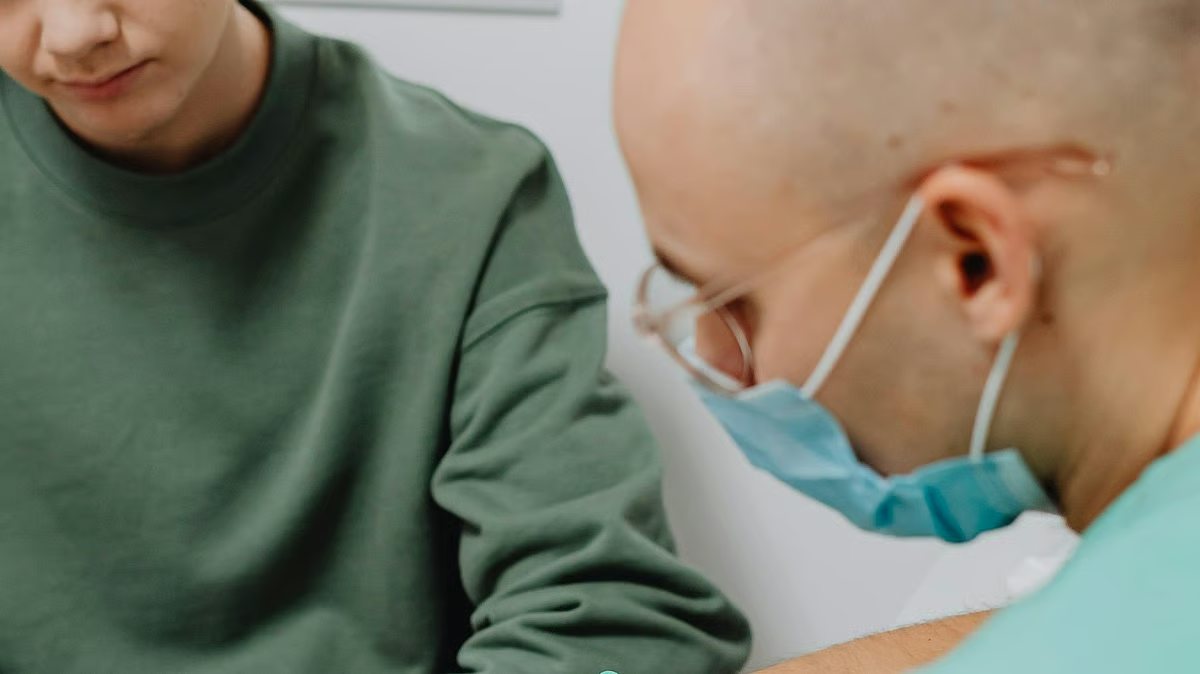


In a rare and medically puzzling case, a 17-year-old boy in the Netherlands shocked doctors after waking up from a routine knee surgery speaking only English — a foreign language to him — instead of his native Dutch.
The teenager had been admitted to hospital for knee surgery following a football injury. According to doctors, the procedure was uneventful and there were no immediate surgical or neurological complications. However, the surprise came when the boy regained consciousness from general anaesthesia.
Woke up convinced he was in the US
Upon waking, the boy began speaking exclusively in English, a language he primarily used in school but not at home. He repeatedly insisted that he was in the United States and appeared confused about his surroundings.
Initially, hospital staff believed the behaviour was a temporary post-anaesthesia reaction that would resolve on its own. However, as hours passed, the condition persisted.
More concerningly, the boy was unable to recognise his parents and could neither speak nor understand Dutch, his mother tongue. This prompted doctors to conduct detailed neurological and psychiatric evaluations.
Rare diagnosis: Foreign language syndrome
After thorough assessment, doctors documented the case and diagnosed the teenager with foreign language syndrome (FLS) — an exceptionally rare and poorly understood condition in which individuals suddenly and involuntarily switch to speaking a second language instead of their native one.
Medical reports noted that the boy had no prior psychiatric illness and no significant family medical history, apart from instances of depression on his mother’s side. There was also no evidence of brain injury, stroke, or infection.
Doctors believe the episode may have been triggered by the effects of general anaesthesia, combined with stress and the brain’s complex language-processing mechanisms.
A condition that still puzzles medicine
Foreign language syndrome is far rarer than conditions like foreign accent syndrome and has been documented only in a handful of cases worldwide. Experts say it highlights how little is still known about how the brain stores and accesses language.
In most reported cases, the condition is temporary, with patients gradually regaining their native language over days or weeks. Doctors treating the teenager remain optimistic but are closely monitoring his recovery.
The unusual case has drawn attention within medical circles, serving as a reminder of the brain’s extraordinary complexity — and its ability to surprise even experienced clinicians.