







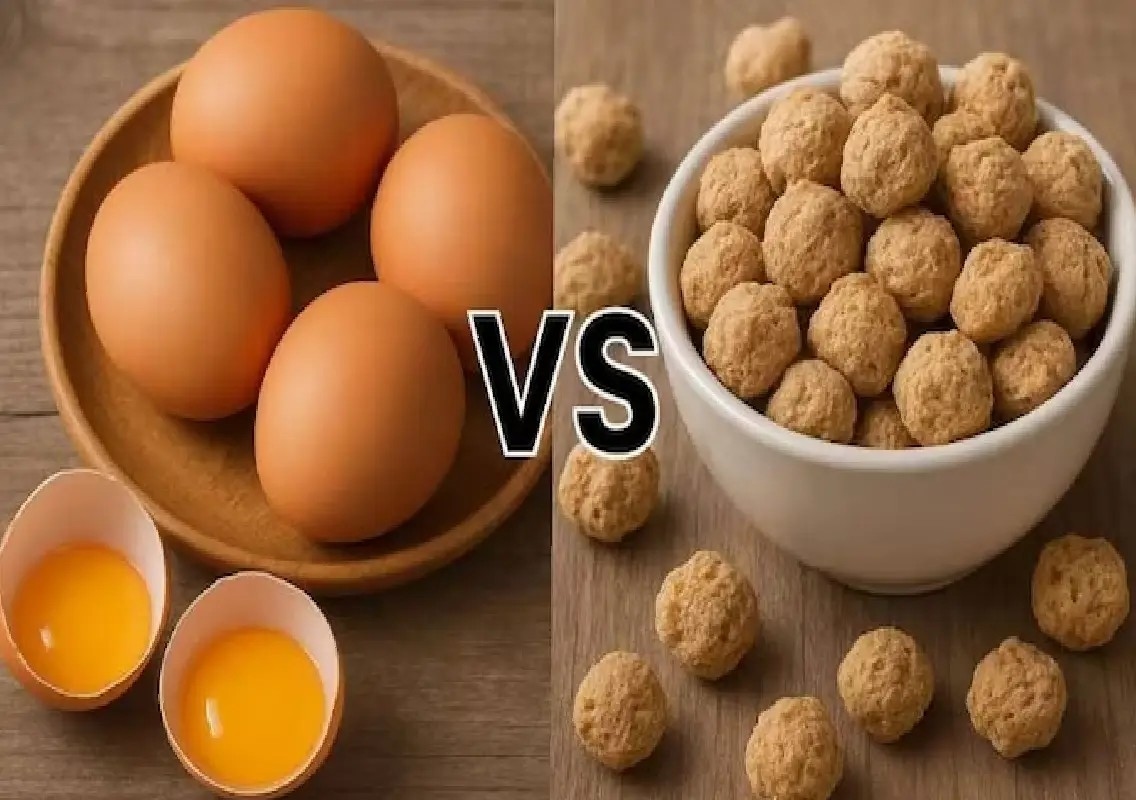


Eggs and soya are both popular sources of protein, but choosing between them is not simply a matter of comparing the number printed on a nutrition label. Protein quality, digestibility, amino-acid composition and individual dietary needs all matter.
Soya can pack in more protein
Dry soya chunks can contain considerably more protein by weight than eggs. This is partly because the comparison is usually made using 100 grams of dry soya, while eggs contain substantial amounts of water.
That does not mean that soya automatically provides a greater nutritional benefit in every situation. Once prepared, soya absorbs water and its weight increases, changing the protein concentration per 100 grams.
Quality and absorption matter too
Egg protein is widely regarded as a high-quality protein because it contains all nine essential amino acids in useful proportions and is highly digestible.
Soya is also a complete protein, making it an important plant-based option for people who avoid animal products. However, its protein quality and digestibility can differ depending on how it is processed and prepared.
For people following vegetarian or vegan diets, soya can therefore be a practical way of meeting protein requirements.
So which should you choose?
There is no universal answer. Eggs can be an efficient source of high-quality protein, while soya offers a protein-rich plant-based alternative along with other nutrients.
The more useful question is not whether one food is universally “better”, but whether a person’s overall diet provides enough protein from varied sources.
For those with specific dietary requirements, allergies, medical conditions or fitness goals, a doctor or qualified dietitian can provide personalised guidance.