







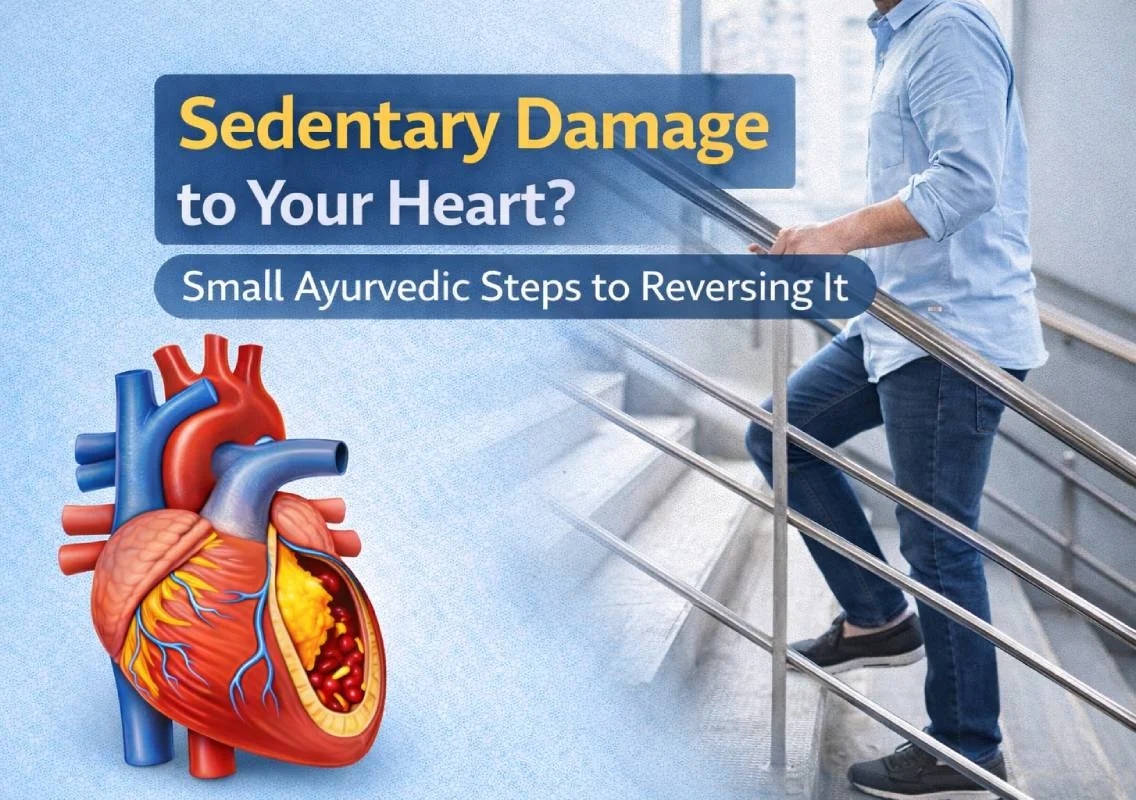


Modern life has gradually replaced movement from our daily routines. Elevators have replaced stairs, and many everyday tasks now require little to no physical effort. A single press of a remote or button can complete activities that once required movement.
While this convenience saves time, it also silently contributes to serious health concerns. A sedentary routine steadily increases the risk of obesity, diabetes, hypertension, and ischemic heart disease.
Ayurveda, India’s ancient science of life, offers a powerful yet simple solution through micro lifestyle changes—small but consistent daily habits that restore circulation, improve metabolism, and strengthen heart vitality without overwhelming changes.
Let’s explore how moving from “lift to walking” is more than just a physical shift—it is a lifestyle transformation that protects the heart.
How a Sedentary Lifestyle Affects Heart Health
Prolonged sitting slows blood circulation, increases fat deposition—especially abdominal fat—reduces metabolic efficiency, affects stress hormones, and promotes arterial stiffness.
In Ayurveda, this condition is interpreted as:
- Kapha aggravation – heaviness, sluggishness, and fat accumulation
- Ama formation – toxic metabolic waste clogging body channels
- Rasa and Rakta Srotas blockage – obstruction in circulatory pathways
Over time, these imbalances contribute to Hridroga (heart disorders).
The encouraging news is that small, consistent lifestyle corrections can reverse much of this damage.
1. Take the Stairs: Activate Circulation Naturally
Replacing lifts with stairs whenever possible activates circulation immediately.
Benefits include:
- Increased cardiac output
- Stronger leg muscles
- Better oxygen utilization
Ayurvedic Perspective
Climbing stairs stimulates Vyana Vayu, the sub-dosha responsible for circulation and heart rhythm. It also reduces Kapha stagnation and supports healthy metabolism (Agni).
Even 3–5 minutes of stair walking several times daily can significantly improve heart efficiency.
2. Walk After Meals
A simple 10-minute slow walk after meals can have powerful metabolic benefits.
It helps:
- Improve post-meal blood sugar levels (PPBS)
- Reduce insulin spikes
- Prevent fat accumulation
Ayurvedic View
Ayurveda recommends walking 100 steps after meals to improve digestion. This practice enhances Agni, prevents Ama formation, and keeps body channels clear.
For individuals with ischemia or metabolic syndrome, this small habit can be highly cardio-protective.
3. Break the Sitting Cycle
Desk jobs often involve sitting for several hours continuously. Breaking this cycle is essential.
Simple desk movement rituals include:
- Standing and stretching every 45–60 minutes
- Shoulder rolls and neck rotations
- Deep breathing exercises
Prolonged sitting reduces arterial dilation and slows blood flow. Micro movements restore vascular flexibility.
Ayurvedic View
Movement keeps Prana (life energy) flowing and prevents Kapha accumulation in the body.
4. Early Morning Brisk Walking
A 20–30 minute brisk walk in early morning sunlight offers multiple cardiovascular benefits:
- Improves endothelial function
- Reduces cholesterol levels
- Enhances blood circulation
- Boosts serotonin and mood
Ayurvedic View
Walking between 6 AM and 10 AM helps balance Kapha, preventing heaviness and lethargy throughout the day.
Adding Pranayama and breathing exercises further enhances oxygenation and reduces cardiac workload.
5. Oil Massage (Abhyanga) for Vascular Health
Regular oil massage is another simple Ayurvedic practice.
Applying warm sesame oil 2–3 times a week can:
- Improve peripheral circulation
- Reduce stress hormones
- Enhance parasympathetic activity
Ayurvedic View
Abhyanga nourishes body tissues (Dhatus), improves blood flow, and strengthens heart function.
6. Dietary Shifts That Support Heart Health
Small dietary changes can significantly influence heart health.
Healthy dietary practices include:
- Eating warm, freshly cooked meals
- Consuming leafy vegetables, millets, and garlic
- Avoiding excess sugar, fried foods, refined foods, and reheated oils
Ayurveda emphasizes maintaining strong Agni (digestive fire) to prevent vascular blockages.
When lifestyle changes are combined with appropriate heart blockage treatment, they can significantly improve cardiovascular health outcomes.
7. Stress Release and Detox
Mental overload and toxin accumulation contribute heavily to stress-related heart imbalance.
Helpful practices include:
- Breathing exercises and Pranayama
- Meditation
- Engaging in hobbies
- Practicing Anuloma-Viloma and Bhramari
Reducing screen time and adopting digital detox habits also help restore mental balance.
Emotional stress increases heart rate, blood pressure, and inflammation. Maintaining a healthy work-life balance is essential for heart protection.
8. Maintain a Healthy Sleep Cycle
Late nights increase cortisol levels and disrupt metabolic repair processes.
Ayurveda recommends aligning sleep with the natural circadian rhythm.
Getting 7–8 hours of quality sleep helps:
- Repair vascular lining
- Regulate blood pressure
- Improve insulin sensitivity
Lifestyle-based healing approaches are often integrated with heart blockage treatment without surgery to support better long-term cardiovascular health.
Clinical Evidence Supporting Lifestyle Changes
Modern research strongly supports these lifestyle practices:
- Regular walking helps reduce progression of coronary artery disease
- Lifestyle modification improves ischemia symptoms
- Weight reduction lowers cardiac workload
These findings echo Ayurvedic wisdom that daily habits play a crucial role in preventing heart disease.
Message to Patients: Small Steps, Big Healing
Protecting heart health does not require extreme routines.
Start with simple daily shifts:
- Choose stairs instead of lifts
- Walk 10 minutes after meals
- Perform hourly desk stretches
- Sleep early and regularly
These micro lifestyle steps gradually:
- Reduce arterial stiffness
- Improve metabolic balance
- Enhance blood circulation
- Strengthen heart function
Ayurveda teaches that health is built in daily routines, not only in hospitals.
When movement becomes medicine, even small lifestyle shifts can reverse the silent damage caused by inactivity.
Your heart only asks for rhythm, balance, and consistent care.
Madhavbaug continues to actively educate people about preventing cardiac diseases and restoring strong heart health through awarenes