







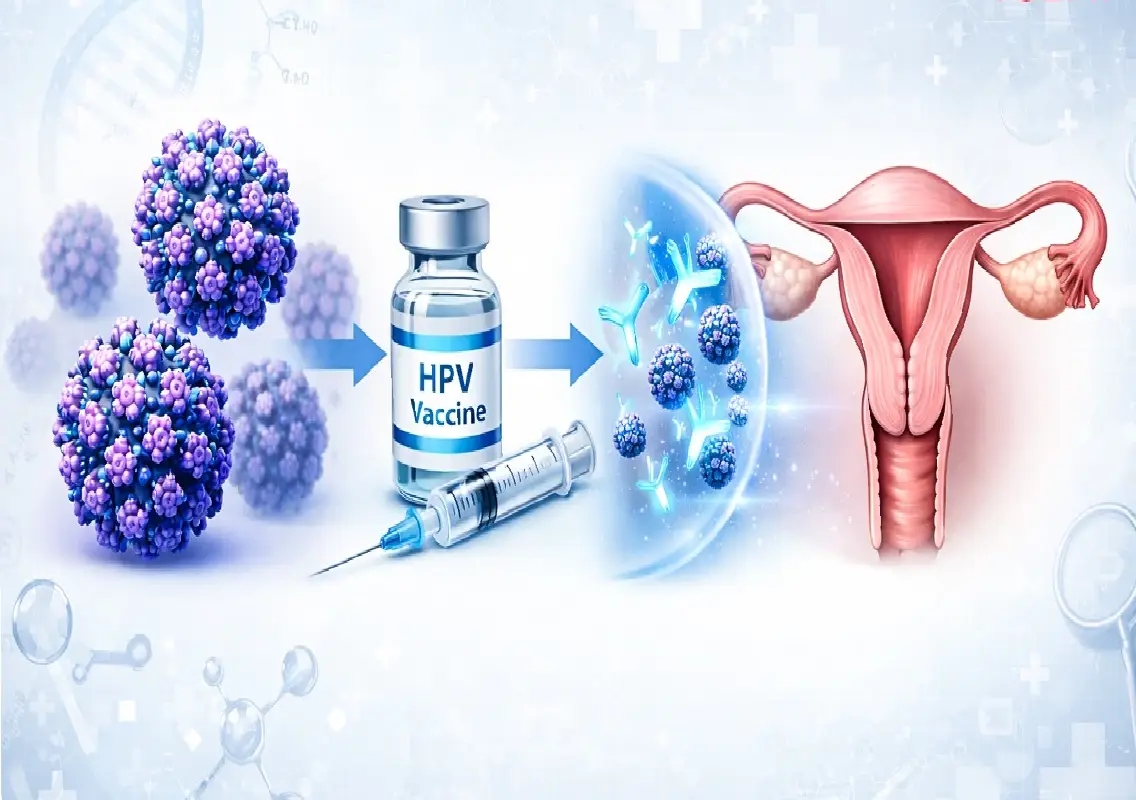


In a landmark public health initiative, the Government of India will launch a nationwide Human Papillomavirus (HPV) vaccination drive targeting 14-year-old girls, aiming to significantly reduce the country’s high cervical cancer burden.
Union Health Ministry officials said the special programme will cover nearly 1.15 crore girls who turn 14 each year. The vaccination will be voluntary and provided free of cost through government healthcare facilities. The drive will function separately from the Universal Immunisation Programme (UIP).
Why the focus on cervical cancer?
Cervical cancer is the second most common cancer among women in India, with nearly 80,000 new cases and over 42,000 deaths reported annually. According to the World Health Organization, cervical cancer is one of the most preventable cancers when vaccination and screening are widely available.
Persistent infection with high-risk HPV types is responsible for about 95 per cent of cervical cancer cases globally.
Which vaccine will be used?
The programme will use Gardasil 4, manufactured by Merck & Co. It protects against HPV types 16 and 18, which cause most cervical cancers, and types 6 and 11, responsible for genital warts.
The government has opted for a single-dose schedule, following 2022 WHO guidance that a single dose offers comparable protection for those aged 9 to 20 years. Around 2.6 crore doses are being procured through Gavi, the Vaccine Alliance, with over one crore doses already distributed across states and Union Territories.
Why target 14-year-olds?
Officials said the vaccine is most effective before potential exposure to HPV. Younger adolescents also produce a stronger immune response.
Parents will be able to register through the U-WIN digital immunisation platform. Vaccinations will be administered at Ayushman Arogya Mandirs, community health centres, district hospitals and government medical colleges.
More than 160 countries have already incorporated HPV vaccination into their national immunisation programmes. With this rollout, India joins the global effort to eliminate cervical cancer as a public health threat.