







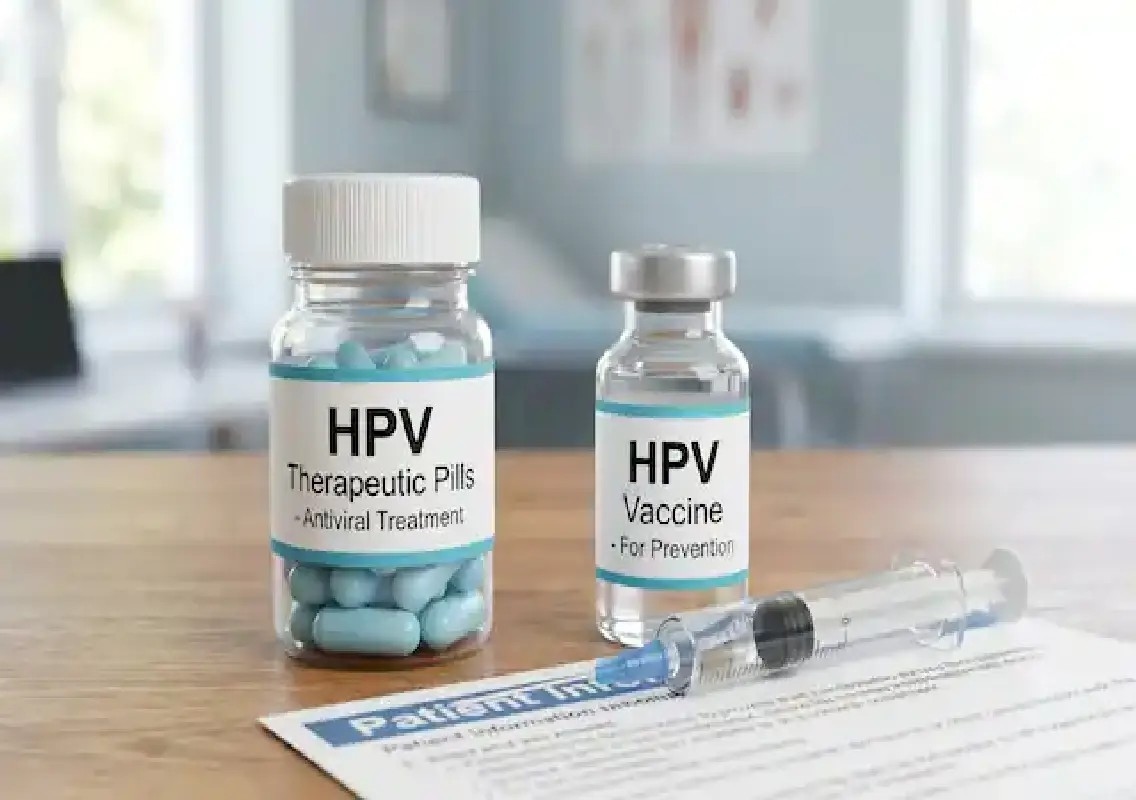


New Delhi: The announcement of India’s first investigational oral drug for HPV-related precancerous cervical lesions, SHetA2, has generated optimism among doctors, researchers and patients. Developed by scientists at the Indian Council of Medical Research (ICMR) and licensed to Emcure Pharmaceuticals for further development, the drug is being viewed as a promising advance in the fight against cervical cancer, one of the leading causes of cancer-related deaths among Indian women.
However, experts caution that SHetA2 is still in the clinical development stage and remains several years away from becoming available for routine patient care. While early laboratory and clinical findings are encouraging, larger human trials and regulatory approvals are still required before the drug can reach hospitals.
What is SHetA2?
SHetA2 is an investigational oral therapy designed to treat HPV-related precancerous cervical lesions, also known as cervical intraepithelial neoplasia (CIN).
Unlike the HPV vaccine, which helps prevent infection from high-risk strains of the human papillomavirus (HPV), SHetA2 is intended for women who have already developed abnormal cervical cells due to persistent HPV infection.
According to Dr Mohit Agarwal, Principal Director and Head of Medical Oncology at Fortis Hospital, Shalimar Bagh, the drug targets and destroys HPV-infected abnormal cells while largely sparing healthy tissue.
“This investigational pill is designed to treat precancerous cervical lesions caused by HPV, not prevent the initial infection,” Dr Agarwal explained.
How is it different from the HPV vaccine?
Experts say one of the biggest misconceptions is that SHetA2 is a replacement for HPV vaccination.
The HPV vaccine prevents infection by the high-risk HPV strains responsible for most cervical cancer cases.
SHetA2, on the other hand, is a therapeutic medicine meant for women who already have precancerous cervical lesions following persistent HPV infection.
The two approaches serve different purposes and complement rather than replace each other.
Why is it considered a breakthrough?
At present, women diagnosed with high-grade cervical precancer are commonly treated through surgical procedures such as the Loop Electrosurgical Excision Procedure (LEEP) or conisation, which remove abnormal tissue from the cervix.
Although these procedures are effective, they may carry risks, particularly for younger women who plan to have children in the future.
Researchers believe SHetA2 could eventually offer a non-surgical, tissue-preserving alternative by selectively eliminating HPV-infected abnormal cells while leaving healthy cervical tissue largely intact.
If ongoing and future clinical trials confirm these early findings, the treatment could significantly change the management of cervical precancer.
When will the drug become available?
Doctors stress that SHetA2 is not expected to be available anytime soon.
According to Dr Agarwal, although the drug has shown promise in preclinical and early clinical studies, it must undergo extensive human clinical trials to establish its safety and effectiveness.
These large-scale studies alone could take up to five years, followed by a comprehensive regulatory review before approval.
He emphasised that SHetA2 should currently be viewed as a promising scientific development rather than a treatment ready for patients.
Challenges before approval
Even if clinical trials are successful, several challenges remain before the medicine reaches the market.
Pricing
The drug’s pricing will need to comply with India’s Drugs (Prices Control) Order (DPCO) while remaining commercially viable. Its final cost has not yet been determined.
Manufacturing
Large-scale production of a novel medicine requires specialised manufacturing facilities and stringent quality control standards.
Distribution
Ensuring equitable access across India’s urban and rural regions will also be a significant challenge once the drug receives approval.
Experts urge realistic expectations
Health experts advise patients to interpret reports about medical breakthroughs carefully.
Dr Agarwal said early-stage research should not be mistaken for an immediate cure.
He also stressed the importance of distinguishing between preventive vaccines and therapeutic medicines, noting that SHetA2 is intended only for women who already have precancerous cervical lesions.
Prevention remains the best defence
Experts emphasise that the development of SHetA2 does not alter current recommendations for cervical cancer prevention.
According to the World Health Organization (WHO), nearly all cervical cancer cases are linked to persistent infection with high-risk HPV.
The WHO’s strategy for eliminating cervical cancer continues to focus on three key measures:
- HPV vaccination before exposure to the virus.
- Regular cervical screening using recommended tests.
- Prompt treatment of precancerous lesions.
Women are advised to receive the HPV vaccine when eligible, undergo regular cervical screening such as Pap smears, seek medical attention for abnormal symptoms, and follow up promptly if precancerous changes are detected.
A promising future, but not a current treatment
India’s SHetA2 programme represents a significant milestone in indigenous medical research and reflects growing innovation in cancer therapeutics.
If future clinical trials confirm its safety and effectiveness, the oral drug could eventually provide women with a less invasive treatment option for HPV-related precancerous cervical lesions.
For now, however, SHetA2 remains an investigational medicine under development. Medical experts stress that HPV vaccination, routine screening and early diagnosis continue to be the most effective tools for preventing cervical cancer, while research into new therapies progresses.