







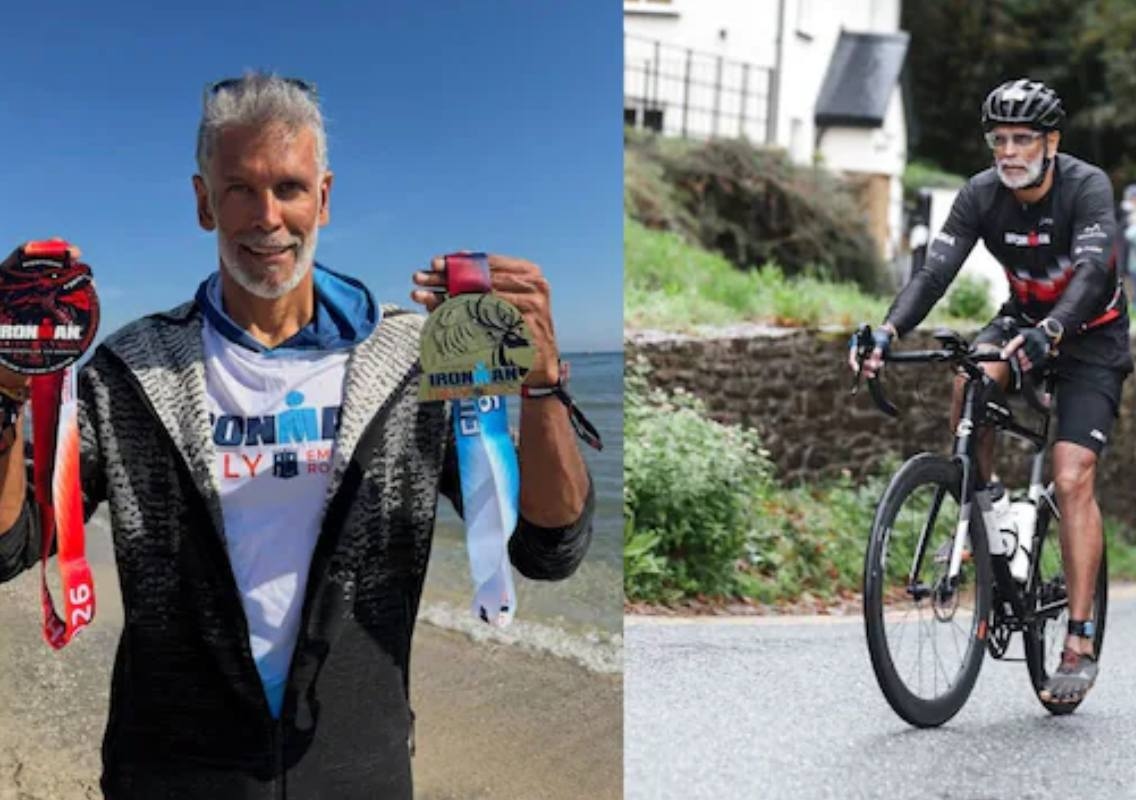


New Delhi: Actor and fitness enthusiast Milind Soman has completed two full-distance Ironman triathlons within just six days, finishing Ironman Wales on September 13 and Ironman Italy on September 19. At 60, the endurance challenge has also turned attention to an often-overlooked part of fitness: how well the body recovers between periods of intense physical stress.
Each full-distance Ironman includes a 3.8-kilometre swim, a 180-kilometre cycling leg and a 42.2-kilometre marathon run. Across the two events, Soman therefore covered 7.6 kilometres in the water, 360 kilometres on the bicycle and 84.4 kilometres on foot.
What made the challenge particularly notable for Soman was not simply completing two endurance races, but doing so with only six days between them. In a social media post after the second event, he described the experience as an opportunity to learn more about recovery and understand his individual fitness level.
His experience offers a useful reminder for recreational exercisers too: recovery is not something that begins after fitness goals have been achieved. It is a part of training itself, particularly when workouts are long, intense or repeated frequently.
What made the two-Ironman challenge unusual
Soman completed Ironman Wales before travelling on to the second full-distance event in Italy. He described the Wales course as particularly demanding, citing its rough swim, steep cycling climbs and hilly running route.
After completing the second race, Soman shared photographs on Instagram and explained that the short gap between the events was intended to help him understand how his body responded to a major physical stress and how much recovery was required before repeating it.
The observation is relevant beyond professional or elite endurance athletes. Recovery needs vary substantially between individuals and can be influenced by factors such as training load, sleep, nutrition, hydration, age, health and previous conditioning.
Completing an extreme endurance event should not be taken as a benchmark that others need to reproduce. For most people, recovery should be tailored to the intensity of their own exercise and their individual health status.
1. Prioritise good-quality sleep
Sleep is one of the most important components of physical recovery. During sleep, the body gets time to carry out processes involved in tissue repair and restoration, while adequate sleep also supports normal daytime functioning.
Sleep requirements vary with age. The US Centers for Disease Control and Prevention recommends at least seven hours for adults aged 18–60, seven to nine hours for those aged 61–64, and seven to eight hours for adults aged 65 and older.
For people who exercise regularly, cutting sleep short to accommodate another workout can work against recovery. Maintaining a consistent bedtime and wake-up schedule, keeping the bedroom comfortable and limiting electronic-device use before bedtime may support better sleep habits.
Following an unusually demanding workout or endurance event, giving the body sufficient time to rest becomes even more important.
2. Do not ignore protein
Exercise places stress on muscles, while protein supplies amino acids needed for muscle maintenance and repair. Including adequate protein as part of a balanced diet can therefore support recovery.
Protein-rich foods include eggs, dairy products, pulses, soy, fish, chicken and other sources. After demanding exercise, a meal or snack containing protein can help provide the amino acids required for muscle repair.
However, there is no single protein requirement that applies to everyone. Needs can vary according to age, body weight, health, activity level and the type and volume of exercise.
People with specific medical conditions or dietary requirements should seek individual advice from a qualified healthcare or nutrition professional rather than adopting a high-protein diet solely because they exercise regularly.
3. Replace fluids and electrolytes
Long-duration exercise can result in substantial fluid loss through sweating. Dehydration can contribute to fatigue, headaches and dizziness and may affect physical performance.
Water is important for everyday hydration, but people undertaking prolonged or intense endurance exercise may also need to replace electrolytes lost through sweat. Sodium and other electrolytes have important roles in fluid balance and normal muscle and nerve function.
Hydration requirements differ from person to person. Weather, exercise intensity, duration and individual sweating rates can all affect how much fluid is needed.
For recreational exercisers, the emphasis should be on avoiding both inadequate hydration and excessive fluid intake. After very long or demanding events, personalised guidance can be particularly useful.
4. Choose active recovery when appropriate
Recovery does not always require remaining completely inactive. After suitable workouts, gentle movement such as an easy walk, light cycling or relaxed swimming can allow the body to remain mobile without adding substantial physical stress.
The intensity should remain low. A recovery session should not become another hard workout.
If gentle movement increases pain, exhaustion or other symptoms, rest may be more appropriate. Similarly, after an exceptionally demanding endurance event, additional recovery time may be needed before returning to normal training.
The purpose of active recovery is to support a gradual return to activity, not to test fitness again immediately.
5. Watch for signs of excessive fatigue
Learning to recognise when the body needs a break is an important recovery skill. Persistent tiredness, declining performance, unusual or prolonged muscle soreness and poor sleep can all be reasons to reassess a training routine.
A higher-than-usual resting heart rate can also be a useful personal indicator when considered alongside other changes, although it does not by itself establish that someone has failed to recover.
Trying to exercise through persistent fatigue can increase the risk of training-related problems. Instead of continuing to increase exercise intensity or duration, reducing the workload and allowing more recovery time may be sensible.
Persistent or unexplained fatigue, significant pain, dizziness, breathing difficulties or other concerning symptoms should not simply be attributed to exercise. Medical evaluation may be appropriate.
6. Give your nervous system a break
Recovery is not only about muscles. Repeated high-intensity exercise can contribute to overall physical and psychological stress, particularly when training volume is high and rest is limited.
Relaxation practices such as deep breathing, meditation or simply taking time away from intense physical activity can help create a healthier balance between exercise and rest.
Maintaining good sleep, eating adequately and allowing easier days within a training programme can also help prevent every workout from becoming another major physical demand.
Recovery becomes part of fitness
Milind Soman’s two-Ironman challenge highlights an important distinction between completing a demanding workout and being ready to repeat it. Fitness is not only about how much exercise a person can tolerate at one point in time; the ability to recover before taking on another physical demand also matters.
For most people, there is no need to replicate extreme endurance challenges to benefit from exercise. Regular physical activity has well-established health benefits, including improvements in sleep, heart health, bone strength and overall disease prevention.
The practical lesson is to match exercise with adequate recovery. Quality sleep, sufficient nutrition, appropriate hydration, sensible active recovery and attention to signs of fatigue can help create a more sustainable routine.
As training demands increase, recovery should increase in importance too. And after an extreme endurance event, rest is not a sign of weakness — it is part of allowing the body to adapt to the stress it has experienced.