







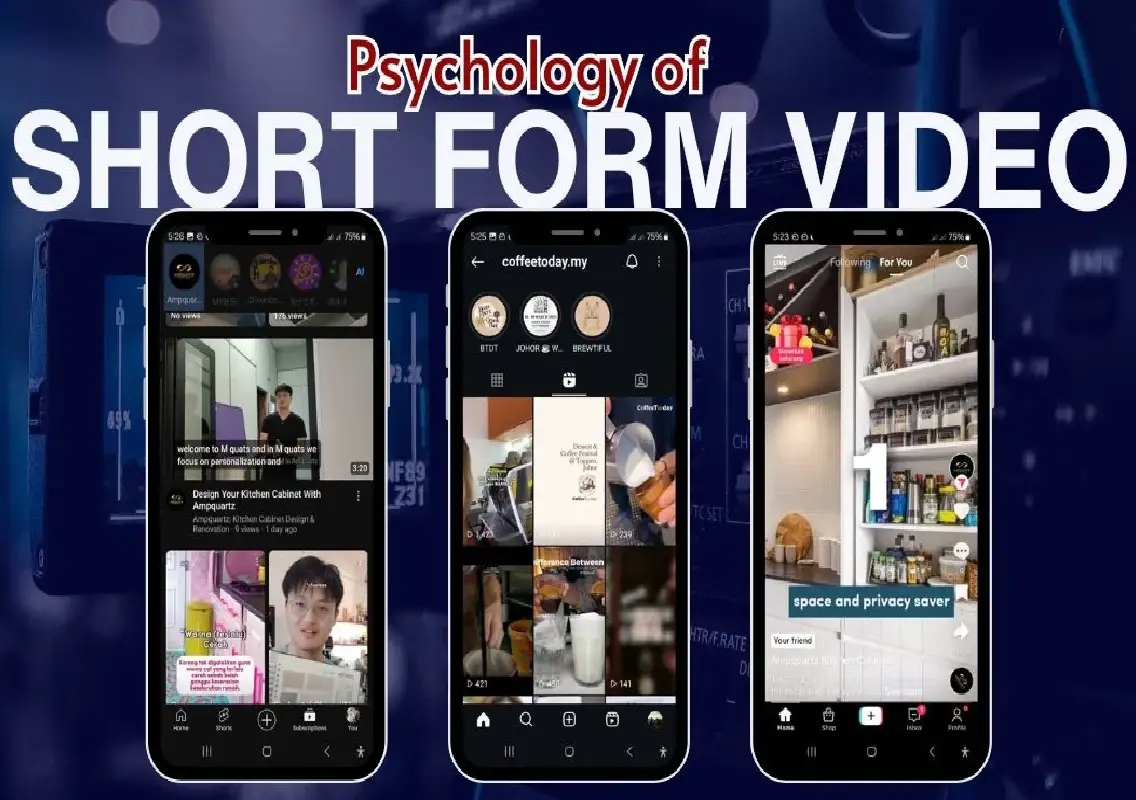


A sweeping new psychological review has revealed how short-form video (SFV) platforms are subtly but consistently reshaping attention, emotion, and daily mental life. The study, titled Feeds, Feelings, and Focus, analysed 71 studies covering nearly 100,000 participants across Asia, Europe and North America. Rather than pointing to dramatic cognitive decline, researchers describe something more gradual and pervasive: a civilisation drifting into a new mental rhythm shaped by the infinite scroll.
How the meta-analysis was conducted
Researchers examined behaviours ranging from time spent scrolling to the difficulty of stopping once the feed begins. Participants included school students, university learners and working adults. The review assessed attention, memory, sleep, anxiety, impulsivity, loneliness and overall well-being. Patterns were modest but strikingly consistent. Correlations between heavy SFV use and negative outcomes ranged between –0.10 and –0.30 across nearly every demographic group.
The consistency of these results, experts say, is more significant than the size of the effects. It suggests a steady, global cognitive shift rather than an immediate crisis.
Attention, emotion and the pace of the feed
Attention thinning
The study shows that heavy SFV users do not lose the ability to focus, but maintaining concentration becomes more taxing. Tasks requiring sustained attention show reliable negative correlations, indicating a mind trained to operate in bursts rather than prolonged stretches.
Emotional overstimulation
SFV use is linked with small but persistent increases in stress, restlessness and anxiety, with an overall correlation of –0.21. Emotion cycles accelerate, leaving users with half-processed feelings and a subtle, lingering tension.
Age does not protect users
A key revelation is that adults exhibit almost the same attention and emotional shifts as teenagers. The feed, researchers conclude, interacts with human neurology, not age.
The power of automatic behaviour
The strongest negative outcomes appear when SFV use becomes automatic. Users who report that checking feeds feels involuntary show higher correlations—often approaching –0.30—indicating a gradual erosion of agency rather than time alone.
A mind reorganised, not destroyed
Researchers emphasise that short-form video does not damage the mind; it reorganises it. Attention adapts to microbursts, emotion accelerates, and stillness begins to feel unnatural. The study suggests that the modern digital environment behaves less like a simulation and more like a continuous mental current that shapes thought patterns without users realising it.