







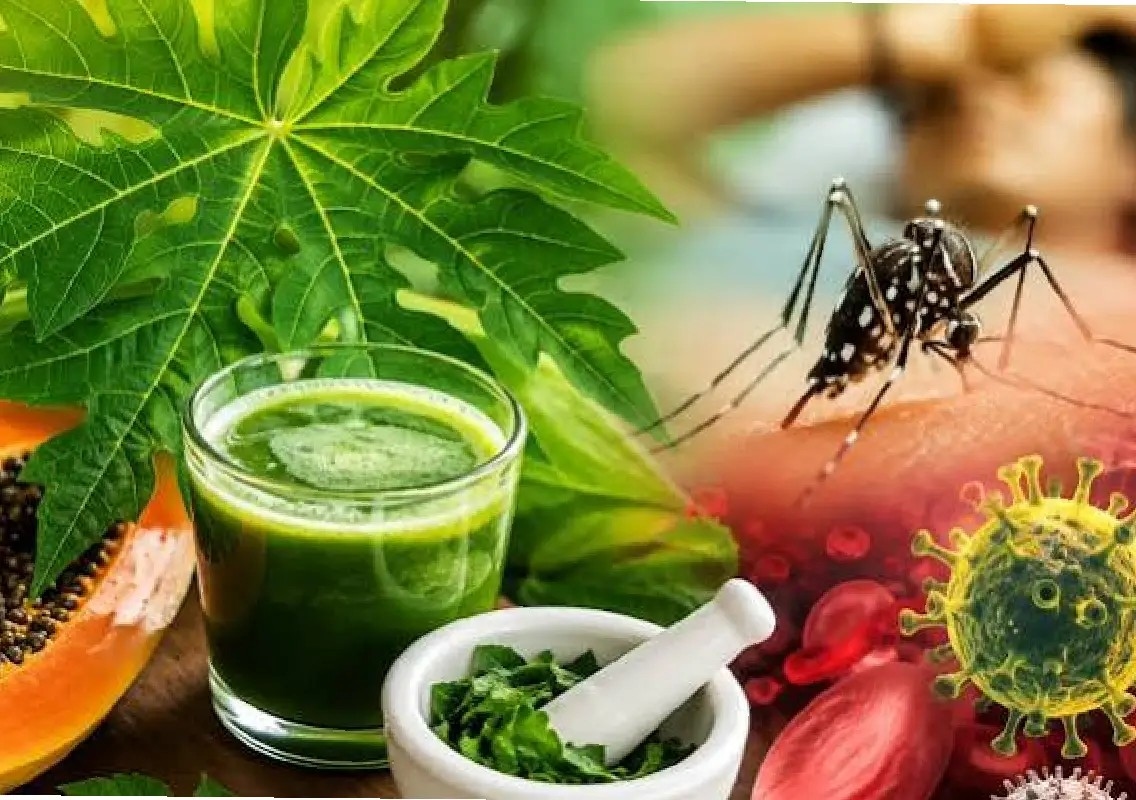


New Delhi: Dengue cases are being reported earlier and continuing for longer in parts of India this year, prompting renewed interest in home remedies such as papaya leaf juice. However, doctors have cautioned that the drink should not be considered a cure or used as a substitute for medical treatment.
Papaya leaf juice has long been promoted as a traditional remedy for dengue, particularly for its perceived ability to support platelet levels. However, relying on it instead of appropriate medical monitoring can be risky, especially when the disease progresses or warning signs appear.
Medical care remains important
Dengue is a mosquito-borne viral infection that can range from a mild illness to severe disease. Patients may experience high fever, headache, body pain, nausea and weakness, while severe dengue can involve bleeding, fluid loss and other serious complications.
Doctors therefore advise patients with suspected or confirmed dengue to remain under appropriate medical supervision and follow prescribed treatment and monitoring. Platelet counts and other clinical indicators may need to be assessed depending on the patient’s condition.
Home remedies should not delay treatment
The growing popularity of papaya leaf juice highlights how quickly traditional remedies can spread during outbreaks. While some studies have investigated whether papaya leaf preparations may influence platelet counts, evidence is not sufficient to establish them as a cure for dengue.
People should also avoid self-medicating and seek medical attention if symptoms worsen. Warning signs such as persistent vomiting, abdominal pain, bleeding, extreme weakness, breathing difficulty or unusual drowsiness require urgent medical evaluation.
The key message for patients is simple: papaya leaf juice cannot replace professional dengue care. Early medical assessment, adequate hydration and careful monitoring remain important in managing the infection.