







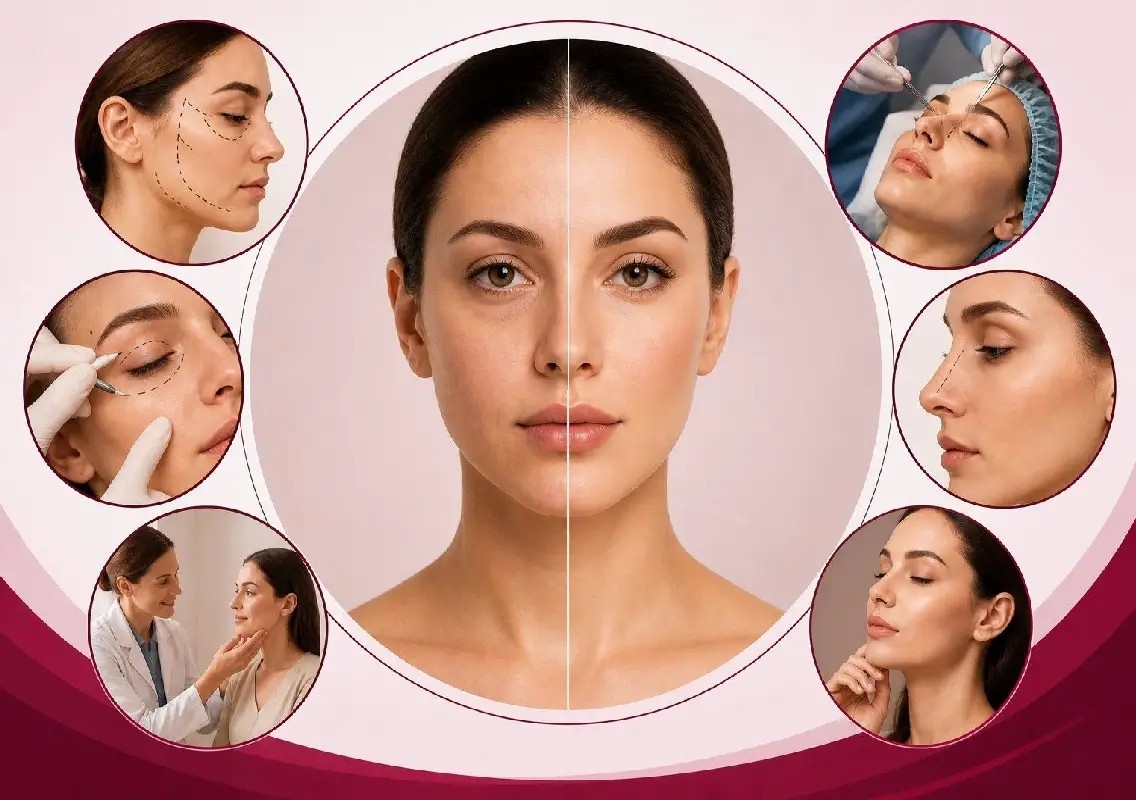


New Delhi: The growing influence of social media filters, celebrity beauty trends and digitally enhanced images has led to a surge in interest in aesthetic procedures. However, medical experts warn that misinformation surrounding plastic surgery is also increasing, leaving many people with unrealistic expectations about what such procedures can achieve.
According to Dr Ashwani Kumar Singh, Senior Consultant and Head of Plastic and Reconstructive Surgery at Sarvodaya Hospital, Sector-8, Faridabad, many patients arrive at clinics with perceptions shaped more by viral content than by medical facts.
The specialist says understanding the distinction between myths and evidence-based medical practice is essential before deciding to undergo any surgical procedure.
Plastic surgery is more than cosmetic enhancement
One of the most common misconceptions is that plastic surgery and cosmetic surgery are the same.
Dr Singh explained that cosmetic surgery is only one branch of the broader specialty of plastic surgery.
While cosmetic procedures focus on enhancing appearance, plastic surgery also includes reconstructive procedures that restore function and appearance after burns, trauma, congenital abnormalities, cancer-related defects, hand injuries and chronic wounds.
He said reconstructive surgery forms a significant part of a plastic surgeon’s work, extending well beyond aesthetic treatments.
Technology cannot replace surgical expertise
Rapid advances in artificial intelligence, robotic-assisted surgery, lasers and three-dimensional imaging have transformed surgical planning and precision.
However, Dr Singh stressed that technology remains a tool rather than a substitute for medical expertise.
He said modern equipment can improve accuracy, assist with planning and support faster recovery, but the success of any procedure ultimately depends on the surgeon’s judgement, experience and ability to select appropriate candidates.
According to the expert, AI and advanced imaging systems complement clinical skills but cannot replace them.
Surgery cannot deliver perfection
Another widespread myth is that plastic surgery can produce flawless, permanent results.
Dr Singh noted that while surgery can improve physical proportions, restore damaged tissue and correct deformities, it cannot create perfection or stop the natural ageing process.
Skin continues to age, lose elasticity and respond to gravity over time, regardless of surgical intervention.
He added that patients with realistic expectations are generally more satisfied with their outcomes than those seeking unattainable perfection.
Every procedure carries risks
Experts also caution against the belief that cosmetic procedures are completely risk-free.
Although many aesthetic treatments are widely marketed and often portrayed as simple or routine, every surgical procedure carries potential complications.
Possible risks include bleeding, infection, scarring, asymmetry, adverse reactions to anaesthesia and the possibility of revision surgery.
Dr Singh emphasised that patient safety depends on undergoing treatment in accredited healthcare facilities under the supervision of qualified plastic surgeons, supported by appropriate anaesthesia and post-operative care.
Social media is influencing patient expectations
Doctors have also expressed concern over the growing influence of social media filters and celebrity-driven beauty standards.
According to Dr Singh, an increasing number of patients request procedures aimed at replicating digitally altered or heavily filtered images rather than achieving natural, balanced results suited to their own facial features.
He said ethical plastic surgery begins with careful counselling and, where necessary, psychological assessment to determine whether a procedure is appropriate for the individual.
The goal, he explained, is to help patients make informed decisions based on medical suitability rather than unrealistic online trends.
Consultation remains the most important step
Dr Singh advised people considering cosmetic or reconstructive surgery not to base their decisions on discounts, social media popularity or celebrity endorsements.
Instead, he recommended undergoing a comprehensive consultation to understand the expected benefits, potential risks, recovery process and realistic outcomes of the procedure.
He stressed that successful plastic surgery depends on clear communication between the patient and surgeon, appropriate medical evaluation and realistic expectations.
Experts say informed decision-making remains the foundation of safe and satisfactory surgical outcomes, particularly in an era where digital imagery can create unrealistic standards of physical appearance.