







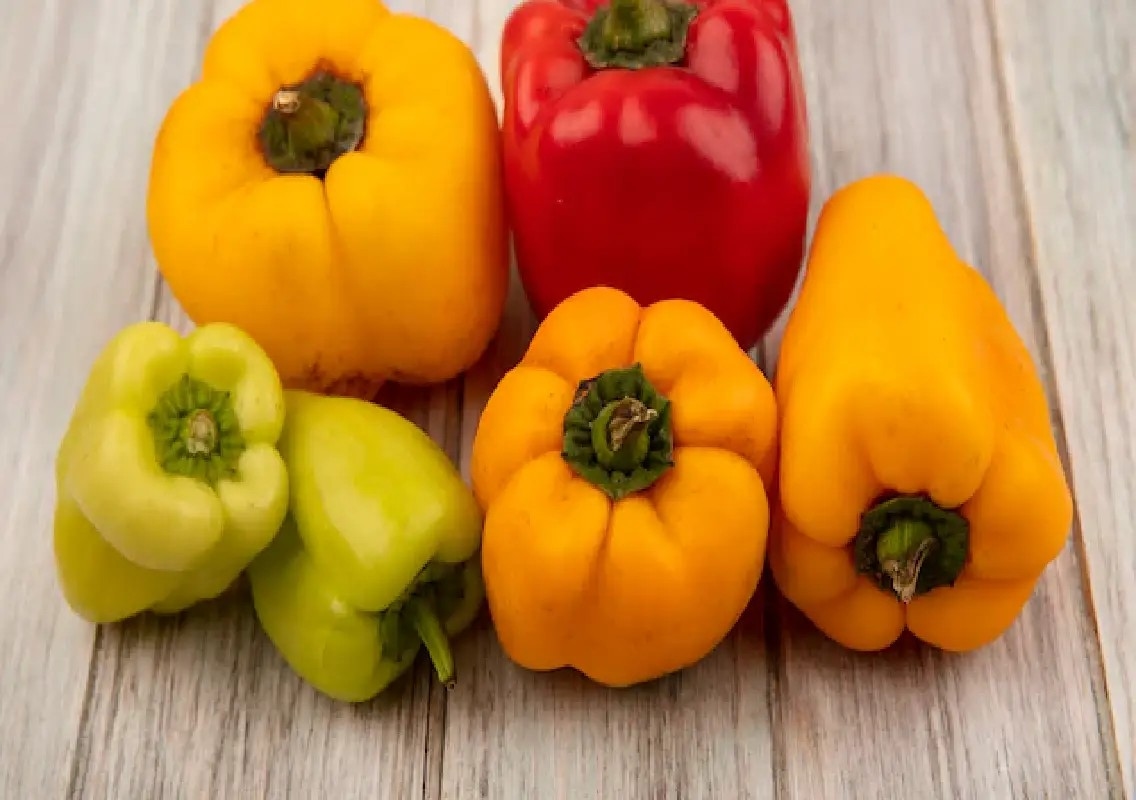


New Delhi: Red and yellow capsicums are colourful additions to everyday meals and are packed with nutrients, including vitamin C, carotenoids and other plant compounds. Their vibrant colours reflect changes that occur as bell peppers mature, giving ripe peppers a different nutritional profile from green ones.
These vegetables are often discussed for their potential role in supporting long-term health, including protection against oxidative stress. However, it is important to distinguish between supporting healthy dietary patterns and directly preventing cancer. Eating capsicum cannot guarantee protection from cancer, and no single vegetable can act as a cancer-preventive treatment.
Still, adding a variety of colourful vegetables to a balanced diet is a practical way to increase the intake of beneficial plant compounds.
Why the colour of capsicum matters
Green, yellow and red capsicums are different stages of maturity of the same type of bell pepper. As peppers ripen, their pigments and concentrations of certain carotenoids change.
Red peppers contain carotenoids such as capsanthin and capsorubin, while yellow peppers contain compounds including lutein and violaxanthin. These plant pigments have antioxidant properties and contribute to the characteristic colours of ripe peppers.
Antioxidants help protect cells from oxidative damage. However, laboratory findings about individual compounds should not be interpreted as proof that eating a particular vegetable prevents cancer in humans.
The strongest evidence for cancer prevention continues to support an overall healthy lifestyle, including eating plenty of vegetables and fruit, maintaining a healthy weight, exercising regularly and avoiding tobacco.
Red capsicum offers a range of nutrients
Red capsicum is particularly rich in vitamin C and carotenoids. Its deeper colour indicates that it has undergone further ripening compared with green capsicum.
Carotenoids are plant pigments that can act as antioxidants. Some carotenoids can also be converted into vitamin A, which is important for normal vision, immune function and maintaining healthy skin and tissues.
Red capsicum can therefore be a useful addition to salads, vegetable preparations, sandwiches, wraps and stir-fries.
Its natural sweetness also increases as the pepper ripens, making it appealing in dishes where a milder, sweeter vegetable is preferred.
Yellow capsicum brings different plant compounds
Yellow capsicum is another nutrient-dense choice. It provides vitamin C along with carotenoids and other phytochemicals.
Lutein, one of the carotenoids found in yellow vegetables, is particularly associated with eye health. Like other colourful vegetables, yellow capsicum contributes to dietary variety and increases the range of plant compounds consumed.
Rather than choosing between red and yellow peppers, including both can provide a broader range of nutrients and pigments.
How to prepare capsicum without losing nutrients
The way vegetables are prepared can influence their nutritional value. Capsicum can be eaten raw or cooked, and both methods have advantages.
Eat it raw for vitamin C
Vitamin C is sensitive to heat and can be reduced during prolonged cooking. Raw capsicum can therefore be a convenient way to obtain more of its naturally occurring vitamin C.
Sliced peppers can be added to salads, raita, sandwiches, wraps or homemade vegetable bowls.
Use quick cooking methods
If you prefer cooked capsicum, short cooking methods such as stir-frying or lightly sautéing can help retain more nutrients than prolonged boiling.
Capsicum can be quickly cooked with vegetables such as beans, carrots, broccoli and onions or added towards the end of cooking a dish.
Long boiling can cause some water-soluble nutrients, including vitamin C, to move into the cooking water.
Add a little healthy fat
Some carotenoids are fat-soluble, meaning that dietary fat can help with their absorption. Including a modest amount of oil, nuts, seeds or another healthy fat in a meal containing capsicum can therefore be useful.
There is no need to use large quantities of oil. A balanced meal containing vegetables alongside healthy sources of fat is sufficient.
Do not assume that more is always better
Capsicum is nutritious, but eating very large quantities does not provide unlimited health benefits.
For most people, incorporating reasonable portions into a varied diet is a better approach than concentrating on one food. Excessive intake may also cause digestive discomfort in people who are sensitive to peppers.
The goal should be dietary variety rather than relying on capsicum as a specific disease-prevention strategy.
Pair capsicum with iron-rich foods
One particularly useful combination is capsicum with plant-based sources of iron.
Vitamin C can improve the absorption of non-haem iron, the form of iron found in foods such as lentils, chickpeas, beans and leafy vegetables.
For example, chopped red or yellow capsicum can be added to a bowl of dal, chickpea salad or sprouts. This creates a simple combination that provides both plant-based iron and vitamin C.
Capsicum and cancer prevention: what the evidence means
Research into carotenoids and other phytochemicals has generated interest in their possible effects on cancer-related biological processes. Laboratory and experimental studies have examined mechanisms such as oxidative stress, cell proliferation and inflammation.
However, these findings do not mean that red or yellow capsicum has been clinically proven to prevent cancer by itself.
Cancer develops through complex interactions involving genetics, age, lifestyle, environmental exposures and other factors. Diet is one part of this picture.
A more evidence-based approach is to consume a wide variety of vegetables, fruits, whole grains, pulses and other nutrient-rich foods rather than focusing on one “anti-cancer” ingredient.
Simple ways to add more capsicum to your diet
Red and yellow capsicum can easily become part of everyday meals. They can be:
- Added raw to salads and vegetable bowls
- Chopped into poha or upma
- Mixed into vegetable pulao
- Stir-fried with paneer or tofu
- Added to dal, chickpeas or sprouts
- Used in sandwiches and wraps
- Lightly sautéed as a side dish
- Added to omelettes or scrambled eggs
- Combined with other vegetables in homemade soups
Including different coloured vegetables throughout the week is more beneficial than depending on one vegetable every day.
A colourful addition to a balanced diet
Red and yellow capsicums are excellent sources of vitamin C and provide a variety of carotenoids and other plant compounds. Eating them raw or using quick cooking methods can help preserve heat-sensitive nutrients, while pairing them with a modest amount of healthy fat can support absorption of fat-soluble carotenoids.
Most importantly, capsicum should be viewed as one nutritious component of an overall healthy diet, not as a standalone cancer-prevention food. A diverse diet rich in vegetables, pulses, whole grains, fruits, nuts and seeds, combined with regular physical activity and avoidance of tobacco, provides a stronger foundation for long-term health.