







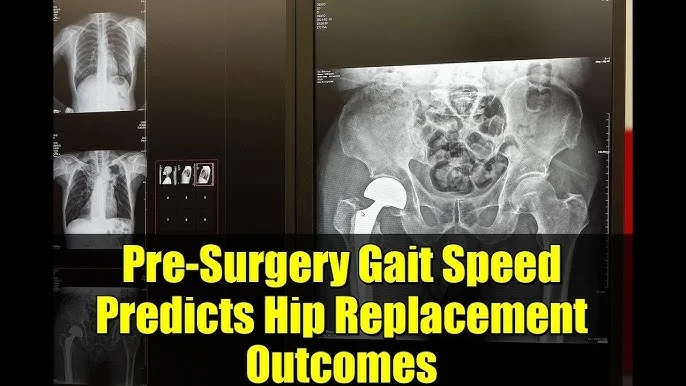


A new study published in The Journal of Bone and Joint Surgery has identified preoperative gait speed — the pace at which a patient walks — as a strong predictor of recovery and clinical outcomes after total hip arthroplasty (THA). The finding offers surgeons a simple and practical tool to assess when patients with hip osteoarthritis may benefit most from surgery.
Why walking speed matters
Total hip arthroplasty, widely known as hip replacement, is considered one of the most successful orthopaedic procedures. Yet patients often experience varied recovery timelines. Current criteria for deciding when to perform surgery rely on limited evidence, highlighting the need for objective predictors.
Researchers from Kyushu University examined whether preoperative clinical data could forecast recovery. They found that gait speed — a measure requiring only a stopwatch and a 10-metre walkway — was highly predictive of patient-reported outcomes.
About the study
The study followed 274 patients with hip osteoarthritis undergoing THA. Before surgery, researchers recorded symptom duration, pain intensity, hip range of motion, muscle strength and 10-metre free gait speed.
Postoperative progress was assessed using two validated tools:
- Oxford Hip Score (OHS): Measures hip pain and function
- Forgotten Joint Score-12 (FJS-12): Assesses how naturally a patient moves without noticing the artificial joint
Gait speed emerged as the strongest predictor of both outcomes.
Key findings
Patients who walked 1.0 metres/second or faster before surgery were significantly more likely to achieve excellent postoperative outcomes. A slower gait speed — below 1.0 m/s — indicated reduced likelihood of optimal recovery.
The researchers also found that hip flexion strength, hip range of motion and pain levels all influenced gait speed, highlighting the interconnected nature of lower-limb function.
The 1.0 m/s threshold aligns with existing criteria for sarcopenia and is consistent with typical walking speeds of older adults, generally 1.2–1.4 m/s in those aged 60–69.
Why the findings matter
Gait speed reflects combined cardiovascular, neurological and musculoskeletal performance, and is already known to predict falls, disability, institutionalisation and mortality. Because it requires minimal equipment and is easy to standardise, gait speed can be used widely, even in resource-limited settings.
The study suggests that patients may benefit from preoperative rehabilitation focused on improving hip mobility, muscle strength and overall physical activity to raise gait speed before undergoing surgery.
Researchers noted limitations: some patients used walking aids during testing, which may have inflated results, and the presence of arthritis in other joints may have affected gait speed.