







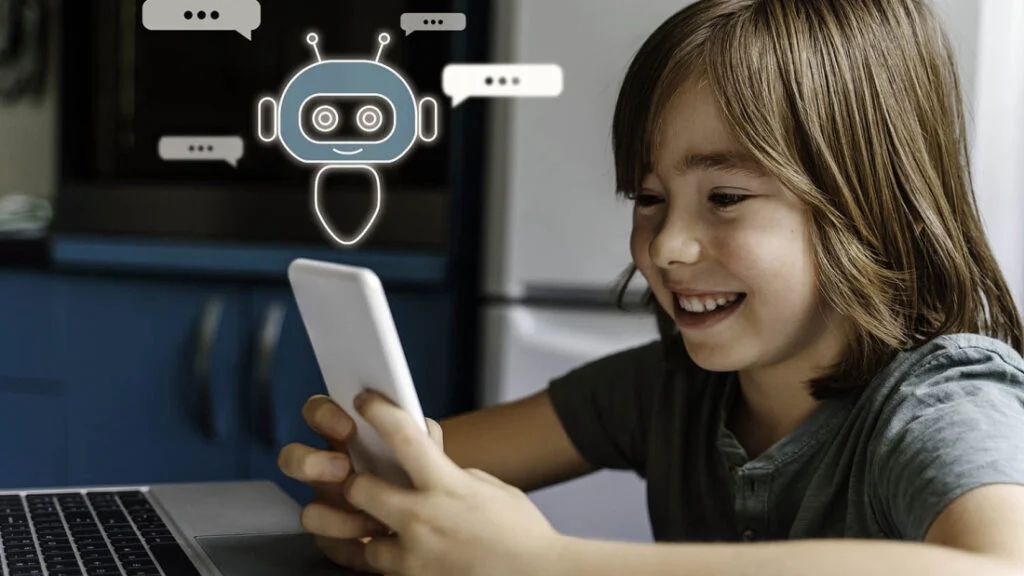


A major study has found that large numbers of teenagers affected by youth violence in England and Wales are turning to AI chatbots for emotional support, raising urgent questions about access to mental health care and the safety of relying on artificial intelligence during crises
Young people seek support where humans fall short
For Shan, an 18-year-old from Tottenham, the deaths of two close friends—one shot, one fatally stabbed—left her searching for help she felt unable to find elsewhere. After trying formal mental health services, she turned instead to AI.
Using Snapchat’s AI and later ChatGPT, Shan said the tool felt safer, more private and available around the clock. “The more you talk to it like a friend, it will talk to you like a friend back,” she said. “If I say, ‘Hey bestie, I need advice,’ chat will respond the same way.”
Her story reflects a wider trend. Research by the Youth Endowment Fund (YEF), involving more than 11,000 young people, shows that 40% of 13- to 17-year-olds affected by youth violence now turn to AI chatbots for support.
Both victims and perpetrators of violence were significantly more likely to use AI for emotional help than other teenagers.
Long waits and fear of judgement drive teens to AI
The report highlights two strong reasons young people prefer chatbots:
- Long waiting lists for mental health services
- Concerns about privacy and judgement
Teenagers on waiting lists—or those denied support—were far more likely to turn to AI tools than those already receiving in-person care.
Shan said she preferred AI because it did not judge her and would not disclose her feelings to teachers or parents. After believing her school therapist had shared confidential information, she began favouring anonymous digital conversations.
For boys involved in gangs, chatbots felt safer than approaching adults. Some feared that discussing money troubles or exit plans could lead to information being leaked to police or rival groups, endangering them.
Another teen told researchers: “The current system is so broken. If you’re going to wait one to two years for help or get answers in minutes from AI… the choice becomes obvious.”
One in four teens using AI for mental health support
The YEF study revealed that one in four teenagers had used an AI chatbot for mental health reasons in the past year. Black teenagers were twice as likely to use AI tools as white teenagers, pointing to significant disparities in access, trust and service responsiveness.
YEF chief executive Jon Yates said the findings show young people are struggling with unmet needs:
“Too many young people can’t get the support they need. It’s no surprise some are turning to technology. But children most at risk need a human, not a bot.”
Growing concerns about long-term AI interaction
While AI tools may feel comforting, safety experts warn that they are not designed for mental health treatment. Several lawsuits have been filed against OpenAI by families who believe extended AI engagement worsened crises, including the tragic death of 16-year-old Adam Raine in California.
OpenAI has denied the claims but acknowledged the need for stronger safeguards, saying it is improving systems to detect distress, de-escalate conversations and guide users toward real-world help. The company has said it may alert authorities when users discuss suicide seriously.
Researchers call for youth-led regulation
London-based youth violence and mental health researcher Hanna Jones warned that AI’s appeal can make it dangerously seductive for vulnerable teens.
“To have a tool that feels like a magic book solving your problems—of course young people will turn to it,” she said. “But it’s not designed for mental health support and regulation hasn’t caught up.”
Jones stressed the need for youth-led policymaking, arguing that adults who did not grow up in the digital age must not dictate solutions alone. “Young people need to be in the driving seat. We cannot imagine what it means to be a teenager today.”
A complex gap in mental health care
While AI can provide rapid comfort or information, mental health specialists say it cannot replace trained professionals who can interpret trauma, assess risk and offer long-term support.
The findings underline the growing pressure to fix fragmented youth mental health systems and provide support that is timely, trusted and empathetic.