







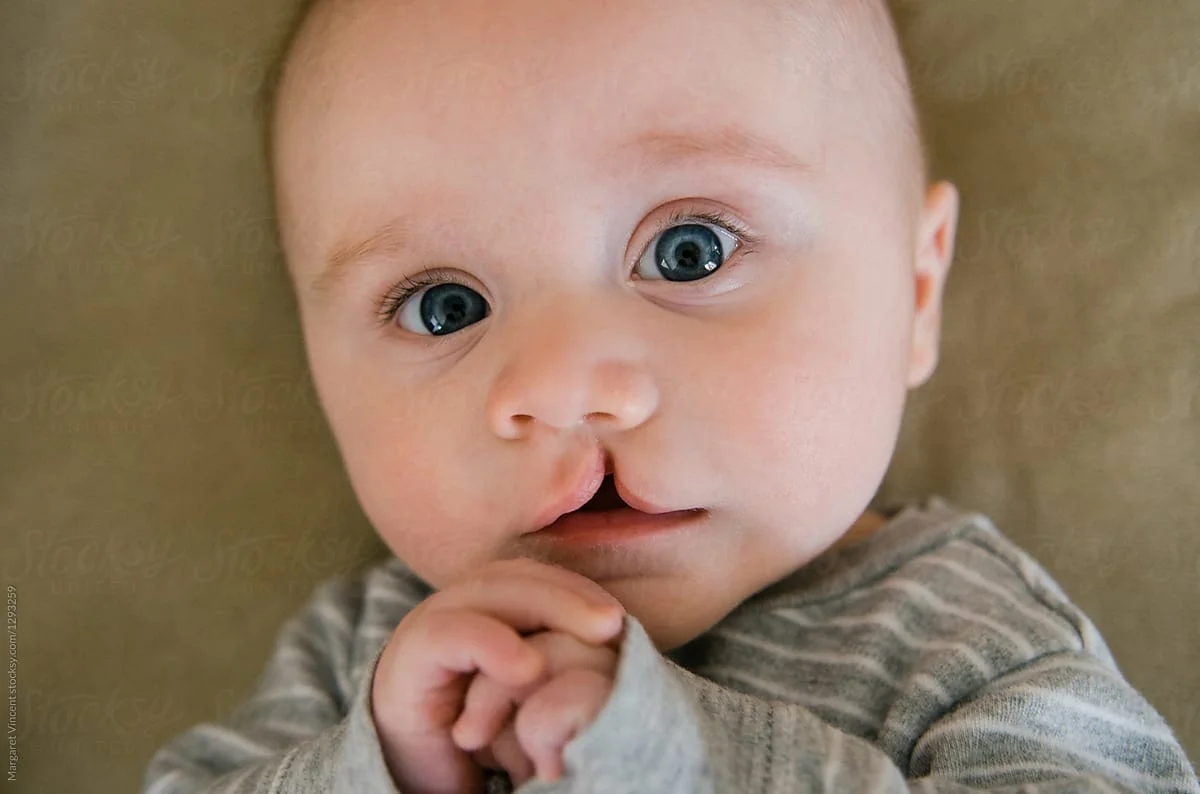


A heartfelt TikTok post by a young mother from the United Kingdom has resonated with thousands online, after she shared how a difficult medical conversation during pregnancy led to a life-affirming choice — and a joyful outcome.
A scan that changed everything
Georgia Lloyd-Sutton, now 28, revealed that during her 20-week anomaly scan, she was told her unborn baby had a cleft lip and palate and was asked whether she wanted to continue the pregnancy. At the time, she was pregnant during the height of the COVID-19 pandemic and attended the scan alone due to hospital restrictions.
“What I thought would be another happy scan suddenly became terrifying,” Georgia told Newsweek. The moment the sonographer asked whether cleft conditions ran in the family, she sensed something was wrong.
Difficult choices and frightening possibilities
Georgia was asked to return the same day for further scans, where doctors discussed the possibility of genetic syndromes such as Down syndrome, Patau syndrome and Edwards syndrome, conditions sometimes associated with cleft palate.
Although earlier screening tests showed low risk, Georgia opted for amniocentesis, wanting clarity despite the risks involved. The results brought reassurance — the cleft was not linked to a wider genetic condition.
“I was heartbroken,” she said. “I could feel her move, hear her heartbeat — and suddenly everything felt uncertain.”
‘It’s very important you say yes’
In her now-viral TikTok, Georgia shared her daughter’s ultrasound images before cutting to the present day — a smiling, confident five-year-old Paisley. The final message read: “It’s very important you say YES!”
Paisley underwent three surgeries before the age of one to repair her lip and palate. Today, she continues routine dental and surgical follow-ups but is otherwise thriving.
“She’s bright, funny, caring — and just a little sassy,” Georgia said with pride.
A common condition, often misunderstood
A cleft lip or palate occurs when the lip or roof of the mouth does not fully form during early pregnancy. In the UK, around one in 700 babies are born with some form of cleft, making it one of the most common facial differences.
While it can occur independently, it sometimes prompts further testing due to possible genetic links, making prenatal counselling especially sensitive.
Internet reacts with warmth
Georgia’s video has crossed 4.3 lakh views, with thousands of comments praising Paisley’s spirit and sharing similar experiences. Many mothers said they, too, were offered termination but trusted their instincts.
Paisley has met all developmental milestones, with speech therapists raising no ongoing concerns.
“She hasn’t just thrived as a cleft baby,” Georgia said. “She’s thrived as a five-year-old.”