







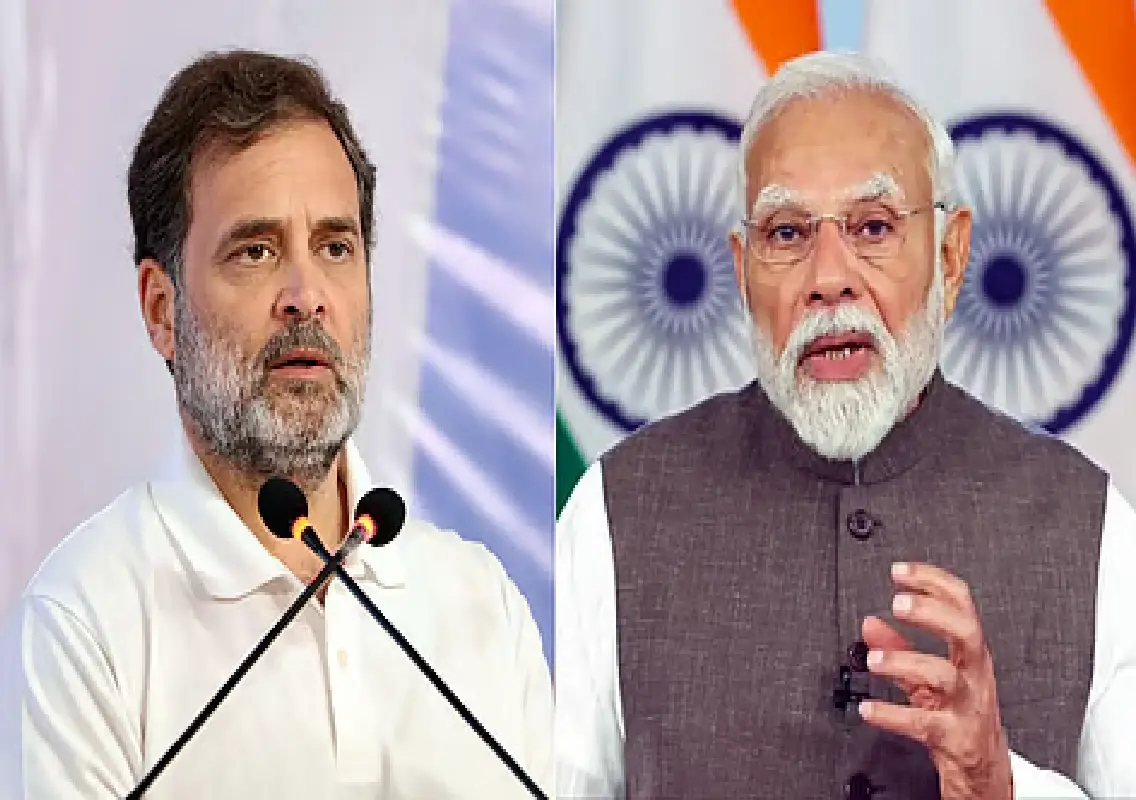


New Delhi: An unexpected 88-minute meeting between Prime Minister Narendra Modi and Leader of the Opposition Rahul Gandhi on Wednesday created a flutter across Parliament House, triggering discussions on what could have transpired behind closed doors. Although the meeting was scheduled to finalise names for key transparency and vigilance bodies, its unusual length set off speculation during the ongoing Winter Session.
Selection meeting that went beyond expectations
Under the Right to Information Act, the Prime Minister, a senior Union minister nominated by him, and the Leader of the Opposition form the high-level committee responsible for appointments to the posts of Chief Information Commissioner, Information Commissioners, Election Commissioners and the Vigilance Commissioner.
For this round, Union Home Minister Amit Shah attended as the Prime Minister’s nominee. Rahul Gandhi arrived at the Prime Minister’s Office at 1 pm, and the meeting began by 1.07 pm. As minutes turned into nearly an hour and a half, MPs in the nearby corridors began exchanging guesses about why the meeting was stretching far longer than usual.
Wider agenda discussed
When Rahul Gandhi finally stepped out after 88 minutes, it became clear that the agenda had expanded significantly. Sources said the deliberations covered not only the appointment of a new Chief Information Commissioner but also the selection of eight Information Commissioners and one Vigilance Commissioner.
Such meetings routinely witness objections from Opposition representatives, and this one was no different. Gandhi reportedly submitted his dissent note in writing, detailing concerns over both the selection criteria and the representational balance among shortlisted candidates.
Rahul Gandhi flags caste representation gaps
According to Congress sources, Gandhi strongly objected to what he termed the “near-total absence” of candidates from marginalised communities. He is learnt to have told the committee that nearly 90 per cent of India’s population—comprising Dalits, Adivasis, OBC/EBC groups, and minorities—had “practically no presence” in the proposed list.
Sources said he sought caste-wise data of all applicants and pointed out that less than 7 per cent of the applicant pool was from Bahujan communities. Gandhi argued that such numbers raised fundamental questions about inclusion within institutions tasked with upholding transparency.
Congress sources added that Gandhi highlighted structural barriers that hinder marginalised groups from entering oversight bodies that shape the country’s accountability ecosystem. Government officials, meanwhile, maintained that the selection process was already at an “advanced stage” and offered no formal comment on caste-related data.
Buzz intensifies in Parliament
While the meeting was underway, MPs from several parties were seen discussing its possible implications. With eight vacancies—including that of the Chief Information Commissioner—the Central Information Commission (CIC) has been functioning with just two commissioners: Anandi Ramalingam and Vinod Kumar Tiwari.
The backlog has risen steadily. As per September figures, the CIC had a pending caseload of 30,838 appeals and complaints. The post of Chief Information Commissioner has remained vacant since Hiralal Samariya retired on 13 September this year.
Given the importance of the commission in ensuring citizens’ access to information, the prolonged vacuum has drawn concern from transparency advocates. Officials indicated that formal announcements on appointments are expected soon.
Legal framework for appointments
Under Section 12(3) of the RTI Act, the Prime Minister chairs the selection committee. The Leader of the Opposition and a Union minister nominated by the PM complete the three-member panel. Their recommendation forms the basis for presidential approval of appointments.
Conclusion
The unusually long meeting has fuelled political speculation, but it has also underscored deeper issues around representation, transparency and the functioning of key oversight institutions. As the government prepares to finalise appointments, attention will remain focused on whether concerns raised by the Opposition find space in the final list of names.