


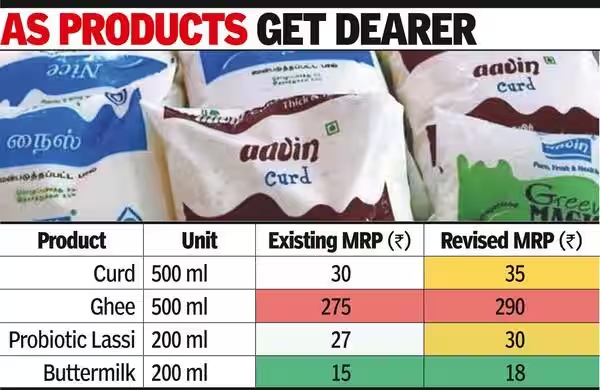


Chennai: Tamil Nadu’s state-owned dairy cooperative, Aavin, has increased the prices of several dairy products, including ghee, butter, curd, milk-based sweets, lassi and cookies, ahead of Diwali. The revised rates will come into effect from Wednesday, October 28, 2026, marking the first price increase by the cooperative under Chief Minister C Joseph Vijay’s Tamilaga Vettri Kazhagam (TVK) government.
The revision has drawn criticism from AIADMK chief and former Chief Minister Edappadi K Palaniswami, who has urged the state government to withdraw the increase, arguing that it would add to household expenses during the festive season.
Aavin, meanwhile, has defended the decision, citing rising production costs and comparisons with prices charged by private dairy companies and other state cooperatives. The organisation has maintained that its products will remain comparatively affordable despite the revision.
Aavin ghee and butter prices increased
Ghee and butter are among the products affected by the latest price revision. The price of a 100-ml pack of ghee has increased from Rs 80 to Rs 95, while the 200-ml pack will now cost Rs 180, compared with the earlier price of Rs 160.
The price of a 100-gram pack of butter has also been increased from Rs 60 to Rs 70.
The revised prices will apply from October 28, according to Aavin’s official announcement. The increase comes just ahead of Diwali, when households typically purchase ghee, butter, curd and sweets for cooking, festive meals and religious offerings.
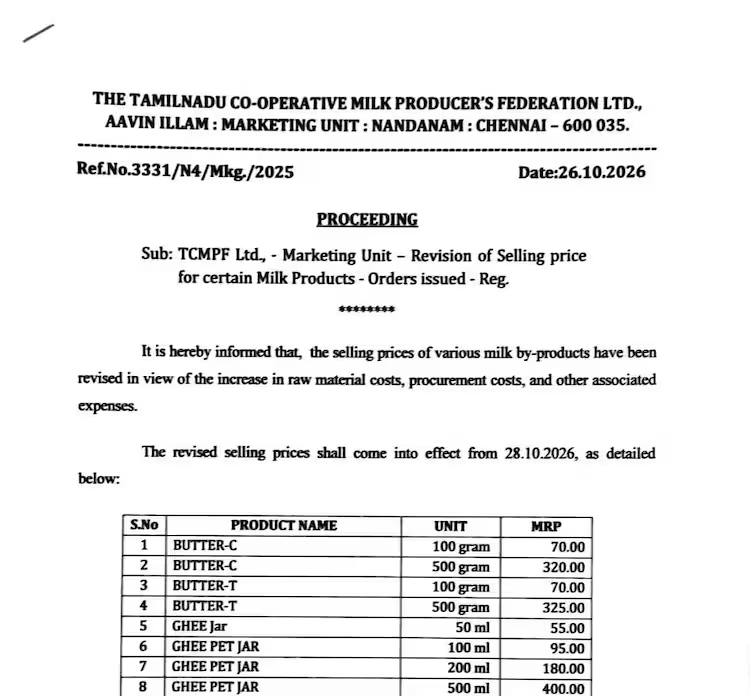
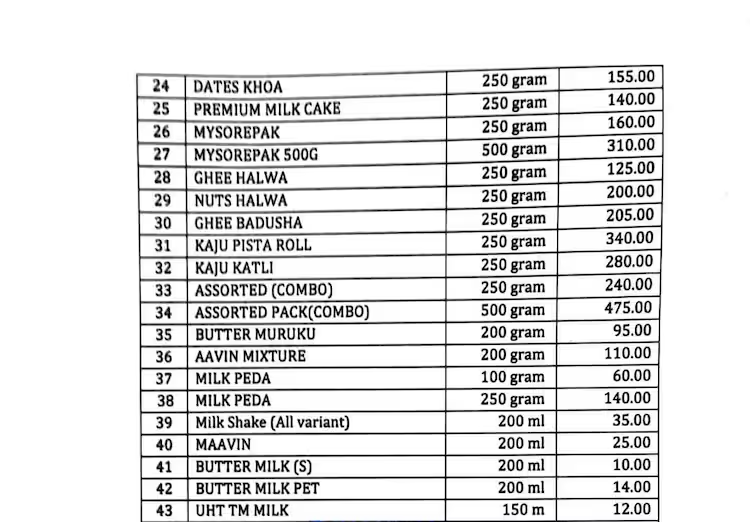
The cooperative has also revised prices for curd, milk-based sweets, lassi and cookies. However, the specific revised rates for these products were not detailed in the information provided in the announcement.
The timing of the increase has become a point of political contention, with the opposition arguing that higher prices could place an additional burden on consumers during a period of increased festive spending.
Revised prices of selected Aavin products
| Product | Earlier price | Revised price |
|---|---|---|
| Ghee, 100 ml | Rs 80 | Rs 95 |
| Ghee, 200 ml | Rs 160 | Rs 180 |
| Butter, 100 g | Rs 60 | Rs 70 |
The increase in the 100-ml ghee pack amounts to Rs 15, while the 200-ml pack has become costlier by Rs 20. The 100-gram butter pack has seen a price increase of Rs 10.
Consumers who regularly purchase these products may therefore face higher expenses, particularly if they buy larger quantities for Diwali preparations.
EPS criticises Vijay government over festive price hike
Palaniswami criticised the TVK-led government over the timing of the revision, arguing that the increase had come when demand for ghee and sweets was likely to rise ahead of Diwali.
The former Chief Minister said the government should have considered the additional financial pressure that consumers could face during the festive period. He also argued that traders would generally try to attract customers through discounts and promotional offers during the season.
Taking a swipe at the government, Palaniswami compared its approach to that of a corporate villain in a film and questioned why the price increase had been announced at this time.
He urged the state government to roll back the revised rates so that people could celebrate Diwali without facing an additional financial burden.
The criticism has placed the first Aavin price revision under Vijay’s administration in the spotlight, with the opposition focusing on its impact on consumers during a major festival.
Aavin cites rising production costs
Aavin has said the price revision was necessary because of increasing production expenses. The cooperative also referred to a study of prices charged by private dairy companies and other state cooperative dairies.
According to the organisation, its products will continue to be priced below comparable offerings from private companies and other cooperative dairies even after the increase.
Aavin has argued that the revision is not intended primarily to generate profits. Instead, it said the additional revenue would help cover production costs, maintain the competitiveness of its products and support the cooperative’s operations.
The organisation has also emphasised the importance of maintaining a balance between offering products at reasonable prices to consumers and ensuring that dairy farmers receive adequate returns.
The price revision, it said, forms part of efforts to sustain the cooperative milk procurement system while responding to changes in operating costs.
Aavin says additional revenue will benefit milk producers
A key argument put forward by Aavin is that more than 90 per cent of the additional revenue generated through the price revision will benefit milk producers.
The cooperative said the move would help improve farmers’ income and strengthen the milk procurement network that supports its operations.
As a state-owned cooperative, Aavin connects milk producers with consumers through its procurement, processing and distribution system. Its pricing decisions therefore affect both the cost of dairy products for households and the revenue available to support the cooperative’s operations.
Aavin has maintained that the revised prices are intended to protect dairy farmers’ livelihoods while allowing the organisation to continue supplying milk products to consumers.
The claim that more than 90 per cent of the additional revenue will benefit producers is central to the cooperative’s explanation for the increase. The extent of the eventual benefit will depend on how the additional revenue is distributed and used within the system.
Diwali demand adds to the debate
The price increase comes at a time when many households are preparing for Diwali, a period associated with buying sweets, preparing special meals and making traditional offerings.
Ghee and butter are commonly used in festive cooking, while curd, lassi and milk-based sweets are also purchased by consumers during the season. Higher prices across several product categories could therefore affect household spending, particularly for families that rely on Aavin products.
For the opposition, the timing of the revision is a reason for the government to reconsider the decision. Palaniswami has called for a rollback, saying consumers should not face an additional burden during the celebrations.
Aavin, however, has defended the increase on cost and producer-income grounds, arguing that its products will remain competitively priced.
The debate reflects the challenge faced by dairy cooperatives in balancing consumer affordability with rising production expenses and the need to provide sustainable returns to milk producers.
What consumers need to know
The revised Aavin prices will take effect on October 28, 2026. Consumers purchasing the affected products should check the updated rates at Aavin outlets and authorised retail points.
The confirmed changes include increases in the prices of 100-ml and 200-ml ghee packs and the 100-gram butter pack. Aavin has also announced revisions for curd, milk-based sweets, lassi and cookies, although the specific revised prices for these products were not available in the information provided.
The state government has faced demands from the AIADMK to withdraw the increase, while Aavin has maintained that the revision is required to cover production costs and support dairy farmers.
With Diwali approaching, the revised rates are likely to remain a focus of public discussion. Whether the government considers a rollback or retains the new prices will determine how the issue develops in the coming days.