







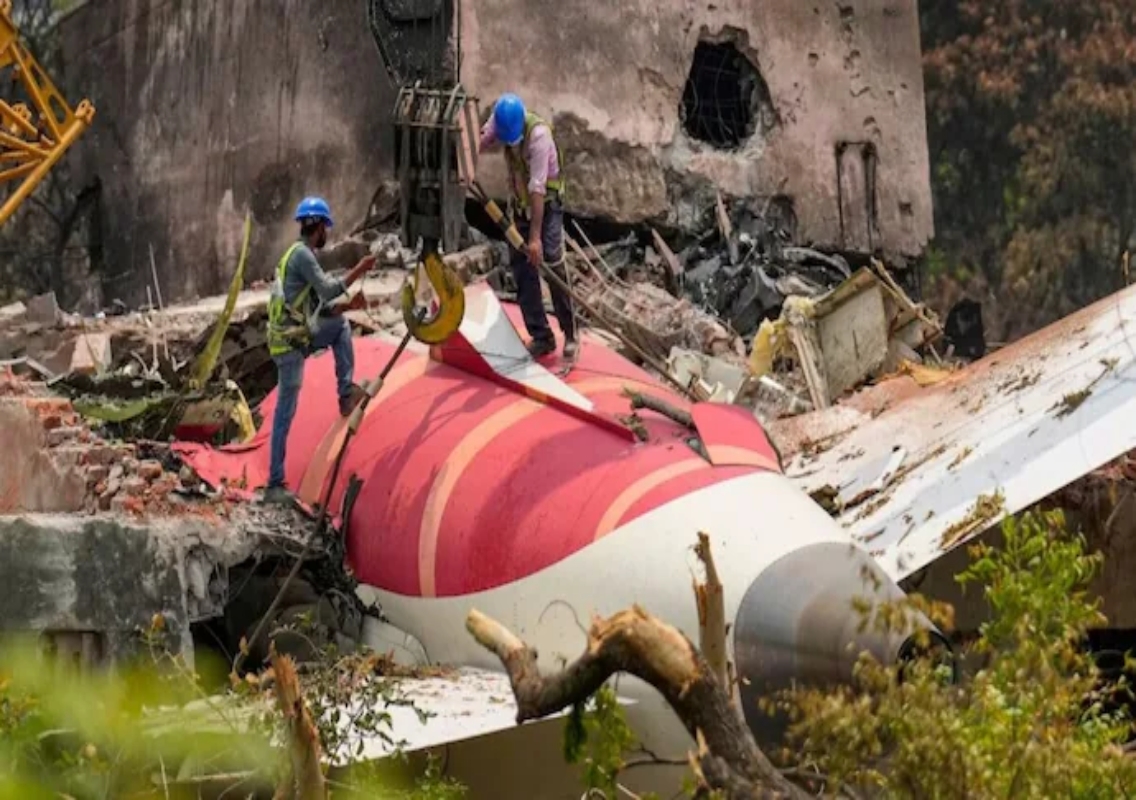


New Delhi: The Federation of Indian Pilots (FIP) has urged the Ministry of Civil Aviation to review the submissions made by pilots’ representatives in connection with the investigation into the Air India AI-171 crash, which killed 260 people in Ahmedabad in June 2025.
The request comes as the Aircraft Accident Investigation Bureau (AAIB) continues work on its draft final report into the crash of the Boeing 787-8 Dreamliner. The aircraft crashed shortly after taking off from Ahmedabad for London Gatwick on June 12, 2025, killing 241 people on board and 19 people on the ground. One passenger survived.
The FIP has previously raised concerns about aspects of the investigation and has argued that technical factors should be examined alongside human factors. Its latest intervention seeks a review of material submitted by the pilots’ body before the final report is completed.
FIP seeks review of pilot submissions
The Federation of Indian Pilots has been involved in the legal and investigative proceedings surrounding the AI-171 crash and has questioned aspects of the investigation.
The pilots’ body has previously disputed suggestions that the crash could be attributed to pilot action without conclusive evidence. It has also raised questions about aircraft systems, maintenance information and other technical evidence that it believes should be examined as part of the investigation.
The latest request comes at a critical stage because the AAIB is preparing its draft final report. The Supreme Court was informed in July that the draft report was expected to be ready in October and would be submitted to the court in a sealed cover.
The FIP’s request does not itself establish the cause of the crash. Any conclusions regarding the accident will depend on the evidence examined by the AAIB and the findings contained in its final report.
AI-171 crash killed 260 people
Air India flight AI-171 was operating from Ahmedabad to London Gatwick when it crashed shortly after take-off on June 12, 2025.
The Boeing 787-8 Dreamliner came down in an area containing the B.J. Medical College hostel. The accident killed 241 of the 242 people aboard the aircraft and 19 people on the ground. British national Viswashkumar Ramesh was the only passenger to survive.
The crash became one of India’s deadliest aviation disasters and triggered an extensive investigation involving aircraft systems, flight recorder data, engines, maintenance records, operational information and human factors.
The AAIB has said the investigation is being conducted under established national and international procedures and is intended to identify safety lessons rather than assign blame or liability.
Preliminary report examined engine shutdown
The AAIB’s preliminary report, released in July 2025, found that the fuel-control switches for both engines moved from the “RUN” position to “CUTOFF” shortly after take-off.
The switches transitioned within about one second of each other, resulting in the shutdown of both engines. The report also recorded a cockpit exchange in which one pilot asked the other why the switches had been moved.
However, the preliminary report did not constitute the final determination of the cause of the accident.
The AAIB has continued examining additional evidence since the preliminary findings were published. The agency said in June 2026 that investigators had made significant progress in analysing aircraft systems, flight recorder data, engine-related components, maintenance and operational records and other evidence.
FIP has raised technical questions
The Federation of Indian Pilots has argued that technical possibilities should receive detailed attention during the investigation.
In earlier submissions, the organisation raised questions about aircraft communications and maintenance information, including ACARS messages that it said should be examined in greater detail. The FIP has also questioned whether all relevant technical evidence was adequately considered before preliminary conclusions were discussed publicly.
These remain submissions and concerns raised by the pilots’ body rather than established findings of the AAIB.
The final investigation is expected to assess the available evidence as a whole, including flight recorder information, aircraft systems, maintenance history, operational circumstances and human factors.
Draft final report expected in October
The timing of the FIP’s latest request is significant because the AI-171 investigation is approaching its final stage.
In July, the Supreme Court was told that the AAIB’s draft final report was expected to be filed before the court in the first week of October in a sealed cover. The court was also informed that the FIP could submit its inputs to the AAIB, which could consider them if necessary during the investigation.
The AAIB has maintained that the investigation must be allowed to proceed according to established procedures and that sensitive evidence cannot be publicly disclosed during the process.
The bureau has specifically told the Supreme Court that cockpit voice recordings and airborne image recordings are protected by confidentiality provisions under the Aircraft (Investigation of Accidents and Incidents) Rules, 2025.
Investigation remains ongoing
The government investigation has not yet publicly established a final cause for the crash.
On the first anniversary of the disaster in June, the AAIB said evidence from multiple areas was still being analysed in an integrated manner. The bureau cautioned against speculation until the investigation was completed.
Civil Aviation Minister Ram Mohan Naidu had also said the investigation was in its final phase but stressed that the process should not be rushed.
The final report is expected to provide a more comprehensive account of the sequence of events and the factors that contributed to the disaster.
Families and aviation sector await findings
The AI-171 crash has continued to raise questions among victims’ families, pilots and the wider aviation industry.
The FIP’s request for the ministry to review its submissions adds another layer to the ongoing process, particularly concerning the examination of technical evidence and the treatment of human factors.
At the same time, the AAIB remains responsible for completing the statutory accident investigation. Until its final findings are released, claims about the precise cause of the crash remain subject to investigation.
The upcoming draft report is therefore expected to be closely watched by the families of victims, aviation professionals, regulators and aircraft manufacturers as authorities work towards establishing the facts surrounding the tragedy.