







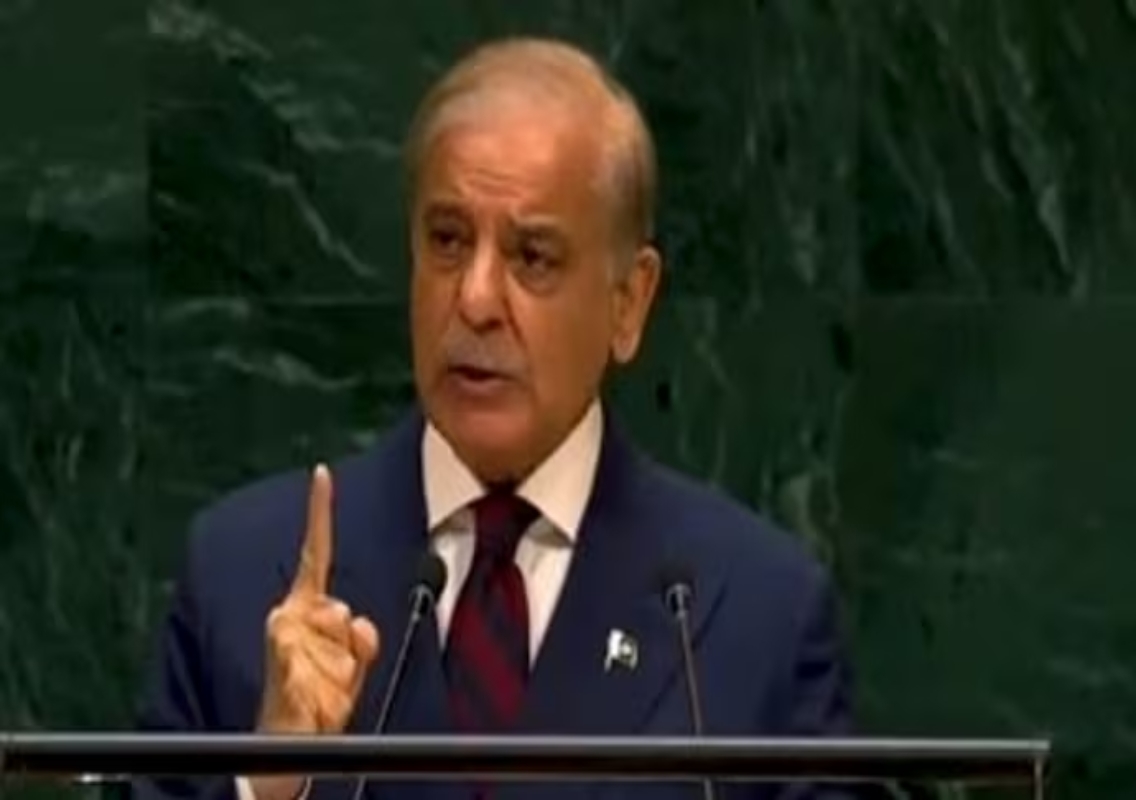


New Delhi: An Indian diplomat’s reaction during Pakistan Prime Minister Shehbaz Sharif‘s address at the United Nations General Assembly (UNGA) has gone viral on social media after Sharif claimed victory for Pakistan during the 2025 conflict with India.
The video shows Indian diplomat R. Srinivas appearing to smile and smirk as Sharif spoke about Pakistan’s version of the conflict and Operation Sindoor. The moment was captured by cameras at the UN and subsequently circulated widely online.
Sharif used his address at the 81st UNGA session in New York to revisit the 2025 India-Pakistan military confrontation, while also raising the Kashmir issue and the Indus Waters Treaty. He credited US President Donald Trump for what he described as a timely intervention during the conflict.
What happened during Shehbaz Sharif’s speech
Sharif’s UNGA address focused on Pakistan’s position on several long-standing issues with India.
While referring to the 2025 conflict, the Pakistan Prime Minister presented Islamabad’s account of the military confrontation and claimed that Pakistan had emerged victorious. The speech also included praise for the Pakistani military leadership.
Sharif thanked Trump for his intervention, saying the US President’s role helped prevent a wider conflict and saved lives in South Asia. India has consistently rejected the assertion that a third party brokered the understanding that brought the fighting to an end.
As Sharif made the claims, cameras at the UN captured the reaction of members of the Indian delegation. Among them was diplomat R. Srinivas, whose apparent smirk became the focus of the viral video.
The reaction itself was not accompanied by a public statement from Srinivas in the report. The video has instead drawn attention because of its timing during Sharif’s remarks.
India and Pakistan have different accounts of 2025 conflict
The exchange comes more than a year after India launched Operation Sindoor on May 7, 2025, following the April 22 Pahalgam terror attack in which 26 civilians were killed.
India said the operation targeted terrorist infrastructure in Pakistan and Pakistan-occupied Kashmir. Pakistan subsequently responded with attacks, leading to several days of military escalation before the two sides reached an understanding on cessation of hostilities on May 10.
The circumstances surrounding the cessation remain a point of disagreement between New Delhi and Islamabad.
Pakistan has credited Trump and the United States with helping bring the conflict to an end. Trump has also repeatedly claimed that his intervention helped stop the fighting. India, however, has maintained that the cessation understanding followed direct communication between the Directors General of Military Operations of the two countries and has rejected claims of third-party mediation.
Sharif again highlighted Trump’s role during his latest UNGA address, while India’s position on the matter remains unchanged.
Sharif raises Kashmir at UN
The Pakistan Prime Minister also raised the Kashmir issue during his UN speech and called for what he described as a “just and fair solution”.
According to India Today, Sharif argued that resolving Kashmir was necessary to prevent South Asia from returning to the brink of conflict witnessed in 2025. India has repeatedly rejected Pakistan’s position on Kashmir at international forums.
New Delhi maintains that Jammu and Kashmir is an integral and inalienable part of India and has rejected Pakistan’s attempts to internationalise the issue.
The Kashmir reference was expected to form part of India’s response under the UN’s Right of Reply mechanism.
Operation Sindoor claims remain disputed
The latest UN exchange also highlights the continuing differences between India and Pakistan over their respective accounts of Operation Sindoor.
Pakistan has repeatedly presented its own assessment of the military confrontation, including claims about damage inflicted on Indian military facilities. India has rejected several such claims.
In September 2026, Pakistan’s Air Force released an animated video making extensive claims about the operation, including alleged strikes on Indian air bases and military assets. India Today reported that the video did not provide independent photographic or satellite evidence to substantiate several of the claims made in it.
India, meanwhile, has released its own imagery and operational details regarding strikes during Operation Sindoor. The two countries therefore continue to offer substantially different accounts of the military outcome.
Indian diplomat’s viral reaction draws attention
Against this background, the brief reaction from Srinivas during Sharif’s speech attracted considerable attention online.
The India Today report described the diplomat’s expression as a dismissive smirk, while the video itself shows him reacting as Sharif discussed Pakistan’s version of the 2025 conflict. The clip subsequently spread across social media platforms.
The viral response reflects the broader diplomatic disagreement playing out between India and Pakistan at the UN, where both countries have continued to present competing positions on terrorism, Kashmir and the events of 2025.
The incident also follows Sharif’s recent interactions with journalists in New York. A day before his UNGA address, he declined to answer questions from an Indian reporter about Pakistan’s alleged harbouring of terrorists and the prosecution of Lashkar-e-Taiba founder Hafiz Saeed.
UN remains platform for competing positions
The latest exchange demonstrates how the UNGA continues to serve as a platform where India and Pakistan present their respective positions on contentious bilateral issues.
Sharif’s speech brought Kashmir, the Indus Waters Treaty and the 2025 conflict back into the international discussion. India is expected to use its Right of Reply to respond to the Pakistani Prime Minister’s remarks and reiterate its positions on terrorism and bilateral issues.
The viral video of R. Srinivas has consequently become a separate point of attention from the diplomatic substance of the speeches. While the expression has generated widespread discussion online, the larger dispute remains centred on the competing accounts presented by New Delhi and Islamabad regarding the 2025 conflict and their broader bilateral relationship.