







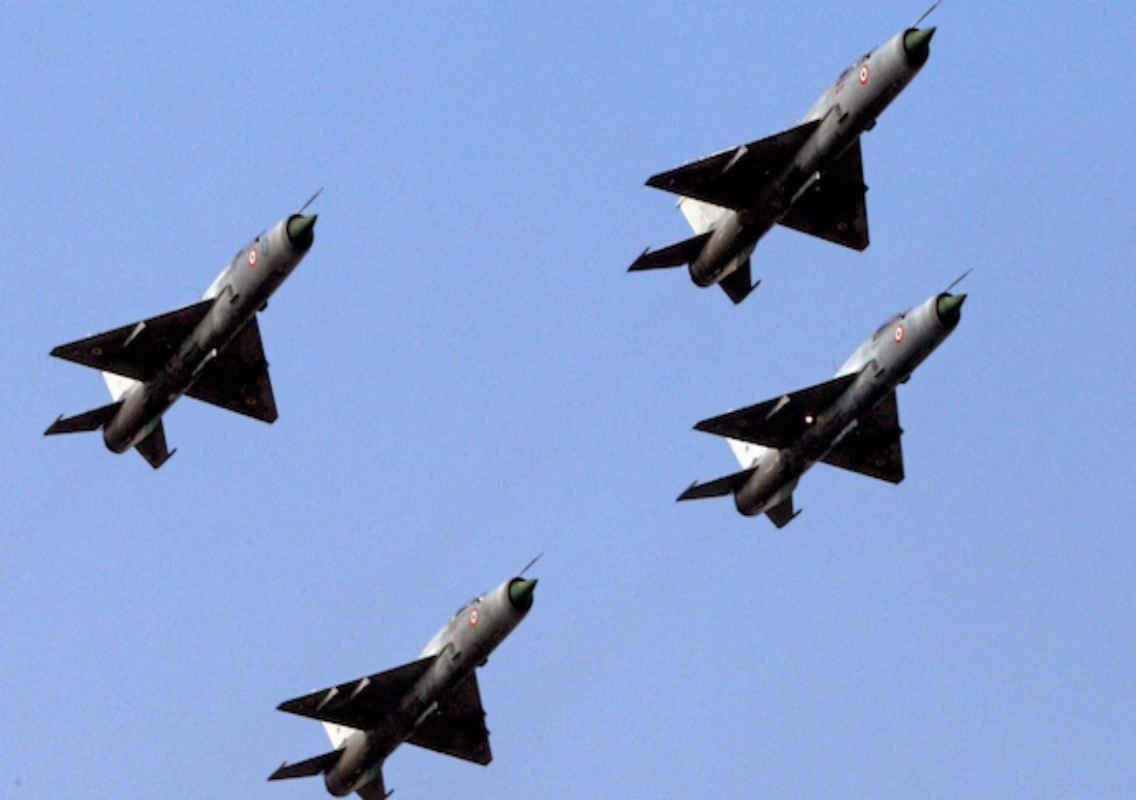


New Delhi: A year after the Indian Air Force (IAF) retired its iconic MiG-21 fighter jets, the aircraft are entering a new phase of their long military history. While some will continue to be preserved for heritage purposes, others could become museum displays, provide usable components or have parts of their material repurposed for educational purposes.
The MiG-21 completed more than six decades of service with the IAF, with the final operational sortie taking place from Chandigarh in September 2025. The aircraft had been gradually phased out over several years, with IAF units retiring almost every year between 2015 and 2022, except in 2021.
The retirement marked the end of the operational career of India’s first supersonic fighter and one of the most recognisable aircraft in the country’s military aviation history.
Some MiG-21s to be preserved
Retirement from combat service does not mean that every MiG-21 will immediately disappear from public view.
A senior IAF official told India Today Digital that one or two aircraft would be made available for the IAF’s heritage flight. These aircraft would be maintained for heritage and display purposes rather than operational combat duties.
The IAF already maintains vintage aircraft such as the Tiger Moth, Harvard and Dakota, which are used during air displays and ceremonial flypasts. The preservation of selected MiG-21s would allow future generations to see an aircraft that played a major role in the development of India’s military aviation.
Other aircraft are expected to be made available as museum or static display pieces at prominent locations, subject to the required procedures.
Such displays are already common in India, where retired military aircraft are placed outside defence establishments, cantonments, museums and other prominent public locations.
What happens to the remaining aircraft?
Not every retired fighter can be preserved in its entirety.
Another senior IAF officer told India Today Digital that components from decommissioned aircraft that remain usable will be saved, while other material will be disposed of through the prescribed process.

Some recovered material could also be made available to engineering colleges for training and educational purposes. This could allow students to study components and systems from an aircraft that formed an important part of India’s aviation history.
The fate of every individual MiG-21 will therefore depend on its condition, heritage value and the applicable disposal process.
Will retired MiG-21s be scrapped?
There is no official confirmation that specific retired MiG-21 aircraft will be scrapped.
According to India Today Digital, an IAF officer contacted for clarification did not comment on whether some of the aircraft would eventually be scrapped. Military aircraft that reach the end of their technical or calendar life can be disposed of through prescribed procedures.
At least one retired MiG-21 airframe, however, has already found an unusual second life. An older variant is displayed outside a private establishment near the Rohtak-Delhi highway in Haryana. Its engine has reportedly been removed, and the airframe was purchased through an auction in Pathankot, Punjab.
Private ownership of former combat aircraft is relatively uncommon in India. In countries such as the United States, retired military aircraft can enter preservation programmes, private collections or long-term storage facilities.
MiG-21’s six-decade legacy
The MiG-21 was inducted into the IAF in the 1960s and went on to become one of the most important fighter aircraft in the country’s history.

At its peak during the 1980s and 1990s, MiG-21s accounted for nearly 60% of the IAF’s combat fleet, according to the Ministry of Defence. The aircraft was also described by the IAF as the “combat backbone” of the force during a significant period of its service.
The aircraft was also closely associated with generations of Indian fighter pilots. Former Air Chief Marshal NAK Browne said in 2013 that five generations of combat pilots had begun their careers on the MiG-21. The IAF noted at the time that around 90% of serving fighter aircrew had flown a MiG variant at some stage of their careers.
The aircraft also served in major conflicts and military operations involving India, adding to its historical significance.
A long service life came with a heavy cost
The MiG-21’s history also includes a substantial number of accidents.
Then Defence Minister A.K. Antony told Parliament in 2012 that 482 of the 872 MiG-21 aircraft inducted into the IAF had crashed, resulting in the deaths of more than 170 fighter pilots. India Today also reported that there had been more than 20 such incidents since 2010.
Five MiG-21 Bisons were lost in accidents in 2021, with three pilots killed. In May 2023, a MiG-21 crashed near Suratgarh in Rajasthan, killing three civilians after aircraft debris struck a house. The fleet was subsequently grounded.
The aircraft had originally been designed for a service life of around 20 to 25 years and was expected to leave Indian service by the mid-1990s. However, Hindustan Aeronautics Limited (HAL) eventually built more than 650 MiG-21s across different variants for India.
Delays in the development and induction of replacements, including the Tejas programme, contributed to the aircraft’s exceptionally long operational career. By its final years, only 36 MiG-21s remained in service.
From frontline fighter to aviation heritage
The retirement of the MiG-21 does not mark the complete disappearance of the aircraft from India’s aviation landscape.
A small number will remain associated with the IAF’s heritage flight, while others are expected to be displayed at museums and prominent locations. Components that retain practical value may be preserved or used for educational purposes, while aircraft and material that cannot be retained may undergo the prescribed disposal process.
The transition reflects the different afterlives of military aircraft once they leave operational service. For the MiG-21, which remained part of India’s fighter fleet for nearly 63 years despite being designed for a much shorter service life, its next chapter will largely be about preservation and remembrance rather than combat.
The aircraft’s operational career may have ended, but selected MiG-21s are set to remain visible as reminders of an era that shaped generations of Indian Air Force pilots and India’s military aviation history.