







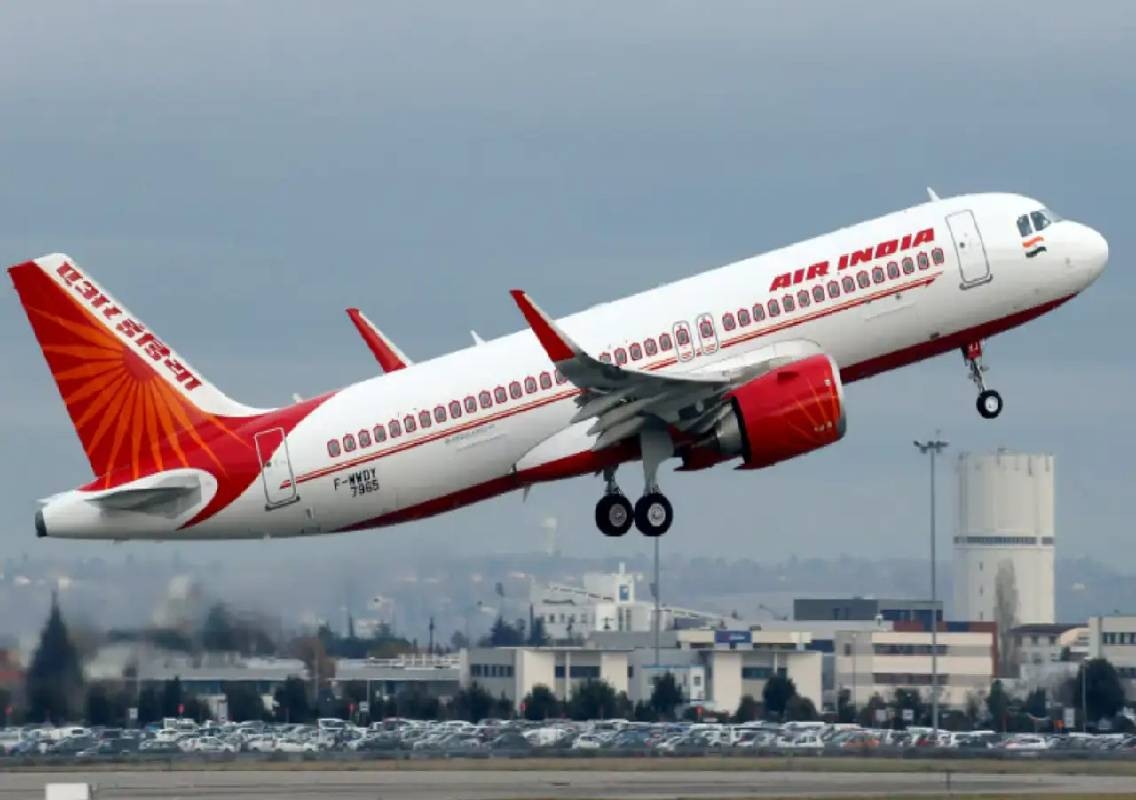


Amritsar: An Air India flight operating from Delhi to Amritsar briefly entered Pakistani airspace while performing a go-around manoeuvre at Sri Guru Ram Dass Jee International Airport on June 22. The airline has confirmed the incident and said an internal investigation is currently underway.
The aircraft, operating as flight AI479, was approaching Amritsar when the crew executed a go-around procedure, a standard aviation safety manoeuvre that requires a pilot to abort a landing attempt and climb away from the runway for another approach or diversion.
According to Air India, the aircraft “marginally infringed” into Pakistan’s airspace during the manoeuvre.
Air India confirms airspace infringement
In an official statement, Air India acknowledged the incident and said the crew briefly crossed into neighbouring Pakistani airspace while managing the go-around procedure.
“The crew operating flight AI479 from Delhi to Amritsar on 22 June had marginally infringed into the Pakistan airspace while manoeuvring a go-around at Amritsar airport,” the airline stated.
The airline emphasised that the matter has been formally reported to aviation regulators and that a detailed internal review has been initiated to determine the circumstances surrounding the incident.
Air India reiterated that passenger and crew safety remains its highest priority and that all necessary procedures are being followed during the investigation.
What is a go-around manoeuvre?
A go-around is a routine aviation safety procedure used when pilots determine that landing conditions are not ideal or when operational requirements prevent a safe landing.
During a go-around, the pilot increases engine power, climbs away from the runway and either attempts another landing or diverts to an alternate airport if necessary.
Such manoeuvres may be triggered by factors including runway congestion, weather conditions, unstable approaches, aircraft separation requirements or air traffic control instructions.
Aviation experts note that go-arounds are a normal part of flight operations and are designed to enhance safety rather than indicate an emergency.
Flight reportedly diverted to Delhi
According to sources, the aircraft was subsequently diverted to Delhi following operational considerations at Amritsar airport.
Reports indicate that congestion and traffic management issues influenced the decision. Delhi was reportedly used as the alternate diversion airport in accordance with established standard operating procedures.
Air traffic controllers and flight crews routinely coordinate diversion decisions to ensure safe aircraft operations while maintaining adequate fuel reserves and compliance with regulatory requirements.
The airline has not disclosed the exact duration or extent of the airspace infringement.
Regulatory authorities informed
Air India stated that the incident has been reported to relevant aviation authorities for review.
In aviation, any unauthorised or unintended airspace entry is generally documented and examined to assess whether operational, navigational or procedural factors contributed to the occurrence.
Regulatory reviews help identify lessons that can improve operational safety and prevent similar incidents in the future.
Officials have not indicated any safety concerns arising from the brief infringement, and there has been no suggestion of any threat to passengers or crew.
India-Pakistan airspace sensitivities
The incident comes amid heightened sensitivity regarding airspace management near the India-Pakistan border, particularly in Punjab where airports such as Amritsar are located close to international airspace boundaries.
Commercial airlines operating in border regions follow carefully coordinated flight paths and air traffic control procedures to ensure compliance with international aviation regulations.
Even minor deviations are typically recorded and reviewed as part of standard aviation oversight mechanisms.
Industry experts point out that such reviews are routine and form part of maintaining high safety standards in civil aviation operations.
Investigation underway
Air India’s internal investigation is expected to examine flight data, cockpit procedures, air traffic control communications and operational conditions at the time of the incident.
The findings will help determine the precise sequence of events that led to the temporary entry into Pakistani airspace.
The airline has not announced a timeline for the completion of the investigation.
Conclusion
While Air India has confirmed that flight AI479 briefly entered Pakistani airspace during a go-around at Amritsar airport, the airline has stressed that safety protocols were followed and the matter is under review. Regulatory authorities have been informed, and an internal investigation will determine the factors behind the incident.