







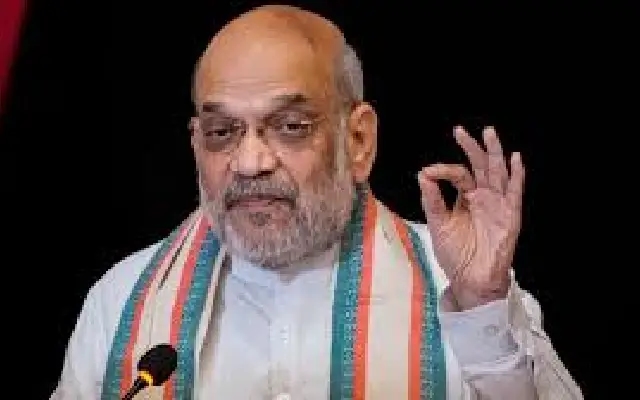


Union Home Minister Amit Shah on Wednesday introduced three key legislations proposing the removal of elected leaders—including the prime minister, chief ministers, and union/state ministers—if they remain in custody for 30 consecutive days on serious criminal charges.
The three bills are:
- Constitution (One Hundred and Thirtieth Amendment) Bill, 2025
- Government of Union Territories (Amendment) Bill, 2025
- Jammu and Kashmir Reorganisation (Amendment) Bill, 2025
Shah clarified that the bills will be referred to a Joint Parliamentary Committee (JPC) for detailed examination.
The move triggered chaos in Parliament, with opposition parties alleging that the BJP-led NDA government was attempting to destabilise opposition-ruled states. AIMIM MP Asaduddin Owaisi strongly objected, arguing the bills erode the principle of separation of powers and empower investigative agencies to act as “judge and executioner.” He warned this could pave the way for a “police state.”
Congress MP Manish Tewari termed the legislation “destructive,” asserting it overturns the principle of innocent until proven guilty by allowing executive agencies to dictate terms even to the prime minister.
The uproar escalated as opposition MPs tore copies of the bills and hurled them toward Shah, prompting the House to be adjourned. Congress MP KC Venugopal also questioned Shah’s past in the Sohrabuddin case, but the Home Minister countered that he had resigned before his arrest.
The bills aim to create a legal framework to remove arrested ministers, amending provisions under the Constitution, the Government of Union Territories Act (1963), and the Jammu & Kashmir Reorganisation Act (2019)