







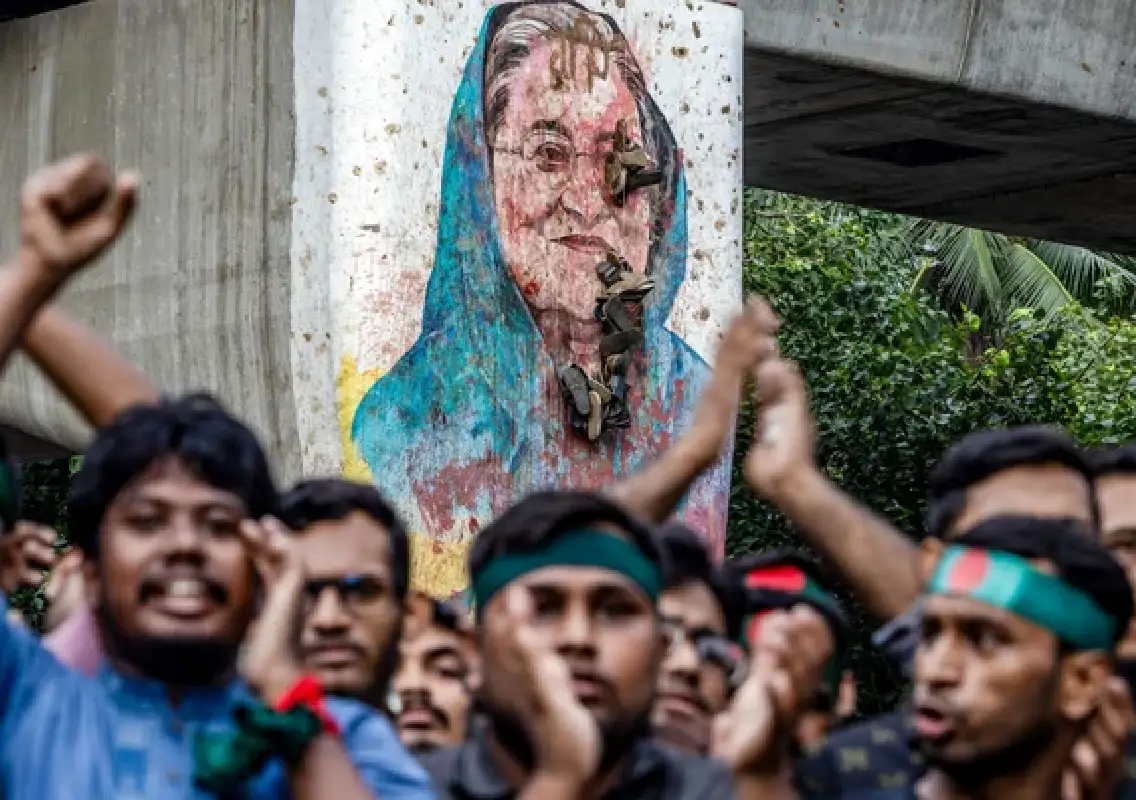


Walls across Dhaka University are once again covered in sharp, emotional graffiti, capturing a new political mood in Bangladesh following the July 2024 uprising that ended Sheikh Hasina’s 15-year rule. As the country prepares for a crucial election on February 12, public anger is no longer directed only at domestic politics but increasingly at India.
Hasina, once seen as a pro-democracy leader, fled to India after resigning amid violent unrest in 2024. The United Nations has said around 1,400 people were killed during the security crackdown. Her party, the Awami League, has been barred from contesting the upcoming polls.
India’s role under criticism
Among students and young voters, slogans such as “Dhaka, not Delhi” reflect resentment over what many see as India’s long-standing political influence in Bangladesh. Critics accuse New Delhi of backing Hasina despite disputed elections in 2014, 2018 and 2024, which they believe weakened democratic institutions.
Political analyst Avinash Paliwal of SOAS University of London says India is facing deep hostility in Bangladesh, worsened by hardening political rhetoric within India itself. Border disputes, water-sharing issues and past border killings have added to the anger.
Ties at a historic low
Relations between the two neighbours are widely described as being at their lowest point in decades. Veteran journalist Kamal Ahmed of The Daily Star said cooperation that once flourished under Hasina — including trade, transit and cultural exchange — has largely stalled.
India has recently attempted outreach, with External Affairs Minister Subrahmanyam Jaishankar visiting Dhaka and meeting Bangladesh Nationalist Party leaders. However, analysts say these steps have not eased public distrust.
Public anger, cautious hope
Interim chief adviser Muhammad Yunus has acknowledged hardened public sentiment, even as officials stress that geography, trade and shared history make cooperation unavoidable.
Observers note that while anger runs deep, Bangladesh’s political leadership understands that repairing ties with India will be essential after the elections — though any reset is expected to be slow and difficult.