







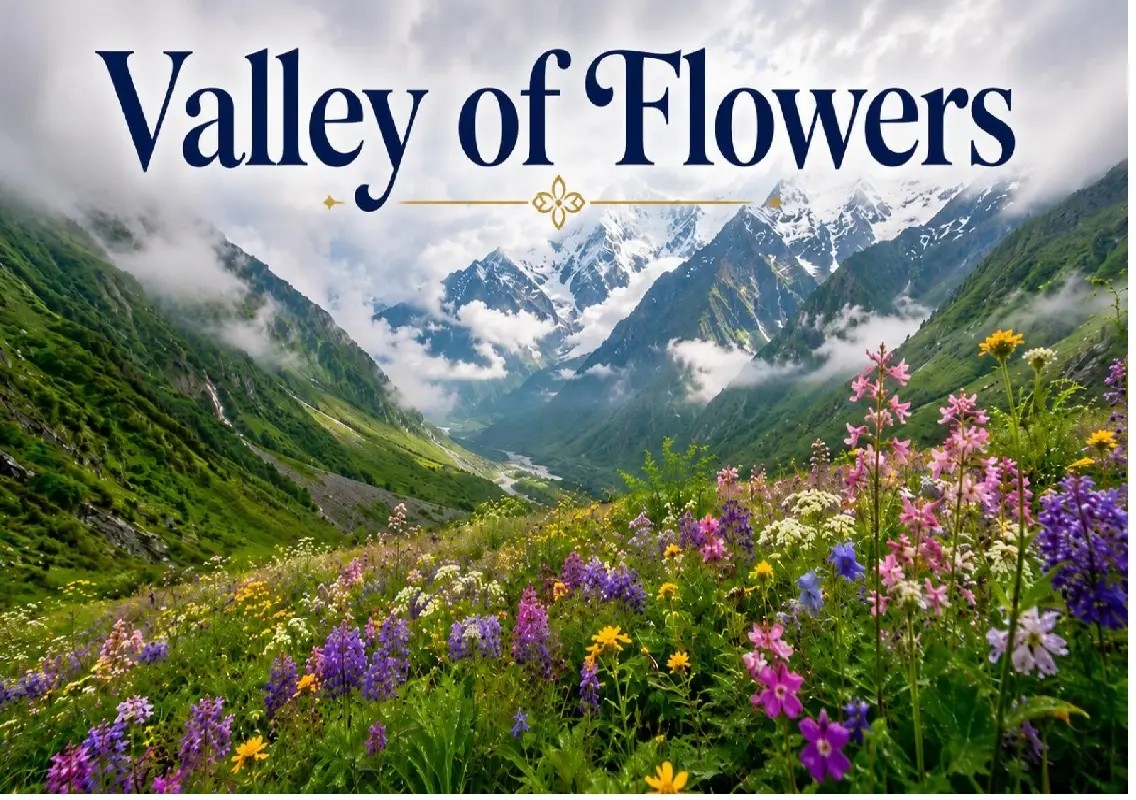


With Uttarakhand’s famed Valley of Flowers reopening to visitors this June, thousands of trekkers and nature enthusiasts are once again making their way into the Himalayas to witness one of India’s most spectacular natural wonders.
Recognised as a UNESCO World Heritage Site, the valley is celebrated for its breathtaking alpine meadows that burst into colour during the monsoon. Yet beyond its vibrant floral landscape lie rare flowers and remarkable wildlife that make the journey even more rewarding.
Blue Poppy draws nature lovers
Among the valley’s most treasured blooms is the Blue Poppy, scientifically known as Meconopsis aculeata. Often referred to as the “Queen of Himalayan Flowers,” the rare species is renowned for its striking blue petals and its endangered status.
The flower is most commonly spotted between mid-July and late August, particularly in the higher-altitude regions near Hemkund Sahib. Its vivid appearance against the rugged Himalayan backdrop makes it a favourite among photographers and botanists.
Despite its beauty, parts of the plant contain toxic and narcotic compounds, adding to its unique botanical significance.
Brahma Kamal blooms for a single night
Another Himalayan marvel is the Brahma Kamal, scientifically known as Saussurea obvallata. Revered in Hindu tradition and associated with Lord Brahma, the flower is among the most sacred plants found in the region.
Its rarity stems from its extraordinary blooming cycle. The flower blossoms only once a year and remains open for just a single night, usually between July and August.
Though often linked with the Valley of Flowers, it is more commonly found near Hemkund Sahib and along the final stages of the pilgrimage trek.
Cobra Lily and mountain wildlife
Trekkers travelling from Govindghat to Ghangaria may also encounter the unusual Cobra Lily, a flower named for its resemblance to a raised cobra hood. It is commonly seen during June and July along forested stretches of the trail.
Beyond flowers, the surrounding Himalayan landscape supports rich wildlife. The adjoining Nanda Devi National Park is home to rare species including the Snow Leopard, Himalayan Musk Deer and the sure-footed Blue Sheep.
A paradise beyond flowers
While the valley’s colourful blooms remain its biggest attraction, experts say its true charm lies in the extraordinary biodiversity that thrives across the Himalayan ecosystem.
For visitors trekking through the region this season, the journey offers far more than flowers — it provides a rare glimpse into one of India’s richest natural landscapes.