







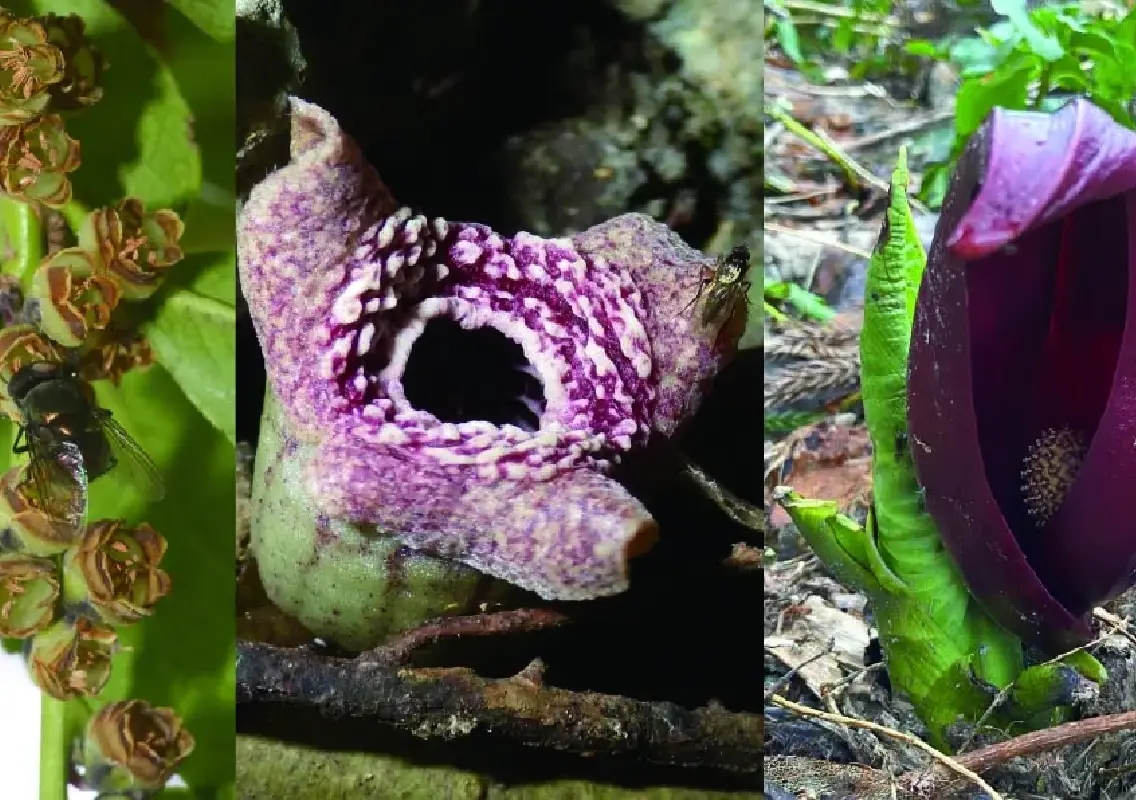


Flowers are usually associated with freshness and pleasing fragrances. Roses, jasmine and lilies symbolise beauty and calm. However, nature also offers blooms that smell shockingly unpleasant. Some flowers emit odours compared to rotting meat, dead animals or waste. Despite their stench, these plants are biologically fascinating and play an important role in ecosystems.
Corpse flower: Rare bloom, unbearable smell
The Corpse Flower (Amorphophallus titanum) is widely regarded as the world’s smelliest flower. Native to Indonesia, it blooms very rarely, sometimes once in several years. When it does, it releases a powerful odour similar to a decaying body. Botanical gardens often attract large crowds during its bloom, as the smell helps draw flies and beetles that pollinate it.
Rafflesia: Giant flower with a rotten secret
Rafflesia is famous for being the largest single flower in the world. It smells strongly of rotting meat and lacks leaves, stems or roots. Growing as a parasite on other plants, its foul odour is essential for attracting insects required for pollination.
Dead horse arum: Looks deceive
Found in parts of Europe, the Dead Horse Arum appears striking and ornamental. However, once it blooms, it emits a stench resembling a dead animal. The smell is so strong that people instinctively step away, proving that appearance can be misleading.
Carrion flower: A risky houseplant
The Carrion Flower smells like decaying flesh mixed with sweat. Surprisingly, it is grown by some as a houseplant. When it blooms, the odour can fill an entire room, attracting flies but making it unpleasant for people.
Skunk cabbage: Heat and stench combined
Skunk Cabbage smells like a skunk’s spray. Found in colder regions, it is unique because it produces heat, sometimes melting snow around it, though its smell is hard to ignore.
Why do these flowers smell so bad?
These plants evolved foul odours to mimic dead matter, attracting insects that aid pollination. What humans find repulsive is vital for their survival.