







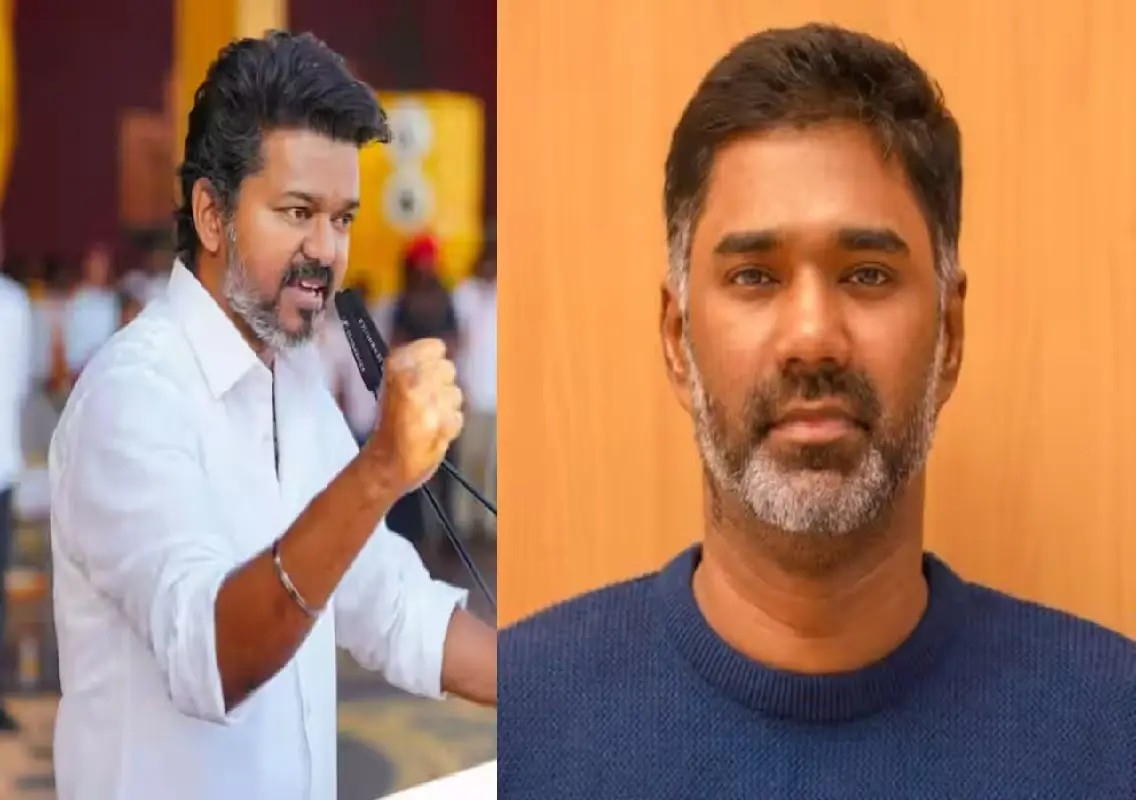


Chennai: The arrest of YouTuber and social media commentator Maridhas by Chennai Cyber Crime Police has triggered a political controversy in Tamil Nadu, with the state unit of the Bharatiya Janata Party (BJP) accusing the government of suppressing dissent and targeting critics.
The arrest has sparked a fresh debate on freedom of expression, with opposition leaders questioning the circumstances that led to the detention of the outspoken commentator.
Maridhas detained by cyber crime police
Maridhas, known for his political commentary and criticism of the ruling government, was taken into custody after a team from the Chennai Cyber Crime Police, accompanied by Madurai Police personnel, reached his residence as part of an investigation.
Authorities have not yet publicly disclosed detailed information regarding the allegations or specific charges connected to the case.
Following the operation, Maridhas was detained for questioning, prompting reactions from political parties and supporters across social media platforms.
BJP demands immediate release
Reacting strongly to the development, Nainar Nagendran condemned the arrest and called for Maridhas’s immediate release.
In a statement, the BJP leader alleged that the commentator had been targeted for criticising the government and exposing what he described as its “Reels Model”.
Nagendran accused the administration of attempting to silence dissenting voices and questioned whether such actions aligned with the political change promised to voters.
The BJP leader further alleged that the arrest represented an attack on democratic values and freedom of expression.
Political war of words intensifies
The controversy has escalated into a broader political confrontation between the BJP and the ruling establishment.
Nagendran claimed that the government had abandoned its promise of providing an alternative political culture and accused it of moving against critics at a pace faster than previous administrations.
He described the arrest as unacceptable and reiterated the party’s demand for Maridhas’s release.
The remarks have intensified political tensions, with opposition parties closely monitoring developments in the case.
Debate over freedom of expression
The incident has reignited discussions surrounding freedom of speech and the role of social media commentators in political discourse.
The BJP has alleged that law enforcement agencies are being used to suppress criticism and intimidate government opponents.
Party leaders argue that citizens and commentators should be free to express their opinions without fear of retaliation, provided they operate within the framework of the law.
Supporters of Maridhas have also voiced concerns on social media, calling for transparency regarding the investigation.
Authorities yet to detail allegations
While political reactions have dominated public discussion, officials have so far released limited information regarding the reasons behind the arrest.
Authorities have not publicly elaborated on the nature of the cyber crime investigation or the specific content under scrutiny.
As a result, questions remain regarding the legal basis of the action and the scope of the ongoing inquiry.
Further details are expected to emerge as the investigation progresses and official statements are issued.
Case turns into political flashpoint
The detention of Maridhas has quickly evolved from a law enforcement matter into a major political issue in Tamil Nadu.
Opposition leaders have portrayed the arrest as an attempt to curb criticism, while supporters of the government maintain that investigations should be allowed to proceed according to legal procedures.
The case is likely to remain under public and political scrutiny in the coming days as more information becomes available.
Conclusion
The arrest of YouTuber Maridhas has sparked a heated political debate in Tamil Nadu, with the BJP alleging suppression of dissent and demanding his immediate release. With authorities yet to provide detailed information about the allegations, the case has become a significant flashpoint in the state’s political landscape, raising questions about free speech, accountability and the role of social media in public discourse.