


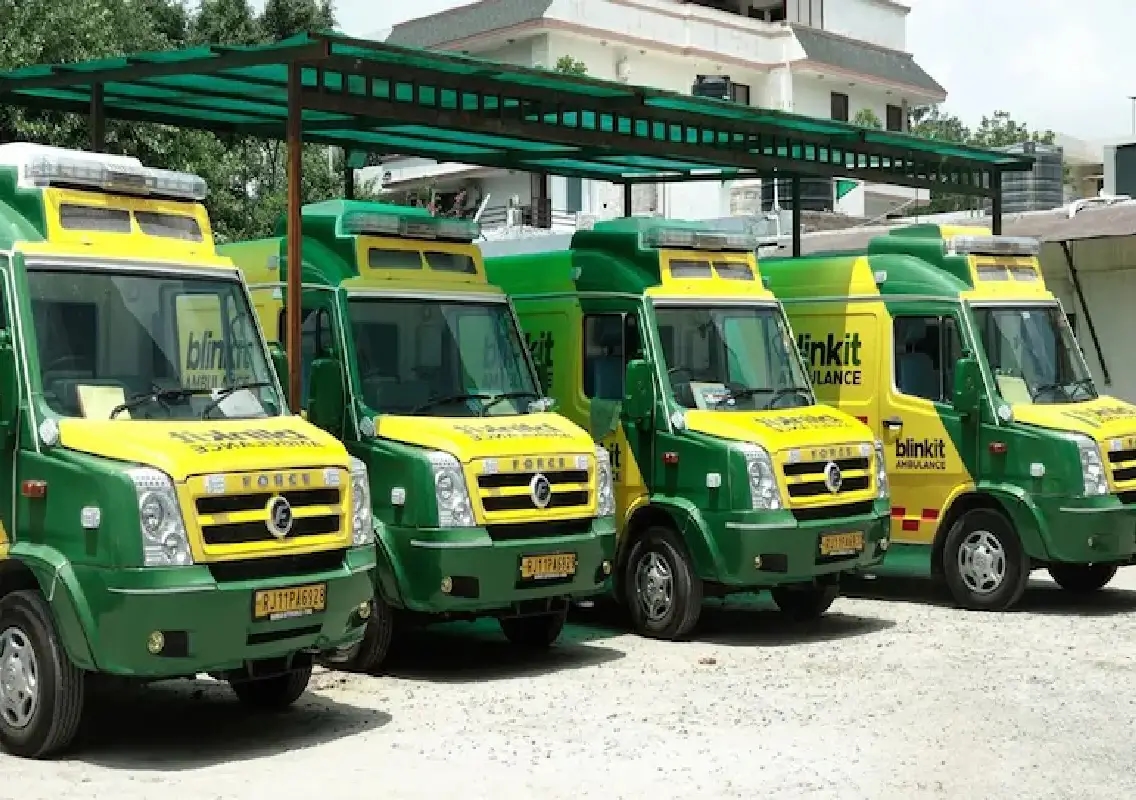


New Delhi: Blinkit has introduced a flat fee of Rs 2,500 for non-emergency ambulance bookings, while keeping emergency transfers completely free. The policy change is aimed at ensuring that its quick-response ambulances remain available for patients who need urgent medical assistance.
Eternal founder Deepinder Goyal announced the decision in a post on X (formerly Twitter), explaining that the company had noticed an increasing number of people using its ambulance service for routine medical transportation. These included trips to hospitals for regular doctor appointments and checkups, as well as transfers from hospitals back home.
According to Goyal, the new charge will be collected only after a non-emergency trip is completed. He said the fee was broadly in line with the rates charged by private ambulance operators.
Blinkit ambulances have handled 42,000 cases
Goyal revealed that Blinkit’s ambulance service had handled approximately 42,000 cases over the past two years. Of these, around 20,000 were emergency trips.
He said the company had provided these services without charging patients any amount, including for emergency transportation.
However, the company observed that a considerable number of bookings were being made for journeys that did not require emergency medical transport. Routine hospital visits, scheduled consultations, regular health checkups and journeys from hospitals to patients’ homes were among the non-emergency uses identified.
The company believes that such bookings can be handled through regular taxis or other transport options, allowing ambulances to remain available for situations involving urgent medical needs.
Announcing the revised policy, Goyal said emergency transfers would continue to be free, while non-emergency transfers would attract a charge of Rs 2,500, payable after the journey.
Emergency ambulance service to remain free
Goyal stressed that the primary purpose of Blinkit’s 10-minute ambulance service was to provide rapid assistance during medical emergencies. He said the company wanted to prevent ambulances from being occupied by non-urgent bookings when patients facing life-threatening situations might need them.
He expressed hope that introducing the fee would significantly reduce the use of ambulances for routine transportation.
According to him, the quick-response service had already helped save lives and had the potential to save thousands more. Keeping the vehicles available for emergencies, therefore, remained the company’s priority.
The policy change also draws a distinction between emergency medical transportation and routine patient transfers. While the former will continue to be provided free of charge, customers seeking non-emergency transportation will have to pay the newly introduced fee.
Money from non-emergency trips to support expansion
Goyal also clarified how the money collected through the new charge would be used. The entire amount collected from non-emergency transfers will go directly to the Eternal Foundation, the organisation responsible for running Blinkit’s ambulance fleet.
The funds are expected to support the expansion of the service and help the organisation strengthen its medical transportation network.
He pointed out that scaling up high-quality ambulance services was a challenging task, particularly because of the shortage of trained and empathetic paramedics.
Providing rapid transportation alone is not sufficient, as ambulance services also require skilled personnel capable of assisting patients during transit. Recruiting and retaining trained medical staff is therefore an important part of expanding the network.
The company hopes that the additional funds will help address some of these operational challenges and support the availability of reliable emergency medical transportation.
Goyal responds to family’s account of ambulance service
Goyal’s announcement followed a post by an X user who praised Blinkit’s ambulance service after it helped transport his grandmother to an emergency ward.
The user described how his grandmother’s condition had suddenly deteriorated and said the ambulance reached their home within eight minutes. The patient was then taken promptly to the emergency ward.
The user expressed gratitude for the response, adding that no hospital ambulance could have matched the speed of the service in that situation.
Responding to the post, Goyal wished the grandmother a speedy recovery and said he was glad the ambulance had reached the family in time. He also expressed the hope that they would not need to use the service again.
The account highlighted the importance of quick ambulance response during medical emergencies, particularly when every minute can make a difference to a patient’s chances of receiving timely treatment.
Social media users discuss the new fee
The announcement prompted a range of reactions on social media. While several users supported the decision, others raised questions about how the company would distinguish emergency bookings from routine transportation.
One user questioned who would determine whether a particular journey qualified as an emergency, pointing to the possibility of confusion over the classification.
Another user supported the introduction of the charge, arguing that people should use emergency services responsibly rather than treating free ambulance transportation as a convenient option for routine travel.
Some users also praised the company’s initiative and expressed interest in supporting efforts to expand the service.
The question of how emergency and non-emergency cases will be identified is likely to be important in the implementation of the revised policy. Clear guidelines will help customers understand when the free service applies and when the Rs 2,500 fee will be charged.
Blinkit’s decision is intended to balance accessibility with the need to keep emergency vehicles available for critical cases. While emergency transfers will remain free, the new fee seeks to discourage routine bookings and direct additional resources towards strengthening the ambulance network.