




Mumbai: The Brihanmumbai Municipal Corporation (BMC) has banned the use of rockets and other sky-flying firecrackers across the city until November 25 following a sharp rise in fire incidents linked to fireworks over the past two days.
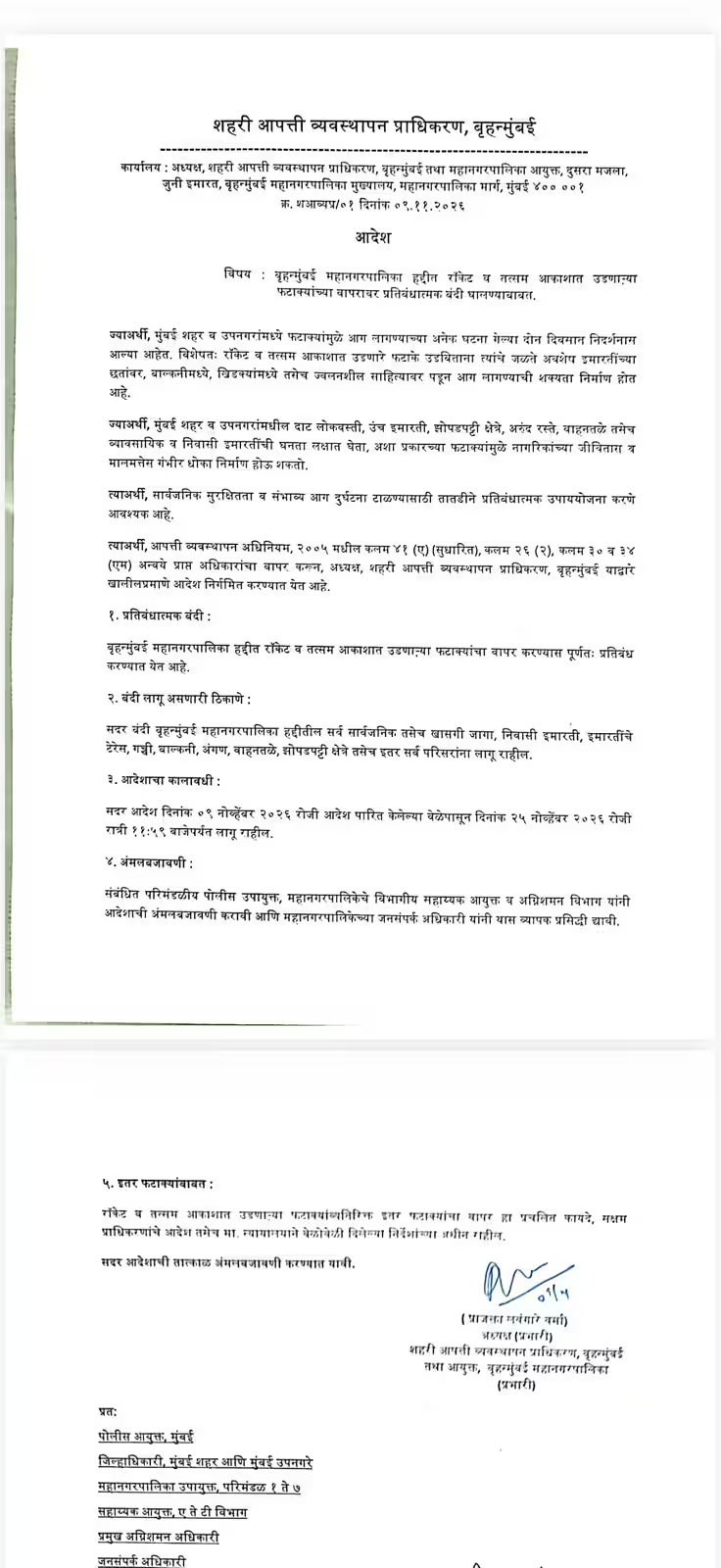
The prohibitory order was issued on Monday, November 9, by municipal commissioner Prajakta Lavangare-Verma in her capacity as chairperson-in-charge of the Urban Disaster Management Authority, Brihanmumbai. It came into immediate effect and will remain in force until 11.59 pm on November 25.
The restriction applies to both public and private spaces within the BMC’s jurisdiction. It covers residential buildings, terraces, balconies, courtyards, parking areas, slum settlements and other premises across Mumbai.
The civic body has taken the decision amid concerns that burning debris from rockets and aerial firecrackers could land on rooftops, balconies, windows and other combustible materials, triggering fires. The risk is considered particularly serious in Mumbai because of its dense population, high-rise buildings, congested settlements and closely packed residential and commercial structures.
The BMC has invoked provisions of the Disaster Management Act, 2005, to enforce the preventive measure. Police officials, civic authorities and the Mumbai Fire Brigade have been directed to ensure compliance.
Ban applies to public and private premises
The BMC order prohibits rockets and similar sky-flying firecrackers throughout the municipal limits, leaving no distinction between public spaces and private properties.
The restrictions cover rooftops and terraces, balconies, courtyards, parking lots, residential buildings and slum areas. Other premises within the civic body’s jurisdiction are also included.
The order specifically addresses the danger posed by burning remnants of aerial fireworks. Once launched, rockets and similar firecrackers can travel beyond the place where they are ignited. Their burning remains may fall on buildings or come into contact with inflammable materials.
In a densely built city such as Mumbai, even a small fire can spread quickly if it reaches combustible materials or structures located close to one another. The BMC has cited the city’s high population density, high-rise buildings, narrow roads and congested settlements as reasons for taking preventive action.
The civic administration said the measure was intended to reduce the possibility of fire-related emergencies and protect lives and property.
Disaster Management Act invoked to enforce restrictions
The BMC has relied on provisions of the Disaster Management Act, 2005, to issue the prohibitory order. The sections cited include Sections 41(A), 26(2), 30 and 34(M).
Municipal commissioner Prajakta Lavangare-Verma issued the order as chairperson-in-charge of the Urban Disaster Management Authority, Brihanmumbai. The restriction became effective immediately on November 9.
To ensure implementation, the order directs zonal deputy commissioners of police, the BMC’s divisional assistant commissioners and the Mumbai Fire Brigade to take necessary steps.
The civic body’s public relations officer has also been instructed to give the order wide publicity so that residents are aware of the restrictions.
The involvement of police and civic officials is intended to ensure that the ban is communicated and enforced across different parts of Mumbai. The fire brigade has also been included because of the direct safety concerns associated with aerial fireworks.
Other firecrackers remain subject to existing rules
The BMC has clarified that the new order does not amount to a blanket prohibition on every type of firecracker.
Firecrackers other than rockets and similar sky-flying varieties will continue to be governed by existing laws, orders issued by competent authorities and directions of the courts.
Residents must therefore follow the applicable restrictions when using other types of fireworks. The new prohibitory order specifically targets rockets and aerial firecrackers because of the danger posed by burning material falling on buildings and other vulnerable locations.
The clarification is significant as the restriction is limited to a particular category of fireworks rather than all firecracker use across the city.
The BMC has said the preventive ban will remain in force until 11.59 pm on November 25. Any further directions concerning firecracker use will continue to depend on the applicable legal and administrative orders.
Mumbai Fire Brigade receives 142 calls on November 8
The decision follows a major increase in fire emergencies reported across Mumbai. The Mumbai Fire Brigade received 142 fire calls on November 8 alone, of which 137 were attributed to firecrackers.
Several major incidents were also reported during the period, including fires at Dongri and Vidyavihar. The rise in emergencies placed considerable pressure on firefighting resources.
The high number of firecracker-related calls highlighted the potential risks associated with fireworks in densely populated neighbourhoods. Burning debris from aerial crackers can land on rooftops, balconies and other exposed areas, where it may ignite materials and cause fires.
The incidents over the past two days prompted the civic administration to take additional preventive steps. Rather than waiting for further emergencies, the BMC has opted to restrict the use of rockets and other sky-flying firecrackers for a defined period.
The November 8 figures also provide the immediate context for the decision. With 137 of the 142 fire calls attributed to firecrackers, the authorities have identified fireworks as a major contributor to the day’s emergency response workload.
Safety concerns in densely populated neighbourhoods
Mumbai’s urban layout presents specific challenges for fire prevention and emergency response. High-rise buildings, closely spaced homes, narrow roads and congested slum settlements can make it difficult for firefighters to access affected locations.
A fire triggered by falling firecracker debris may also spread if it reaches combustible materials or neighbouring structures. The BMC’s order points to these risks while explaining why aerial fireworks require particular attention.
The restriction is intended to reduce the likelihood of such incidents during the period covered by the order. It also places responsibility on residents, police personnel and civic officials to ensure that the prohibited fireworks are not used.
The civic body has directed its zonal and divisional officers to coordinate enforcement, while the public relations department has been asked to spread awareness about the restrictions.
Ban remains in force until November 25
The BMC’s decision marks a targeted intervention following the recent increase in firecracker-related emergencies. By prohibiting rockets and other sky-flying fireworks across public and private spaces, the civic body aims to prevent burning debris from triggering further fires.
The restriction took effect on November 9 and will continue until 11.59 pm on November 25. Other firecrackers remain subject to existing laws and court directions.
With the Mumbai Fire Brigade having received 142 fire calls on November 8, the administration faces the task of ensuring that the new order is followed across the city. The authorities have urged vigilance as they seek to reduce the risk to residents, buildings and emergency services.