







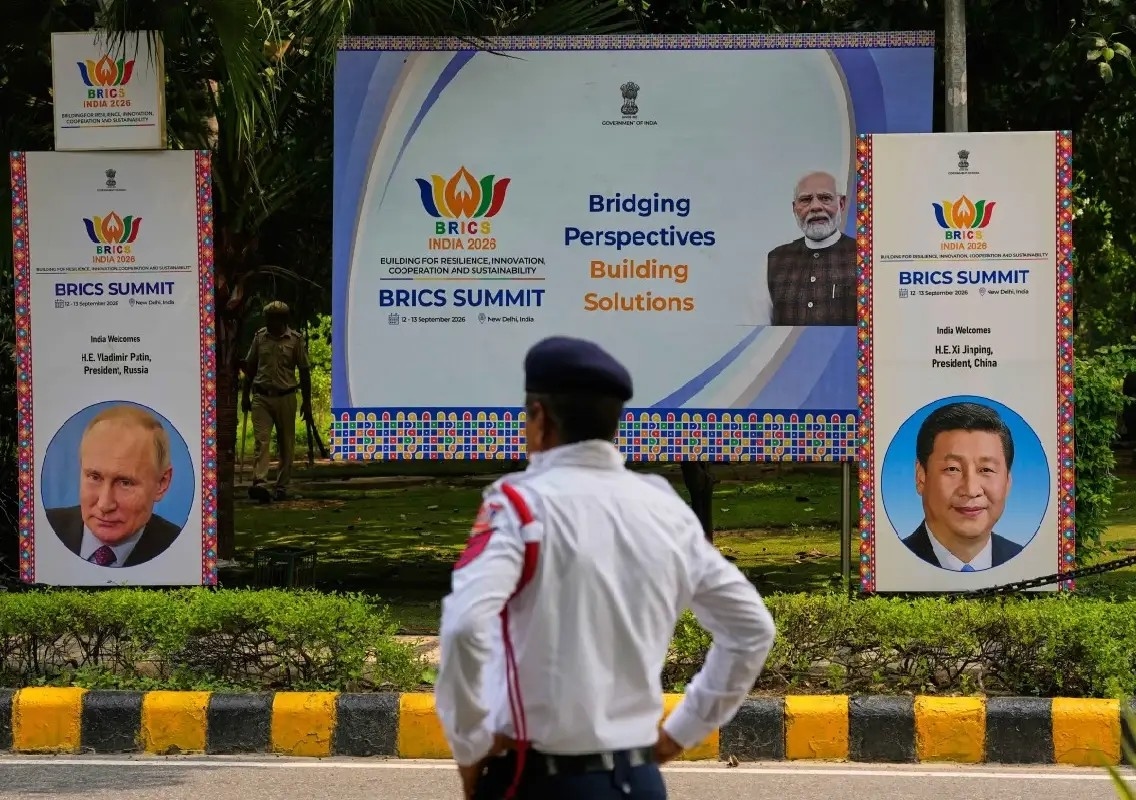


New Delhi: The 18th BRICS Summit has brought world leaders together in New Delhi as India hosts the grouping under its 2026 chairship, with discussions centred on economic cooperation, innovation, global challenges and a stronger voice for the Global South.
India calls for stronger BRICS cooperation
Prime Minister Narendra Modi welcomed leaders to the two-day summit at Bharat Mandapam and highlighted India’s people-centric and ‘Humanity First’ approach to its chairship.
He said resilience, innovation, cooperation and sustainability had remained key priorities, while stressing the need to turn BRICS unity and consensus into tangible results.
New Delhi Declaration adopted unanimously
A major development on the first day was the unanimous adoption of the New Delhi Declaration 2026. The declaration includes positions on terrorism, global conflicts, trade and nuclear safety.
BRICS members condemned terrorism in all forms and expressed concern over conflicts and tensions in West Asia. The grouping also called for dialogue and diplomacy to resolve conflicts.
Modi-Xi talks focus on stable ties
Prime Minister Modi and Chinese President Xi Jinping held a bilateral meeting on the sidelines of the summit. Both leaders stressed the importance of viewing India-China relations from a strategic and long-term perspective.
Modi said differences should not become disputes and emphasised mutual respect, sensitivity and interest. The leaders also discussed border peace, trade, supply chains, business links and people-to-people ties.
Trade and innovation take centre stage
The BRICS Business Forum brought together business leaders and policymakers to discuss trade, investment, technology and innovation. India also encouraged greater cooperation in areas such as startups and digital development.
The Ministry of External Affairs clarified that there is currently no proposal for a common BRICS currency, while local-currency settlement in trade is being encouraged as a practical mechanism to reduce transaction costs.
The summit comes as BRICS marks 20 years of institutionalised cooperation, with India seeking to make the grouping more practical, forward-looking and responsive to the priorities of people across member nations.