









Chennai : Chennai MetroWater is set to restore nine community wells across the city and convert them into rainwater-harvesting structures, in an effort to improve groundwater recharge and make better use of rainwater during the monsoon.
The initiative is aimed at giving a new purpose to old community wells while addressing two persistent urban challenges — groundwater depletion and water stagnation. Instead of allowing rainwater to quickly flow into stormwater drains, the restored wells can serve as recharge points, helping water percolate into underground aquifers.
Chennai has long relied on rainwater harvesting as an important part of its water-management strategy. Rainwater harvesting was made mandatory for buildings in the city, and the system has contributed to groundwater replenishment over the years.
Nine community wells to be restored
The Chennai MetroWater initiative focuses on nine community wells that can potentially be brought back into use for rainwater harvesting.
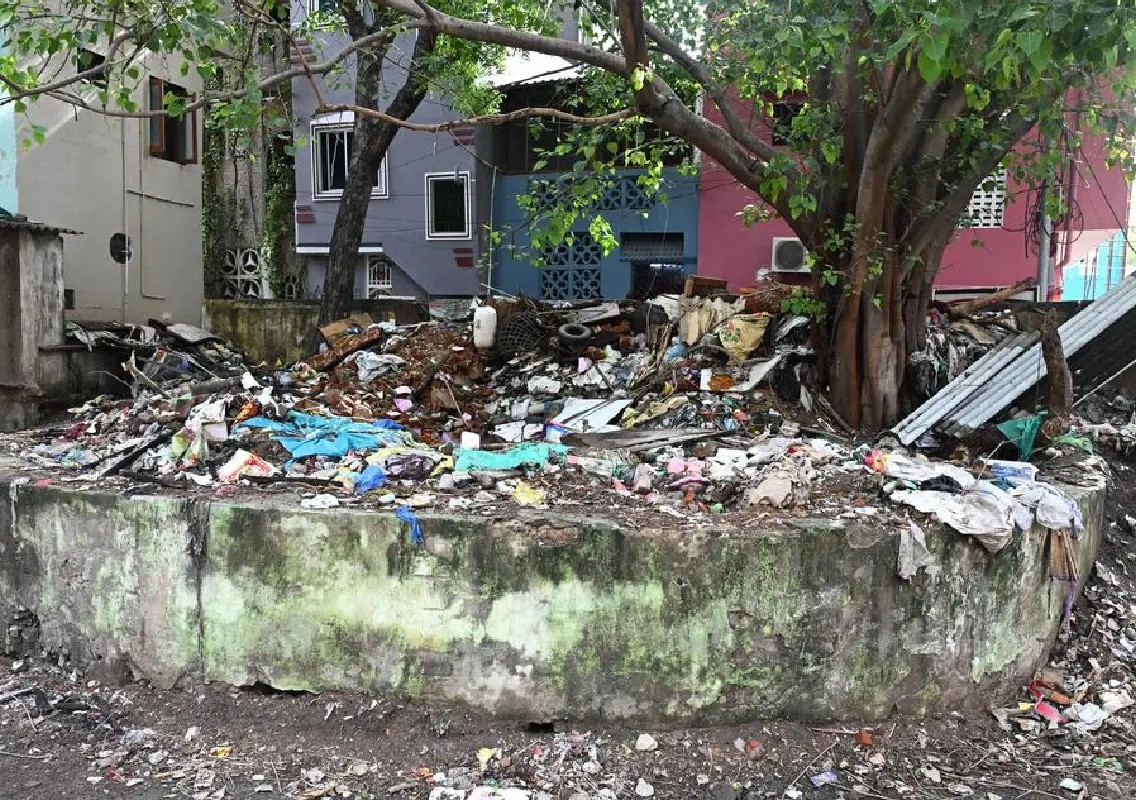
The wells, once important sources of water for local communities, have in many places lost their original function because of changes in urban development, declining groundwater levels and the expansion of piped water supply.
Their restoration is intended to turn existing infrastructure into useful groundwater-recharge points rather than constructing entirely new structures.
The approach also has the advantage of preserving traditional water infrastructure that remains embedded in Chennai’s neighbourhoods.
Turning rain into groundwater
The central objective of the project is to improve the amount of rainwater entering the ground.
During heavy rainfall, large quantities of water can accumulate on roads and open spaces before flowing into drainage networks. In a densely built city, paved surfaces reduce the amount of water that naturally seeps into the soil.
A properly restored well can provide a direct pathway for harvested rainwater to reach underground water-bearing formations, subject to appropriate filtration and safety measures.
This can help improve groundwater availability and reduce the quantity of rainwater lost as surface runoff.
Helping prevent water stagnation
The project also has an urban flood-management dimension.
Chennai frequently receives intense spells of rainfall, particularly during the northeast monsoon. Heavy downpours can overwhelm local drainage systems and result in temporary waterlogging in vulnerable areas.
Rainwater-harvesting structures can help intercept part of this runoff.
By directing suitable rainwater towards recharge structures, authorities can potentially reduce the volume of water reaching already stressed drainage networks during heavy rainfall.
The city’s broader monsoon preparations this year include drainage improvements and other flood-mitigation measures.
Chennai’s long relationship with rainwater harvesting
The proposed restoration builds on Chennai’s long experience with rainwater harvesting.
The city became widely recognised for promoting rainwater harvesting after making it mandatory in buildings. Studies have described Chennai’s experience as one of the more successful large-scale urban rainwater-harvesting programmes in India.
The strategy is particularly relevant to Chennai because the city does not have a large perennial river running through it and has historically depended heavily on rainfall and a combination of reservoirs, groundwater and other sources.
Restoring community wells adds another layer to that water-conservation approach.
Old wells get a new role
Community wells were once an important part of neighbourhood life.
Before the expansion of modern water-supply systems, residents in many parts of Chennai depended on wells for their daily requirements.
As the city developed, several traditional water sources became neglected or contaminated, while others disappeared beneath new construction.
Restoring selected wells could therefore provide both environmental and heritage value.
Rather than treating them simply as old structures, the project seeks to integrate them into modern water management.
Groundwater recharge is increasingly important
Groundwater plays a crucial role in India’s water security.
The Union government recently said that nearly 1.6 crore artificial groundwater-recharge structures had been constructed across the country since the launch of the Jal Sanchay Jan Bhagidari initiative in September 2024. The programme promotes community participation in rainwater harvesting and groundwater recharge.
Chennai’s community-well initiative fits into the broader principle of using local infrastructure to retain rainfall and replenish underground water resources.
The idea is particularly valuable in cities where increasing construction and paved surfaces reduce natural groundwater recharge.
More than simply storing water
The wells are not being revived merely as storage structures.
Their larger purpose is to support the movement of rainwater into the ground.
This distinction is important because urban water management requires both storage and recharge.
Reservoirs and tanks can store water for later use, while recharge structures help replenish underground sources.
A network combining both approaches can make a city more resilient to variations in rainfall.
Need for proper maintenance
The effectiveness of restored wells will depend heavily on their design and maintenance.
Rainwater entering a recharge well needs to be appropriately filtered to prevent silt, solid waste and pollutants from entering groundwater.
Regular cleaning and desilting will also be necessary.
Urban runoff can contain contaminants from roads and other surfaces, meaning authorities need to ensure that only suitable rainwater is directed into recharge structures.
The success of the initiative will therefore depend not just on restoring the wells but also on maintaining them properly.
Community participation could strengthen the project
The word “community” in community wells is significant.
Residents living around the restored structures can play an important role in ensuring that the wells remain clean and protected.
Local awareness can help prevent dumping of waste and encourage residents to understand the importance of groundwater recharge.
Community involvement has also been a recurring feature of water-conservation programmes in Chennai.
Past rainwater-harvesting initiatives in the city have demonstrated how neighbourhood participation can contribute to the restoration and maintenance of traditional water structures.
A possible model for other neighbourhoods
If the nine wells perform well, the approach could offer a model for restoring more abandoned or neglected wells in Chennai.
The city has many traditional water structures whose original functions have changed over time.
Identifying suitable wells and integrating them with modern rainwater-harvesting systems could potentially expand the city’s groundwater-recharge network without requiring large new land parcels.
This could be especially useful in densely populated neighbourhoods where acquiring land for new water infrastructure is difficult.
Complementing existing water systems
The project is not expected to replace Chennai’s existing water-supply infrastructure.
The city continues to depend on a combination of reservoirs, groundwater, desalination and water brought from other sources.
Rainwater harvesting instead provides an additional mechanism for conserving a locally available resource.
Chennai’s experience has shown that groundwater recharge can be an important component of urban water security, particularly when combined with other supply sources.
Preparing for the monsoon
The timing of the initiative is significant as Chennai prepares for the coming monsoon.
The city has been undertaking a range of measures to improve drainage and reduce the impact of heavy rainfall.
Restoring community wells provides an additional opportunity to capture some of the rain that would otherwise become runoff.
If maintained effectively, the wells could help transform rainfall from a short-term drainage challenge into a resource for groundwater replenishment.
Balancing conservation and urban development
Chennai’s rapid urban growth has placed considerable pressure on its natural water systems.
Buildings, roads and other paved surfaces have altered natural drainage patterns, while demand for water has increased with the city’s population.
At the same time, the city faces the challenge of managing periods of intense rainfall alongside periods of water stress.
Projects that capture rain where it falls can help address both sides of this problem.
The restoration of community wells represents a relatively local intervention, but its broader objective is part of a much larger effort to make urban water use more sustainable.
Traditional knowledge meets modern water management
The project also highlights how older infrastructure can be combined with modern environmental planning.
Community wells may have been created decades ago, but their basic function — allowing access to groundwater — remains relevant.
With appropriate restoration, filtration and monitoring, these structures can potentially serve a new purpose in a changing climate.
Instead of allowing traditional wells to disappear from the urban landscape, authorities can use them as part of Chennai’s future water strategy.
A small project with a wider message
The restoration of nine wells may appear modest compared with Chennai’s overall water requirements.
However, the initiative sends a broader message about the value of decentralised water conservation.
Every recharge point can contribute to reducing runoff and replenishing groundwater, particularly when such structures are developed as part of a wider network.
The long-term success of the programme will depend on careful engineering, regular maintenance and public cooperation.
Building a water-resilient Chennai
As cities across India face growing pressure on water resources, Chennai’s decision to revive community wells demonstrates the importance of looking beyond large infrastructure projects.
Rainwater that once disappeared through drains can, where conditions permit, become a source of groundwater recharge.
The restoration of nine community wells is therefore more than a repair exercise. It represents an attempt to reconnect the city’s traditional water infrastructure with contemporary rainwater-management needs.
With effective maintenance and community participation, the restored wells could help Chennai conserve more of its monsoon rainfall, reduce water stagnation and strengthen groundwater reserves.
The initiative ultimately reflects a simple principle: when the rain arrives, the city should find ways to keep as much of it as possible.