







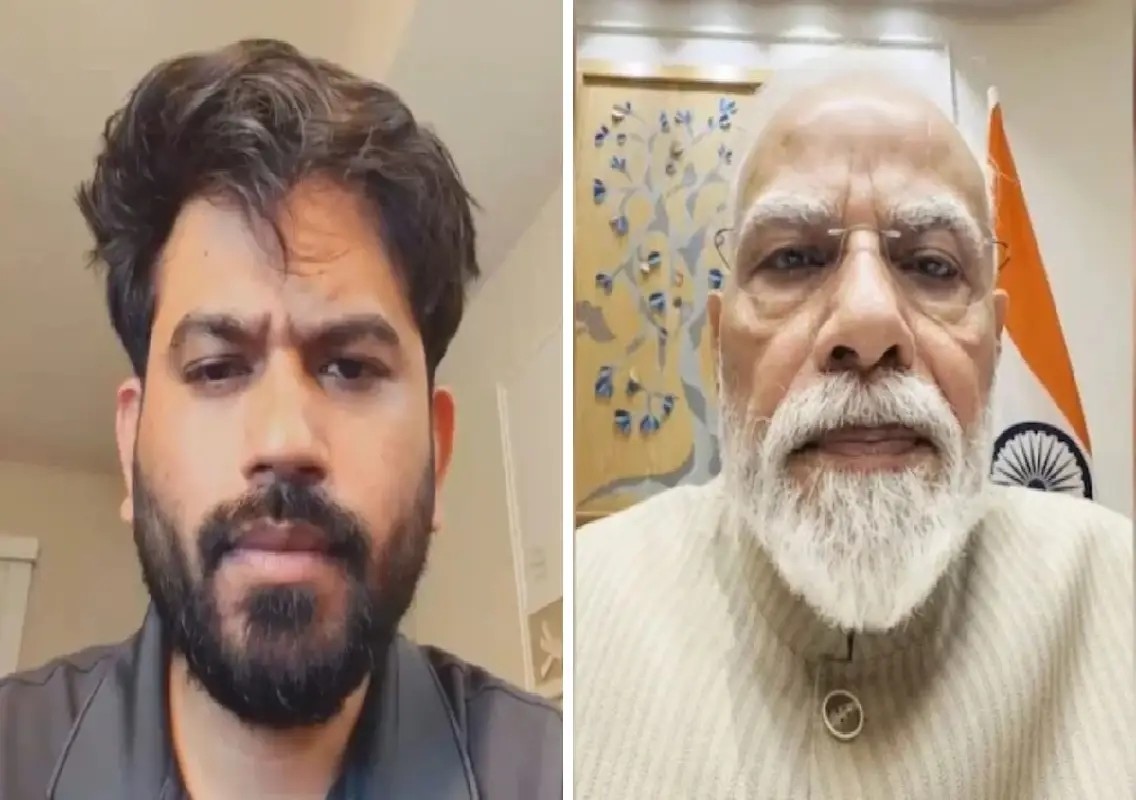


New Delhi: Cockroach Janta Party (CJP) founder Abhijeet Dipke on Thursday night took a swipe at Prime Minister Narendra Modi following the latter’s video message to students on the recently passed Public Examinations (Prevention of Unfair Means) Amendment Bill, 2026.
Dipke, whose student-led movement gained national attention and culminated in the resignation of former Union Education Minister Dharmendra Pradhan, criticised the Prime Minister’s outreach on social media, while also warning that fresh student protests could be launched if concerns over examination reforms remain unresolved.
Dipke’s social media jibe
Responding to the Prime Minister’s late-night video message, Dipke posted a remark on Instagram targeting Modi’s communication style.
He wrote, “Your skin is brighter than the country’s future,” in an apparent criticism of the government’s handling of issues affecting students.
The CJP founder also suggested that the Prime Minister should “become an influencer”, continuing his criticism through social media posts after the passage of the amended anti-paper leak legislation.
His remarks came amid ongoing political debate over the effectiveness of measures introduced to prevent examination malpractices and restore confidence in public recruitment and entrance examinations.
PM highlights anti-paper leak law
Prime Minister Narendra Modi released a video message after Parliament passed the Public Examinations (Prevention of Unfair Means) Amendment Bill, 2026, describing the legislation as a significant step towards strengthening the integrity of India’s examination system.
In the video, the Prime Minister said the government had been working continuously to create a more reliable and transparent examination process by introducing multiple reforms.
He highlighted measures including the establishment of special task forces, fast-track courts, and the incorporation of suggestions received from state governments to tackle the menace of paper leaks.
According to Modi, the newly enacted legislation is aimed at taking stronger action against organised paper leak networks and ensuring that students are not deprived of fair opportunities.
‘Paper leaks affected generations of students’
In his message, the Prime Minister acknowledged that paper leaks have been a long-standing challenge faced by governments across the country.
He said successive state and central governments had struggled with the issue over several decades and noted that repeated examination leaks had adversely affected the future of lakhs of students.
Modi emphasised that the new legal framework seeks to deter organised cheating, improve accountability and reinforce public confidence in competitive examinations.
The Prime Minister reiterated that protecting the interests of students and ensuring merit-based recruitment remain key priorities of the government.
Background of the student movement
Dipke emerged as one of the prominent faces of nationwide student protests over examination-related issues, with the Cockroach Janta Party (CJP) organising demonstrations demanding accountability and stronger safeguards against paper leaks.
The movement drew significant public attention and placed sustained pressure on the Union government over examination reforms. It eventually culminated in the resignation of Dharmendra Pradhan as Union Education Minister.
Following the passage of the amended legislation, Dipke has continued to question whether the government’s measures will adequately address the root causes of recurring examination irregularities.
Debate over reforms continues
The passage of the Public Examinations (Prevention of Unfair Means) Amendment Bill, 2026 has sparked differing reactions from political leaders, student organisations and civil society groups.
While the government maintains that the legislation introduces tougher provisions to curb paper leaks and dismantle organised cheating networks, some student activists have argued that effective implementation and institutional accountability will be critical to restoring trust in the examination system.
Dipke’s latest remarks underscore that the debate over examination reforms is likely to continue even after the new law comes into force, with student groups expected to closely monitor its implementation.