









New Delhi: Five heritage proposals from India have been added to UNESCO’s Tentative List of World Heritage Sites, including four heritage sites in Madhya Pradesh and a transnational proposal covering sites associated with Mahatma Gandhi’s Satyagraha movement in India and South Africa. The additions take India’s UNESCO Tentative List to 78 properties.
The four Madhya Pradesh entries are the Bagh Cave Paintings, Ginnorgarh Fort, Group of Temples of the Chambal Valley and Udaigiri Caves. The fifth entry, titled “The Sites of Satyagraha: The Emergence and institutionalization of the non-violent movement”, includes locations in both India and South Africa.
Being placed on the Tentative List does not mean that a property has been granted UNESCO World Heritage status. The list is an inventory of sites that a country intends to consider for future nomination to the World Heritage List.
Four Madhya Pradesh sites included
The new additions highlight Madhya Pradesh’s archaeological and cultural heritage, with sites representing ancient rock art, temple architecture, forts and rock-cut religious monuments.
Bagh Cave Paintings
The Bagh Cave Paintings are located in Madhya Pradesh and are recognised for their historic mural traditions. The caves are associated with India’s ancient Buddhist artistic heritage and contain paintings that provide evidence of the region’s cultural and religious history.
The property was added to India’s Tentative List on July 8, 2026, according to UNESCO’s World Heritage Centre.
Ginnorgarh Fort
Ginnorgarh Fort is another Madhya Pradesh property added to the list on July 8. The fort forms part of the state’s extensive architectural heritage and represents the historical development of fortified settlements in central India.
Group of Temples of the Chambal Valley
The Group of Temples of the Chambal Valley covers the temple complexes of Bateshwar, Padavali and Kakarmath.
The nomination brings together a group of historic religious structures from the Chambal region, reflecting the architectural traditions that developed in central India.
UNESCO lists the property under this combined title on India’s Tentative List, with the submission dated July 8, 2026.
Udaigiri Caves
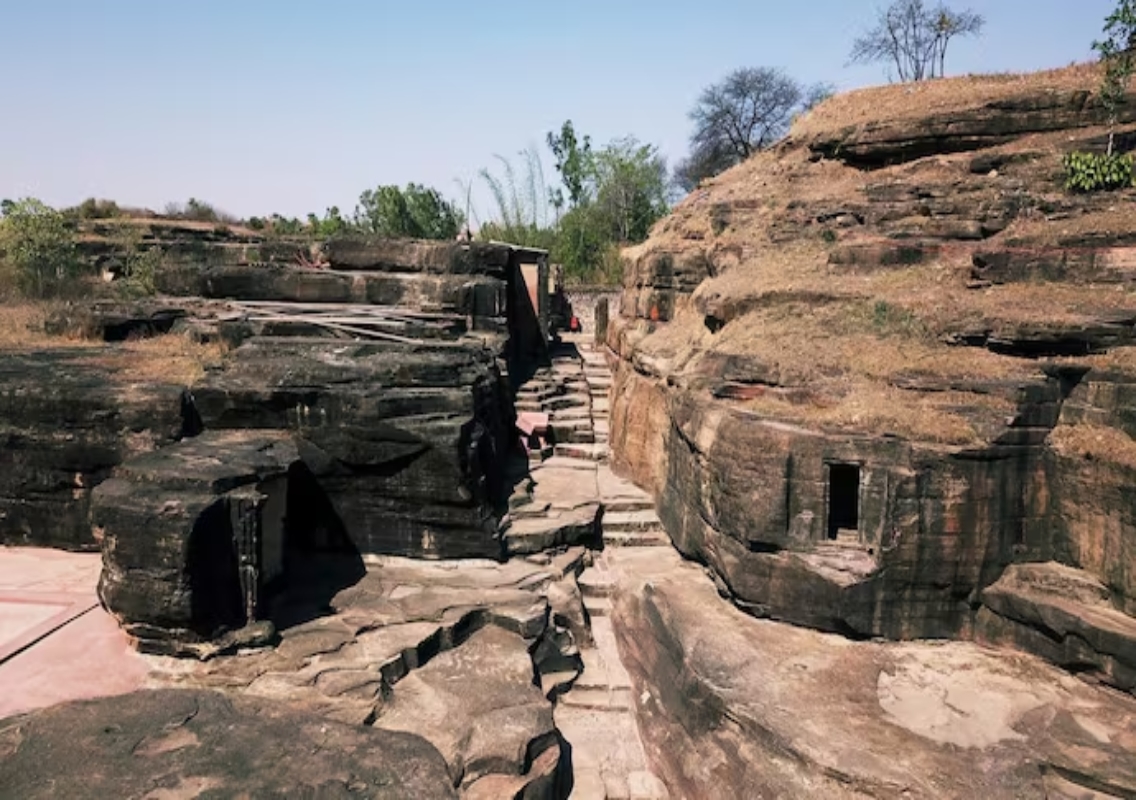
The Udaigiri Caves in Vidisha district are among the most significant additions. UNESCO describes the Udaigiri hill complex as a rock-cut sacred ensemble developed primarily under Gupta patronage between the late fourth and early fifth centuries.
The caves contain important examples of ancient Indian religious art and architecture and include monuments associated with Hindu traditions.
The site was also added to the Tentative List on July 8, 2026.
Satyagraha sites proposed across India and South Africa
The fifth addition is different from the four Madhya Pradesh properties because it is a serial transnational nomination involving India and South Africa.
UNESCO’s proposal, submitted by India’s Permanent Delegation to UNESCO, seeks recognition for a network of nine locations that trace the development of Satyagraha from its conceptualisation in South Africa to its evolution and institutionalisation in India.
Two of the proposed components are in South Africa — Pietermaritzburg Railway Station and Phoenix Settlement.
Seven are in India:
- Mahatma Gandhi Satyagraha Smarak, East Champaran, Bihar
- Sabarmati Ashram, Ahmedabad, Gujarat
- Mani Bhavan, Mumbai, Maharashtra
- Harijan Sevak Sangh, New Delhi
- Sevagram Ashram, Wardha, Maharashtra
- Aga Khan Palace, Pune, Maharashtra
- Gandhi Smriti, New Delhi
UNESCO’s description says the proposed series represents the development of Satyagraha from Gandhi’s early experiences with racial discrimination in South Africa through its later use as a method of organised non-violent resistance in India.
Gandhi’s South Africa years form part of proposal
The proposed transnational property connects Gandhi’s 21 years in South Africa, from 1893 to 1914, with the subsequent development of the Satyagraha movement in India.
Pietermaritzburg Railway Station is identified in the proposal as the catalyst for the movement, while Phoenix Settlement is described as an early experiment in community-based resistance and a prototype for later ashrams in India.
The Indian components represent different stages of the movement. The Mahatma Gandhi Satyagraha Smarak in East Champaran is associated with Gandhi’s first Satyagraha in India in 1917. Sabarmati Ashram became a major centre for mass mobilisation, while Mani Bhavan was associated with several important political movements.
Sevagram Ashram, Harijan Sevak Sangh, Aga Khan Palace and Gandhi Smriti represent later stages of the movement and Gandhi’s wider institutional and social legacy.
India’s Tentative List now has 78 properties
With these five additions, India’s UNESCO Tentative List has reached 78 sites. UNESCO’s country profile separately records 45 properties already inscribed on the World Heritage List for India.
The distinction between the two lists is important. A Tentative List entry represents a country’s intention to consider a property for future nomination. A site must subsequently go through the World Heritage nomination and evaluation process before it can be considered for inscription.
The latest additions therefore represent an important stage in the recognition process for the five proposals, rather than a declaration that they have already become UNESCO World Heritage Sites.
The entries also broaden the geographical and thematic representation of India’s heritage portfolio, bringing together archaeological sites in Madhya Pradesh with a transnational historical narrative linking India’s independence movement with Gandhi’s years in South Africa.