







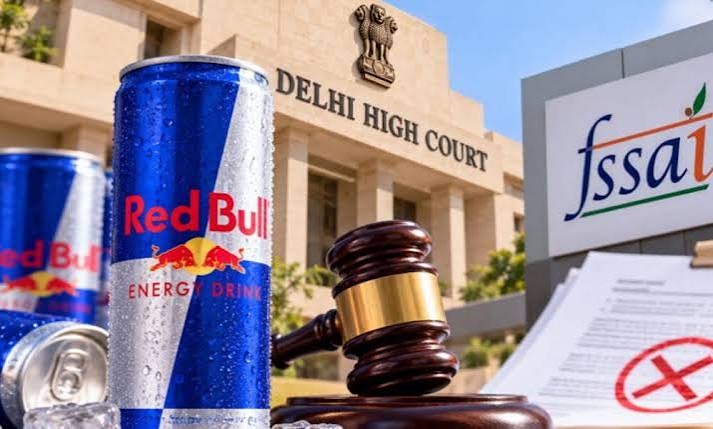


New Delhi: India’s food safety regulator has questioned Red Bull‘s classification as an ‘energy drink’, raising concerns that a 500 ml can could contain approximately 55 grams of sugar, exceeding the generally recommended daily limit of 50 grams cited by the regulator.
The Food Safety and Standards Authority of India (FSSAI) has given the Austrian beverage manufacturer seven days to explain why it should be allowed to continue using the ‘energy drink’ label on its product.
At the centre of the dispute is the beverage’s nutritional composition, particularly the amount of added sugar it contains. Red Bull has 11 grams of sugar per 100 ml, which means a 500 ml can delivers around 55 grams.
The regulator has questioned whether the product’s composition supports its positioning as an energy drink and whether its labelling could give consumers a misleading impression about the quantity they can safely consume.
The latest notice adds to a regulatory dispute that began in June, when the FSSAI moved against the use of the ‘energy drink’ description by beverage manufacturers. The issue has since reached the Delhi High Court, with major companies challenging the regulator’s action.
Why FSSAI has questioned Red Bull’s energy drink label
The FSSAI’s primary concern relates to the proportion of energy in the beverage that comes from added sugar.
According to the details cited in the regulator’s notice, Red Bull contains 11 grams of sugar for every 100 ml. A 500 ml can therefore provides approximately 55 grams of sugar.
This is above the 50-gram daily sugar limit referred to by the regulator. The comparison has raised questions about whether consumers could exceed recommended sugar intake by drinking a single large can.
The FSSAI has asked the company to establish the scientific and regulatory basis for describing the product as an energy drink. It has questioned the nutritional composition and the extent to which the beverage’s declared energy content is derived from added sugar.
The regulator’s scrutiny is not limited to the ingredients themselves. It is also examining how the product is presented to consumers and whether the label accurately communicates its nutritional characteristics.
The seven-day notice gives Red Bull an opportunity to explain its position and justify the continued use of the disputed description.
Why the 500 ml consumption advisory has drawn attention
Another concern flagged by the FSSAI relates to the consumption advisory printed on the beverage.
The product carries a recommendation that intake should not exceed 500 ml per day. The regulator has questioned whether this advisory could lead consumers to believe that consuming the full quantity is safe.
The concern arises because a 500 ml serving contains approximately 55 grams of sugar, according to the figures cited in the report.
The FSSAI’s position is that the advisory needs to be considered alongside the beverage’s nutritional composition. A stated maximum quantity may influence consumer behaviour, particularly if people interpret it as an assurance that consuming that amount does not pose nutritional concerns.
The issue highlights the importance of clear food labelling. Consumers often rely on packaging information and consumption recommendations when deciding how much of a product to drink.
The regulator is examining whether the current description and advisory provide an accurate picture of the product’s composition and potential dietary impact.
Red Bull and other companies challenge FSSAI action in Delhi High Court
The latest notice follows a wider dispute between the food regulator and beverage companies over the use of the ‘energy drink’ label.
Red Bull, PepsiCo, Monster Beverage and Reliance Consumer have challenged the FSSAI’s decision in the Delhi High Court.
The companies have argued that they were not given advance notice before restrictions on the labelling description were imposed.
Red Bull obtained temporary protection from the court, allowing it to continue using the ‘energy drink’ label while the legal proceedings remain pending.
Its competitors, however, were directed to stop using the description after exhausting their existing inventory.
The different treatment has become another point of contention in the dispute.
The FSSAI has approached the Delhi High Court seeking a review of the interim relief granted to Red Bull. The regulator has argued that allowing the company to continue using the label gives it an undue commercial advantage over competitors that have been required to stop using the description.
The matter is scheduled to be heard in January.
The outcome could have implications for how energy drinks are classified and marketed in India, particularly if the court considers the regulator’s concerns about product composition and labelling.
India’s energy drinks market projected to reach $1.6 billion
The regulatory dispute comes at a time when India’s energy drinks market is expanding.
According to Euromonitor, the market is projected to reach $1.6 billion by 2028, with annual growth estimated at 12.6%. The projected pace of expansion is higher than that of the United States and China.
Red Bull has also recorded significant growth in India. The company generated $130 million in revenue from the country in 2024, more than twice its earnings four years earlier, according to the figures cited in the report.
The growing market has increased the importance of product classification, labelling and marketing claims. The ‘energy drink’ description is commercially significant because it helps position beverages within a category associated with alertness, stimulation and performance.
For companies operating in the segment, regulatory changes could affect packaging, advertising and how products are presented to consumers.
The dispute therefore extends beyond one brand, with the outcome potentially influencing other manufacturers and the wider market.
Health concerns over sugar, caffeine and taurine
Energy drinks have attracted scrutiny from health experts because of their combination of ingredients, particularly sugar and caffeine. Some products also contain taurine, an ingredient commonly included in energy drink formulations.
The latest FSSAI action focuses primarily on sugar content and the accuracy of the product’s classification. However, broader health discussions around energy drinks also consider the amount of caffeine consumed and the possible effects of high intake.
High sugar consumption is associated with increased risks of weight gain and dental problems, while excessive caffeine intake can cause symptoms such as sleep disruption, restlessness and a rapid heartbeat in some people.
The effects can vary depending on the quantity consumed, individual sensitivity and other dietary sources of sugar or caffeine.
The presence of multiple ingredients makes it important for consumers to check product labels rather than relying only on marketing descriptions.
The regulator’s questions also underline the distinction between a product’s commercial category and its actual nutritional composition. A beverage marketed as an energy drink still needs to meet applicable food safety and labelling requirements.
What happens next in the Red Bull labelling dispute?
Red Bull has seven days to respond to the FSSAI’s latest notice and explain the basis for continuing to use the ‘energy drink’ description.
Separately, the Delhi High Court is expected to consider the regulator’s request to review the temporary relief granted to the company. The court is also dealing with challenges filed by beverage manufacturers against the broader restrictions.
The legal proceedings will be important in determining how the disputed label can be used while the regulatory questions remain unresolved.
For consumers, the controversy brings attention to the sugar content of packaged beverages and the importance of checking nutritional information before consumption.
With India’s energy drinks market continuing to grow, the FSSAI’s action could become a significant test of how food regulators assess product claims, nutritional composition and consumption advisories.