







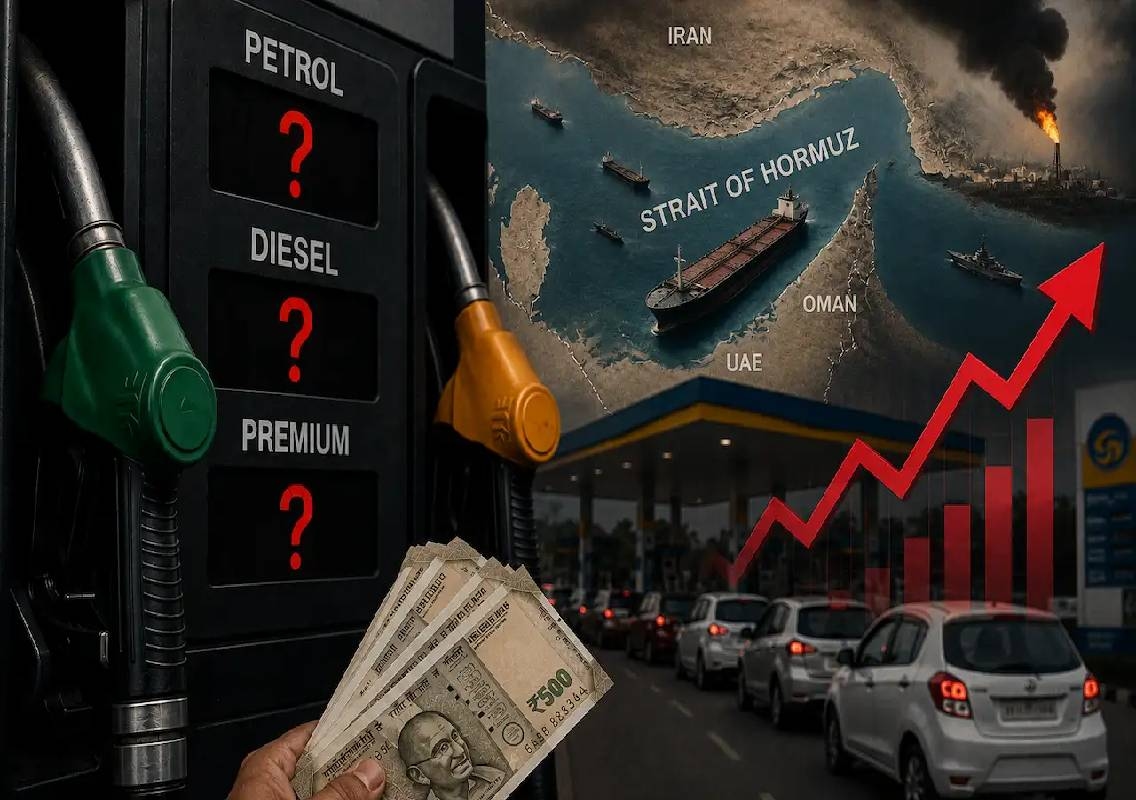


New Delhi: India’s recent increase in petrol and diesel prices has raised concerns among consumers and industry watchers about whether further hikes are on the way, as global crude oil markets remain volatile amid geopolitical tensions.
The latest revision saw petrol and diesel prices rise by Rs 3 per litre each, marking the first significant increase in over four years. CNG prices were also raised in several cities, adding to household transport costs across the country.
The development has triggered debate over whether this is a one-time adjustment or the beginning of a broader upward trend in fuel prices.
First major fuel hike after years of stability
India’s fuel prices had largely remained unchanged since April 2022, except for minor adjustments, as state-run oil marketing companies absorbed global price fluctuations.
The recent hike was implemented after sustained pressure from elevated crude oil prices and supply disruptions linked to geopolitical tensions affecting global energy markets.
In Delhi, petrol prices rose to Rs 97.77 per litre while diesel increased to Rs 90.67 per litre. Rates vary across states depending on local taxes and transportation costs.
In Mumbai, petrol now costs Rs 106.68 per litre, while diesel is priced at Rs 93.14. In Kolkata and Chennai, prices have also seen similar upward revisions.
Global crude oil surge driving pressure
Market experts point to rising global crude oil prices as the primary factor behind the increase in domestic fuel rates.
Brent crude has surged significantly in recent months due to supply concerns linked to disruptions in key global shipping routes, including the Strait of Hormuz.
Analysts say global oil prices have increased sharply, creating sustained pressure on importing countries like India, which depends heavily on crude imports for its energy needs.
This has forced oil marketing companies to partially pass on costs to consumers after a long period of absorbing losses.
Industry warns of inflation impact
Economists and industry experts have cautioned that higher fuel prices could contribute to inflationary pressures in the coming months.
Dr Radhika Rao said higher fuel prices are likely to impact inflation and could also moderate fuel demand in the short term.
Experts estimate that fuel price increases could add 15–25 basis points to headline inflation, with broader second-round effects across transport and logistics sectors.
Analysts also warn that sustained high crude prices could increase the burden on oil marketing companies, which have been recovering from long-standing under-recoveries.
Oil companies still under financial pressure
Despite the recent hike, oil marketing companies continue to face significant losses due to the gap between retail prices and global crude costs.
Industry estimates suggest that at current crude levels, companies may still be absorbing substantial daily losses on petrol, diesel and LPG sales.
Experts from rating agencies have noted that earlier price freezes and subsidy adjustments have only partially reduced these losses.
According to industry data, cumulative losses over the past months could still run into large figures if crude prices remain elevated.
Government defends calibrated increase
The government has defended the fuel price revision, calling it a “limited and calibrated” adjustment aimed at balancing consumer impact with financial stability of oil companies.
Officials said consumers had been shielded from global oil shocks for an extended period before the current adjustment was introduced.
Authorities also pointed out that India’s fuel price increase remains lower compared to several other countries that have experienced sharper hikes amid global energy disruptions.
Political debate over fuel prices
The fuel price hike has also triggered political reactions, with opposition leaders criticising the government over rising costs of essential commodities.
Opposition parties have argued that consumers are being burdened due to policy missteps and global crisis management failures.
Some leaders have claimed that fuel price increases will have a direct impact on inflation and household expenses.
The government, however, maintains that price adjustments were unavoidable given global market conditions.
Cooking gas and CNG also affected
Along with petrol and diesel, CNG prices have also seen upward revisions in several cities, adding pressure on daily commuters and transport operators.
Domestic LPG prices, however, remain unchanged for now, although industry reports suggest oil companies are still incurring losses on subsidised cylinders.
Transport experts say even modest increases in fuel costs can have a ripple effect on public transport fares and logistics pricing.
Conclusion
While the recent fuel price hike is being described as calibrated and limited, uncertainty remains over future revisions as global crude oil markets continue to fluctuate. With inflationary pressures and geopolitical risks still unresolved, further adjustments cannot be ruled out, keeping both consumers and policymakers on alert.