


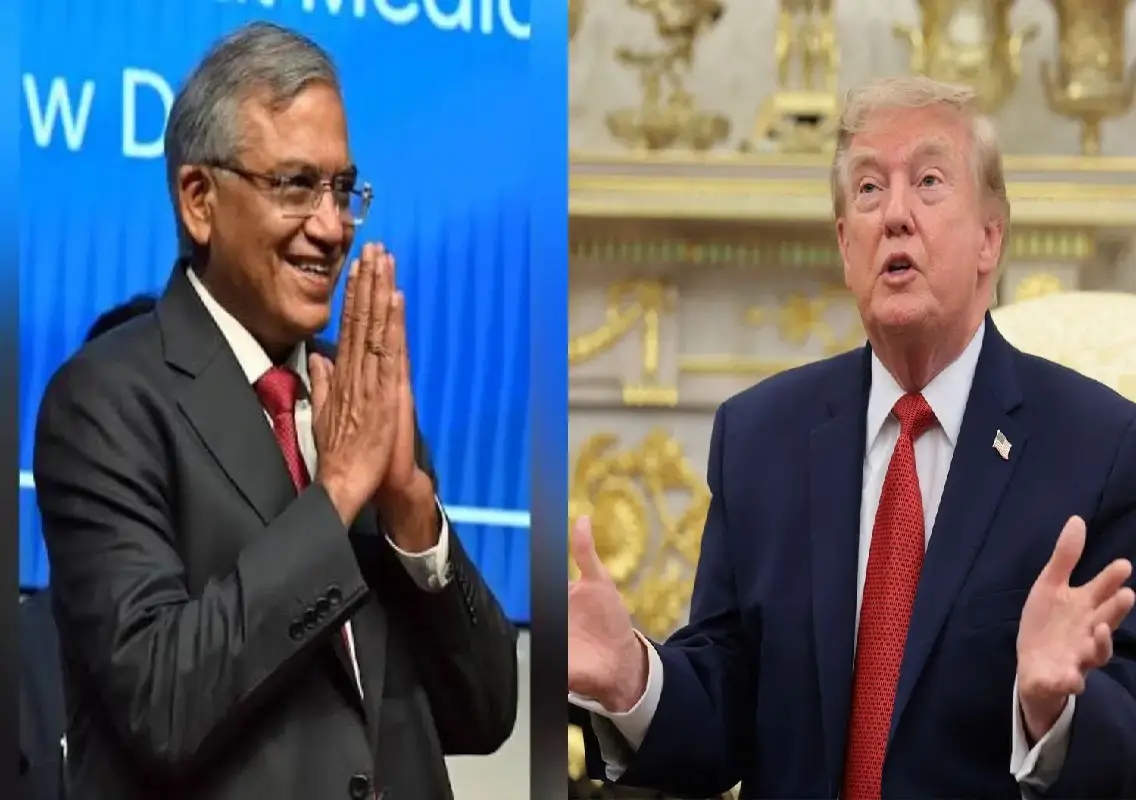


New Delhi: Chief Election Commissioner (CEC) Gyanesh Kumar became the subject of widespread online jokes and political satire on Wednesday after US President Donald Trump’s Republican Party suffered a major setback in the mid-term elections. Social media users, politicians and activists drew parallels between the US election results and the allegations of electoral malpractice levelled against Kumar by the Opposition in India.
Memes and sarcastic posts referring to the Indian CEC flooded platforms such as X, with users joking that Trump could have avoided his party’s electoral losses if he had taken help from Kumar. The posts used humour to take a dig at the controversy surrounding the Special Intensive Revision (SIR) of electoral rolls and the Opposition’s allegations of ‘vote chori’.
The online reaction quickly gathered momentum, with several political figures joining the conversation and using the US election outcome to criticise the BJP-led government and the Election Commission of India.
Politicians join the Gyanesh Kumar meme wave
Congress media and publicity department head Pawan Khera was among those who commented on the US results. Taking a sarcastic swipe at Trump, he wrote on X: “Trump Sahib, if you had taken Gyanesh along, you wouldn’t have had to witness this day today.”
Activist-lawyer Prashant Bhushan also joined the criticism, directing his remarks at Prime Minister Narendra Modi. In a satirical post, Bhushan portrayed Modi as apologising to Trump for being unable to send Kumar to the US, adding that the CEC was now unable to help the Prime Minister because people in India had allegedly confined him to his house.
Abhijeet Dipke, founder of the Cockroach Janta Party, posted a one-line remark suggesting that Trump’s electoral setback would not have occurred had Gyanesh Kumar been involved. He accompanied the post with the hashtag ‘just saying’.
Several other users shared memes and parody news posts. One widely circulated meme depicted Trump entering a room where Prime Minister Modi was waiting, with the caption, “Bro, give me Gyanesh.”
Another parody post claimed that Kumar would leave for the US as Trump began losing the mid-term elections. Other posts joked that Trump wanted Kumar to conduct elections in the United States or that the CEC would travel there to train election officials in conducting polls impartially.
These posts were political satire and not reports of any actual request by the US President or proposed visit by the Indian election chief.
Republican Party suffers major electoral setback
The wave of memes followed a significant setback for Trump’s Republican Party in the US mid-term elections. American voters gave the opposition Democratic Party control of both chambers of Congress and changed the political balance in several closely watched contests.
The Republicans also suffered defeats in traditionally strong areas, including Texas, Georgia and Iowa, where Democrats secured governorships. The results were seen as a major political blow to Trump, with implications for his administration and the remainder of his presidency.
The Republican Party faced setbacks in several Senate contests as well. Races in Texas, Maine, South Carolina, North Carolina, Kansas and Iowa were among those in which the party encountered difficulties.
Trump had actively campaigned for Republican candidates, urging voters to treat the elections as a referendum on his leadership. His appeal, however, did not prevent the party from suffering widespread losses.
Voter dissatisfaction with the administration’s policies was cited as a factor behind the results. Issues including the war with Iran, the rising cost of living and higher diesel prices reportedly contributed to public anger.
The outcome gave Democrats an opportunity to strengthen their position in Congress and challenge the Republican administration on key policy decisions.
Indian ‘vote chori’ controversy behind the satire
The jokes about Kumar came against the backdrop of an ongoing political controversy in India over alleged irregularities in electoral rolls and the conduct of elections.
Opposition parties have accused the Election Commission and Chief Election Commissioner Gyanesh Kumar of failing to address concerns over voter-list discrepancies. They have also alleged that the CEC acted in collusion with the ruling BJP during the Lok Sabha and Assembly elections.
The Opposition has repeatedly raised the issue of ‘vote chori’ and demanded Kumar’s resignation, alleging that the independence of the constitutional institution has been compromised. These remain allegations made by Opposition leaders and have been strongly contested by the ruling party.
The BJP, in turn, has accused the Opposition of spreading misinformation and attempting to create political unrest. It has maintained that the Opposition is using allegations about electoral processes to explain its electoral defeats.
The controversy has also brought the Special Intensive Revision (SIR) of electoral rolls into the centre of political debate. Opposition parties have questioned aspects of the exercise, while the BJP has defended the electoral process and accused its political rivals of misleading voters.
Social media turns US results into Indian political commentary
The contrast between the Republican setback in the United States and the ongoing debate over electoral processes in India provided fresh material for political humour. Users turned the US results into an opportunity to question the credibility of India’s electoral system through memes and one-liners referring to Kumar.
The posts also demonstrated how developments in international politics can become part of domestic political conversations, particularly when they offer an opening to criticise political leaders or institutions.
While the memes were largely humorous in tone, their underlying message reflected the intensity of the debate surrounding electoral transparency and the Election Commission in India.
The US election results and the online reaction have therefore become intertwined with India’s domestic political discourse, with opposition supporters using satire to renew their criticism of the CEC and the ruling establishment.