







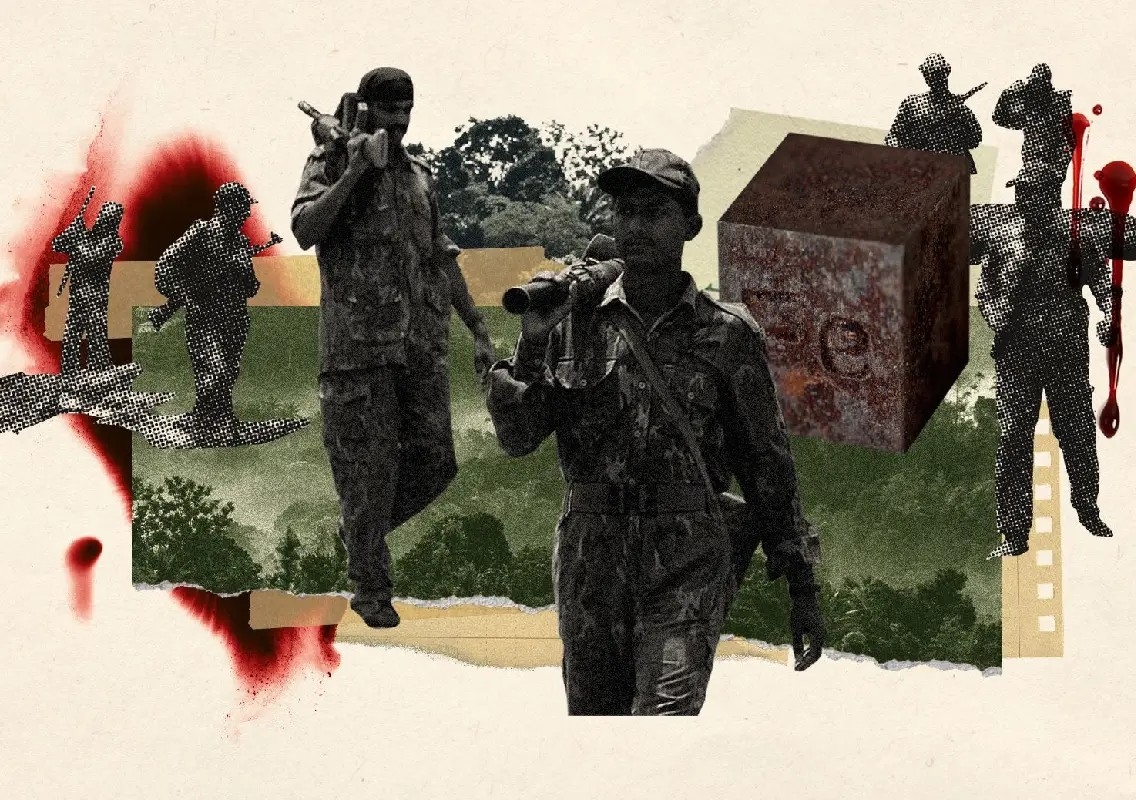


Once described as India’s gravest internal security threat, the Maoist insurgency that spread across large parts of central and eastern India has seen a dramatic decline over the past decade, with the forest region of Dandakaranya emerging as its final major stronghold before gradually weakening.
The insurgency, often referred to as the Naxalite-Maoist movement, had at its peak influenced nearly 180 districts across what became known as the “Red Corridor”. By 2024, that number had reportedly reduced to just 38 districts.
Dandakaranya became the Maoists’ refuge
The Maoist movement in central India grew after the failure of earlier uprisings in regions such as Naxalbari, Bihar and Andhra Pradesh.
Following internal reviews in the late 1970s, Maoist leaders adopted the idea of creating a “rear area” — a protected forest base where cadres could regroup and sustain long-term resistance. Dandakaranya, spanning parts of Chhattisgarh and Odisha, was chosen for this purpose.
Initially, Maoist groups gained support among tribal communities by opposing exploitation linked to forest officials, securing better prices for forest produce and addressing local grievances.
Government campaigns changed the conflict
Observers say two major developments accelerated the Maoist expansion in the region.
The first was the Jan Jagran Abhiyan in the 1990s, which many tribal communities viewed as harassment against suspected Maoist supporters.
The second was the controversial Salwa Judum movement launched in 2005 — a state-backed anti-Maoist campaign that displaced thousands of tribal residents and intensified violence across the region.
Many Adivasis reportedly joined Maoist groups during this period as conflict and insecurity increased.
Tribal fatigue weakened the movement
Between 2005 and 2015, Maoists carried out several major attacks and maintained strong influence across forest areas. However, over time, local support began weakening.
Community leaders who had once supported the movement reportedly started distancing themselves from armed violence, arguing that prolonged conflict was harming tribal society and development.
Citizen journalism initiatives and local outreach efforts in the region also revealed growing public exhaustion with violence and conflict.
Security pressure intensified
The Union government under Amit Shah intensified anti-Maoist operations in recent years, repeatedly setting deadlines to eliminate Left-Wing Extremism from India.
Analysts say the combination of sustained security operations, reduced local support and organisational fatigue contributed significantly to the weakening of the Maoist presence in Dandakaranya.