







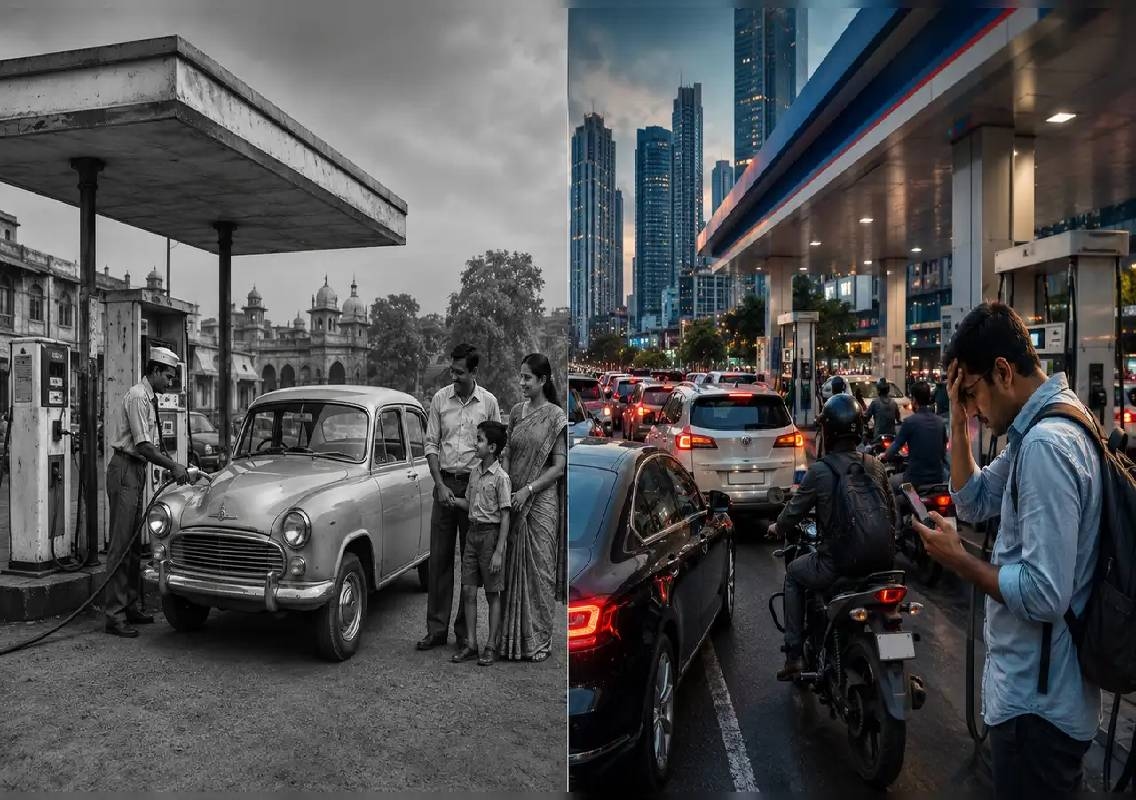


New Delhi: Petrol prices in India have witnessed a dramatic rise since Independence, climbing from nearly 25 paise per litre in 1947 to over Rs 100 per litre in several cities in 2026.
The latest fuel price surge comes after petrol and diesel rates recorded multiple hikes within a short period, pushing prices beyond the Rs 100 mark across all four metro cities.
Fuel prices in India are influenced by several factors including international crude oil prices, rupee-dollar exchange rate fluctuations, taxes imposed by central and state governments, and subsidy policies.
Petrol prices at Independence
In 1947, petrol prices in India reportedly ranged between Rs 0.25 and Rs 0.27 per litre.
At the time, fuel consumption in the country was relatively limited, and the Indian economy was still in its early post-Independence phase.
For several decades after Independence, petrol prices remained comparatively stable due to strong government regulation and lower international crude oil prices.
Slow rise during early decades
By 1970, petrol prices had increased modestly to around Rs 0.90 per litre.
The gradual rise reflected growing industrialisation and increased demand for fuel as India’s transport and manufacturing sectors expanded.
During the following decades, the government continued to regulate fuel prices heavily, keeping them under administrative control.
Liberalisation era changes fuel pricing
Before India’s economic liberalisation in the early 1990s, petrol pricing remained tightly controlled by the government.
In 1990, petrol prices stood at approximately Rs 9.84 per litre.
However, after economic reforms and increasing global integration, fuel prices began rising more rapidly.
By 1996, petrol prices had crossed Rs 21 per litre, nearly doubling within a few years.
Analysts attributed the increase to higher crude oil imports, weakening of the rupee and changing global energy markets.
Prices accelerate after 2000
Petrol prices continued to rise steadily after 2000 as India’s economy expanded rapidly.
In 2000, petrol cost around Rs 25.94 per litre.
By 2005, prices had surged sharply to approximately Rs 43.51 per litre.
The rising fuel cost gradually became a major political issue in India, with opposition parties frequently criticising governments over taxes and inflation.
Global oil shocks impact Indian consumers
In 2010, petrol prices were recorded at around Rs 51.43 per litre despite relative stability in earlier years.
India’s rapid economic growth during the late 2000s significantly increased energy demand, while global crude oil markets also remained volatile.
By 2014, petrol prices had climbed to nearly Rs 72 per litre in several parts of the country.
Experts noted that fluctuations in international crude oil rates, along with taxes and exchange-rate movements, continued to heavily impact domestic fuel pricing.
Pandemic period and post-pandemic surge
In 2020, during the COVID-19 pandemic, petrol prices hovered around Rs 80 per litre despite a global slowdown.
Although crude oil prices briefly declined during the pandemic, higher taxes and economic pressures contributed to elevated retail fuel prices in India.
In recent years, fuel prices have continued to remain volatile due to geopolitical tensions, supply disruptions and global energy demand.
Petrol crosses Rs 100 mark in 2026
In 2026, petrol prices crossed the Rs 100-per-litre mark in all four metro cities after multiple consecutive hikes within less than two weeks.
The recent surge has been linked to global crude oil price increases, rupee volatility and broader geopolitical developments impacting international energy markets.
The sharp rise in fuel prices has once again triggered concerns regarding inflation, transportation costs and the impact on household expenses across the country.
Why fuel prices continue to rise
Experts say petrol pricing in India depends on multiple components including crude oil import costs, refining charges, dealer commissions and taxes.
Central and state taxes form a significant portion of retail fuel prices in India.
Additionally, India imports a major share of its crude oil requirements, making domestic prices vulnerable to global market fluctuations and geopolitical tensions.
Conclusion
From costing just 25 paise per litre at Independence to crossing Rs 100 in 2026, petrol prices in India have reflected the country’s changing economic realities, global energy trends and taxation policies. With fuel remaining central to transportation and economic activity, petrol prices continue to remain a major concern for consumers and policymakers alike.