









New Delhi : India and China are preparing for another round of military-level engagement along their disputed frontier, with an Indian Corps Commander expected to meet his Chinese counterpart in the Northeast in the coming days.
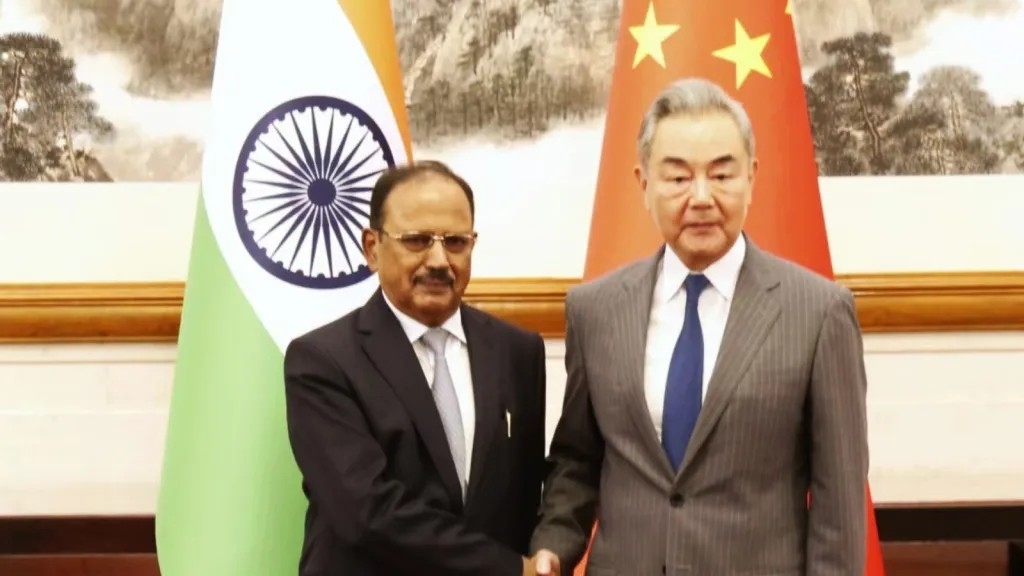
The proposed meeting follows talks between Indian National Security Adviser Ajit Doval and Chinese Foreign Minister Wang Yi in Beijing and comes amid efforts by the two countries to maintain communication and prevent localised tensions along the Line of Actual Control (LAC) from escalating.
The upcoming Corps Commander-level engagement is expected to focus on the situation in the northeastern sector, particularly developments around Taksing in Arunachal Pradesh’s Upper Subansiri district. (indianexpress.com)
The move is part of a broader effort to expand military-to-military communication mechanisms between India and China at a time when both countries are attempting to stabilise relations while the boundary dispute remains unresolved.
Corps Commander meeting planned
The proposed meeting is significant because Corps Commander-level talks have played an important role in managing tensions between Indian and Chinese forces along the LAC.
Such meetings provide military commanders with a direct channel to discuss developments on the ground, clarify concerns and explore measures to prevent incidents from worsening.
The latest proposed engagement comes shortly after Doval and Wang held discussions in Beijing.
The diplomatic-level dialogue and the proposed military meeting indicate that communication is taking place through multiple channels, ranging from senior political and diplomatic officials to field-level military commanders.
The objective is not necessarily to resolve the long-standing boundary dispute through a single meeting, but to maintain mechanisms that can help manage tensions and prevent misunderstandings.
Focus on the northeastern sector
The northeastern sector has gained greater attention amid recent developments along the LAC.
The area around Taksing in Upper Subansiri district of Arunachal Pradesh is located in a strategically sensitive part of the frontier.
India and China have long held competing territorial claims in Arunachal Pradesh, with China referring to the region as part of what it calls “Zangnan”.
India firmly rejects China’s territorial claims over Arunachal Pradesh and maintains that the state is an integral part of India.
The proposed military meeting comes against this complicated backdrop, making direct communication between commanders particularly important.
New military hotlines under consideration
Alongside Corps Commander-level talks, India and China are also working towards strengthening direct communication between their military commands.
Two new military hotlines are expected to link India’s Eastern Army Command in Kolkata and Central Army Command in Lucknow with their respective Chinese counterparts. (theprint.in)
Hotlines can provide commanders with a rapid channel for communication during periods of tension.
Their importance lies in the ability to establish direct contact quickly rather than relying entirely on slower diplomatic or administrative channels.
The proposed expansion would strengthen the communication architecture covering the eastern and central sectors of the India-China border.
Joshimath identified as a meeting point
Another important development concerns the possible establishment of an additional Border Personnel Meeting point at Joshimath in Uttarakhand.
Joshimath has been identified as a potential meeting location for military personnel from the Indian and Chinese sides in the central sector. (theprint.in)
Border meeting points are designed to provide designated locations where military representatives can interact and address issues arising along the frontier.
The proposed arrangement would complement existing mechanisms and provide another avenue for managing local disagreements.
Tawang also gains importance
The eastern sector is also expected to receive a strengthened communication mechanism, with Tawang in Arunachal Pradesh identified as an important location for border engagement.
The proposed arrangements involving Joshimath and Tawang would expand the geographical coverage of established military dialogue mechanisms.
Such mechanisms are particularly important along a frontier where the Line of Actual Control is not a mutually demarcated international boundary.
When both sides have different perceptions of where the LAC lies, patrols and other military activity can sometimes result in confrontations.
Direct communication can help prevent such incidents from escalating.
Lessons from the Ladakh crisis
The importance of military communication was highlighted dramatically after the 2020 India-China border crisis in eastern Ladakh.
The Galwan Valley clash in June 2020 resulted in the deaths of Indian and Chinese soldiers and triggered a prolonged military stand-off.
The confrontation led to large-scale deployments by both sides and a series of diplomatic and military negotiations.
Corps Commander-level meetings subsequently became an important mechanism for discussions over disengagement and de-escalation.
India and China have since worked through multiple rounds of talks to manage the consequences of the crisis.
The two countries also reached an agreement in October 2024 concerning patrolling arrangements in parts of the LAC, helping facilitate a reduction in tensions in some areas.
The experience demonstrated why reliable communication channels between military commanders are essential.
Diplomacy and military dialogue move together
The proposed Corps Commander meeting is notable because it follows the latest diplomatic engagement between Doval and Wang.
The two senior officials have been involved in efforts to improve communication between India and China over the boundary question.
Military-level engagement can complement such diplomatic discussions by addressing issues closer to the ground.
The two tracks serve different purposes.
Diplomatic dialogue can address broader political and strategic questions, while military communication can deal with operational concerns and incidents along the frontier.
Maintaining both channels can help prevent disagreements at the tactical level from becoming larger political crises.
The challenge of the unresolved boundary
Despite the renewed communication, the fundamental boundary dispute between India and China remains unresolved.
The two countries share a long and heavily militarised frontier across the Himalayas, but they do not agree on the precise alignment of the LAC in several areas.
India and China have held numerous rounds of negotiations over the boundary issue for decades.
While agreements and confidence-building measures have helped regulate behaviour in some areas, differences remain.
The latest military communication initiatives should therefore be viewed primarily as mechanisms for managing tensions, rather than evidence that the territorial dispute has been settled.
Why hotlines matter
Military hotlines are particularly valuable in situations where events can develop rapidly.
A patrol encounter, construction activity or movement of troops can generate competing interpretations.
If commanders can communicate directly and quickly, they have a greater opportunity to establish facts, convey intentions and prevent an incident from escalating.
The proposed links between the Indian commands in Kolkata and Lucknow and their Chinese counterparts could therefore provide additional safeguards.
They would also strengthen the institutional framework for military communication that India and China have gradually developed over the years.
Broader efforts to stabilise ties
The latest developments come at a time when India-China relations appear to be moving towards cautious engagement following years of heightened tensions.
High-level meetings, diplomatic consultations and military dialogue have increased as both sides seek to manage differences.
Economic and people-to-people relations remain important aspects of the relationship, even as strategic competition and the boundary dispute continue to create friction.
The border remains the most sensitive component of the relationship.
For that reason, maintaining peace and stability along the LAC remains an important priority for both countries.
Arunachal Pradesh remains sensitive
Arunachal Pradesh is particularly sensitive because of China’s longstanding territorial claims over the entire Indian state.
India has consistently rejected these claims.
The region’s proximity to Tibet and its difficult mountainous terrain also make military communication and border management challenging.
The proposed Corps Commander-level meeting in the Northeast could therefore provide an important opportunity for both sides to discuss concerns directly.
Even when political differences remain unresolved, maintaining channels of communication can help prevent misunderstandings from developing into confrontations.
A cautious step towards stability
The planned meeting between Indian and Chinese Corps Commanders, along with proposals for additional hotlines and meeting points, represents another attempt to build safeguards along the contested frontier.
The developments do not remove the underlying boundary dispute.
Nor do they guarantee that future disagreements will not occur.
But they provide mechanisms through which those disagreements can be addressed.
The experience of the past six years has shown the consequences when tensions along the LAC escalate and communication becomes difficult.
A stronger network of military-to-military contacts could help both sides respond more quickly when problems arise.
Communication as a security tool
For India and China, communication is increasingly becoming an important component of border security.
The proposed hotlines between commands in Kolkata and Lucknow, along with potential meeting points at Joshimath and Tawang, would extend the existing framework for direct military engagement.
The upcoming Corps Commander meeting in the Northeast adds another layer to that system.
Together, these measures suggest that while India and China continue to disagree over their territorial claims, both sides recognise the importance of keeping channels open.
For a disputed frontier stretching across some of the world’s most challenging terrain, the ability to speak directly can sometimes be as important as the ability to maintain a strong physical presence.
The latest engagement therefore represents a cautious but significant step towards ensuring that disagreements along the LAC remain manageable and do not spiral into another major crisis.