




New Delhi: The INDIA bloc has approached the Supreme Court over alleged irregularities in the Election Commission of India’s (ECI) Special Intensive Revision (SIR) of electoral rolls, seeking scrutiny of voter deletions, greater transparency in the poll body’s decision-making and safeguards against the removal of eligible voters.
The petition was filed on October 12 by Leader of Opposition in the Lok Sabha Rahul Gandhi and 10 other opposition leaders following a march towards the Supreme Court in the national capital. The leaders have questioned the process through which names are deleted from electoral rolls and raised concerns about the exercise of powers by Chief Election Commissioner Gyanesh Kumar.
However, the petition faced a procedural hurdle on October 13, when the Supreme Court registry reportedly flagged 14 defects in the filing. The plea had not been cleared for listing at the time of the report, leaving its hearing status uncertain.
Rahul Gandhi and 10 opposition leaders file petition
The petition brings together leaders from several parties that form part of the INDIA opposition bloc. Apart from Rahul Gandhi, the petitioners include Congress president Mallikarjun Kharge, Trinamool Congress MP Saugata Roy, Samajwadi Party president Akhilesh Yadav, Rashtriya Janata Dal leader Tejashwi Prasad Yadav and Shiv Sena (UBT) MP Sanjay Raut.
Other petitioners include Communist Party of India (Marxist) general secretary M. A. Baby, Communist Party of India general secretary D. Raja, Jharkhand Mukti Morcha MP Mahua Majhi, Nationalist Congress Party (Sharadchandra Pawar) leader Supriya Sule and Indian Union Muslim League leader E. T. Mohammed Basheer.
The petition names the Election Commission of India, Chief Election Commissioner Gyanesh Kumar and the other two Election Commissioners, Sukhbir Singh Sandhu and Vivek Joshi, as respondents.
The legal action follows opposition protests against the electoral-roll revision process and demands for greater accountability in the functioning of the Election Commission. The petition seeks judicial scrutiny of the decisions taken by the poll body and the procedures used to revise voter lists.
What the INDIA bloc wants the Supreme Court to examine
A central concern raised by the opposition leaders is the alleged arbitrary deletion of voters during the SIR exercise. They have sought safeguards to ensure that eligible citizens are not removed from electoral rolls without due process.
The petition also calls for greater transparency in the Election Commission’s decision-making. The leaders have questioned whether key decisions related to the revision exercise were taken collectively or whether the Chief Election Commissioner exercised powers without the knowledge or approval of the other commissioners.
The opposition has asked the court to examine the Election Commission’s records connected with the decisions, including relevant internal documents and material relating to the revision process. It has also sought an independent audit of electoral-roll changes to establish how deletions were carried out and whether proper procedures were followed.
Another demand concerns the suspension of the SIR process while the issues raised in the petition are examined. The petitioners have sought protection for eligible voters, including measures to ensure that names are not removed without appropriate notice and an opportunity to respond.
The INDIA bloc has also raised questions about the framework governing the use and deployment of Electronic Voting Machines (EVMs), seeking closer scrutiny of the rules and procedures associated with the electoral system.
These are the petitioners’ claims and requests for judicial intervention. Their allegations have not, by themselves, established that the Election Commission acted unlawfully; the issues remain subject to the legal process.
March towards Supreme Court halted by police
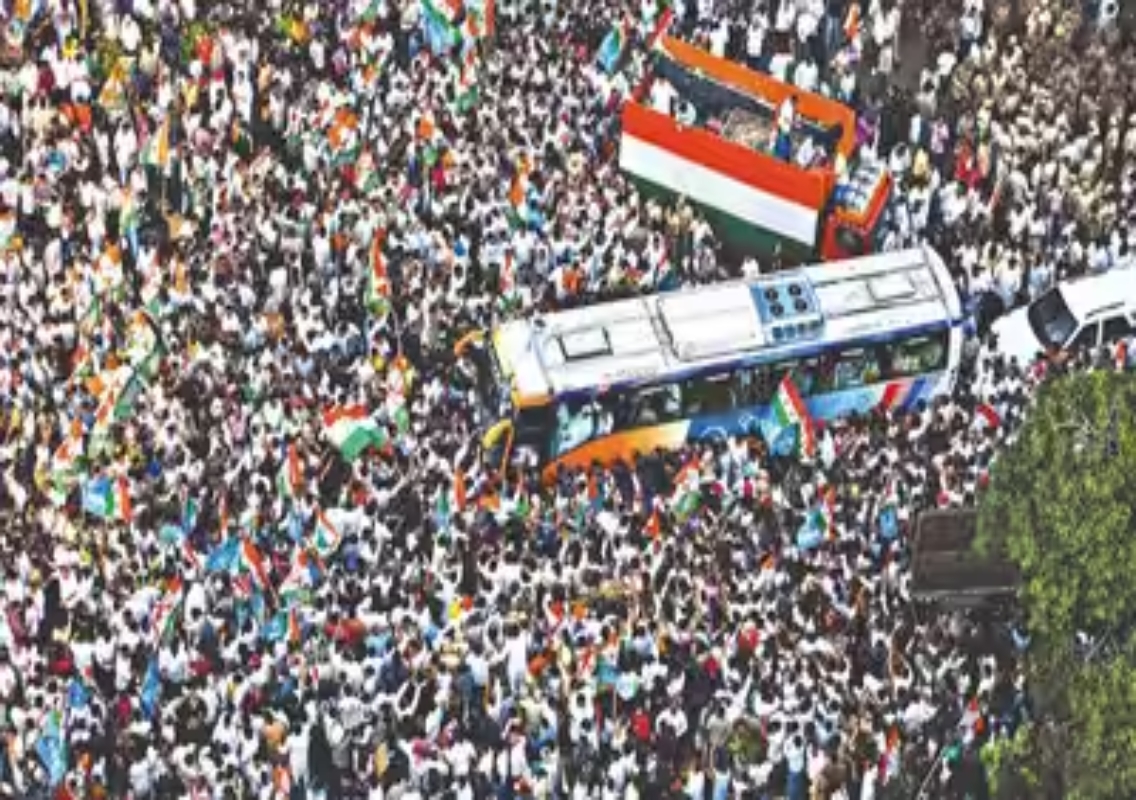
The filing followed a march by opposition leaders, MPs, party workers and activists on October 12. The demonstration, described as a “March for Democracy”, was organised to highlight concerns over electoral-roll revisions and the functioning of the Election Commission.
The procession included Rahul Gandhi, Mallikarjun Kharge, Priyanka Gandhi Vadra, Akhilesh Yadav and Tejashwi Yadav, among other opposition leaders. Participants marched through central Delhi towards the Supreme Court.
Police barricades stopped the procession at Bhagwan Dass Road before the leaders could continue towards their intended destination. The march drew attention to the opposition’s demand for intervention on electoral issues.
The leaders subsequently pursued the matter through a legal petition. Their move came after they had sought a meeting with Chief Justice of India Surya Kant to discuss their concerns about the SIR process and the Election Commission. The requested meeting did not take place.
The petition represents a shift from public demonstrations and press conferences towards a formal legal challenge, although the court must first process the filing before the matter can proceed to a hearing.
Supreme Court registry flags 14 defects
A significant development emerged on October 13, when reports said the Supreme Court registry had identified 14 defects in the petition submitted by Rahul Gandhi and the other opposition leaders.
The reported deficiencies included missing documents, incomplete authorisation details for some petitioners, an unclear copy of an identification document and a shortfall of ₹220 in the court fee.
The registry’s objections are procedural and do not amount to a judicial ruling on the merits of the allegations against the Election Commission. The filing must meet the court’s procedural requirements before it can progress towards listing and a hearing.
The petition had not been cleared for listing at the time of the report. Consequently, there was no confirmed hearing outcome on the substantive demands made by the INDIA bloc.
The developments also underline the distinction between filing a petition and securing judicial consideration of its claims. The opposition leaders have placed their concerns before the court through the filing, but the court has not yet ruled on the allegations simply because the petition was submitted.
Wider debate over voter-list revision
The SIR exercise has become a subject of political and legal debate, with opposition parties questioning the transparency of the revision process and the possibility of eligible voters being excluded. The Election Commission’s procedures for verifying voter details and updating electoral rolls are central to the dispute.
Electoral rolls are used to determine who is eligible to vote in a constituency. Any revision process therefore has implications for voter registration, the correction of records and the removal of entries that authorities consider ineligible or inaccurate.
The opposition’s position is that deletion procedures must include effective safeguards, clear documentation and a fair opportunity for affected voters to challenge decisions. Its demand for an independent audit is intended to establish how deletions were made and whether the applicable procedures were followed.
The legal questions also concern the powers and responsibilities of the Election Commission and the manner in which its decisions are recorded and implemented. The Supreme Court’s eventual consideration, if the petition is listed, could clarify the issues raised by the petitioners and the applicable legal safeguards.
At this stage, however, the claims made in the petition should be distinguished from established findings. The Election Commission’s response and the court’s examination will be important in determining the legal position.
What happens next?
The immediate procedural step is for the petitioners to address the defects identified by the Supreme Court registry, subject to the court’s applicable rules. Any subsequent listing and hearing will depend on the filing process and the court’s directions.
If the petition proceeds, the Supreme Court will have to consider the relief sought, the legal basis of the challenge and the responses of the Election Commission and the other respondents.
For the INDIA bloc, the petition forms part of its campaign for greater transparency in electoral-roll revisions and stronger safeguards for voters. For the Election Commission, the legal proceedings could provide an opportunity to respond to the allegations and explain the processes followed during the SIR exercise.
The central question remains whether the concerns raised by the opposition warrant judicial intervention and what safeguards, if any, may be required. Until the petition is listed and the court considers its merits, no conclusion can be drawn about the outcome of the challenge.