










New Delhi: India is projected to have the world’s second-largest Muslim population by 2070, behind Pakistan, even as Hindus are expected to remain the country’s largest religious community, according to a new study by the Pew Research Centre.
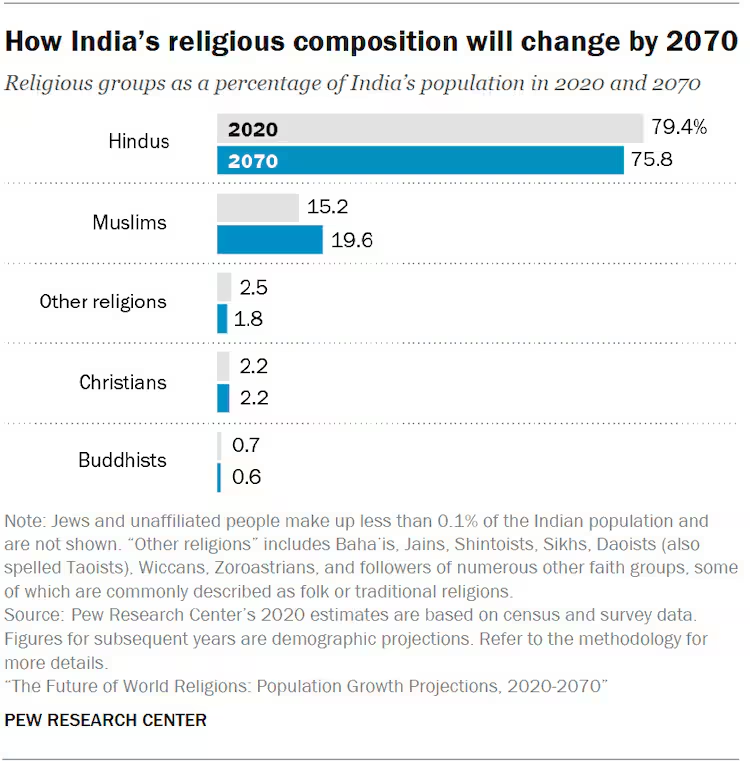
The study estimates that Muslims will account for 20% of India’s population by 2070, compared with 15% in 2020. The Hindu share, meanwhile, is projected to decline from 79% to 76% over the same period.
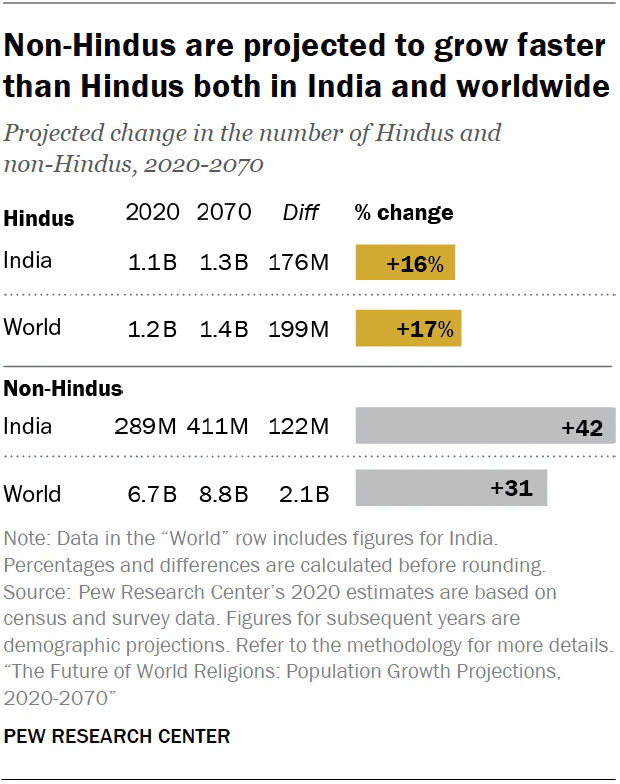
However, the projections indicate that the number of Hindus in India will continue to increase in absolute terms. Their population is estimated to rise from 1.11 billion (111 crore) in 2020 to 1.29 billion (129 crore) by 2070.
India’s Muslim population is projected to grow from 213 million (21.3 crore) in 2020 to 334 million (33.4 crore) in 2070. This increase could move India from third to second place among countries with the largest Muslim populations.
The findings are part of Pew Research Centre’s wider assessment of how the world’s religious composition could change over the next five decades. The study examines seven religious groups across 201 countries and territories, collectively representing 99.98% of the global population.
The projections point to gradual changes in India’s religious composition, largely attributed to differences in age profiles and fertility patterns among communities.
What does the study project for India’s Hindu population?
According to the Pew study, India’s Hindu population is expected to increase by around 176 million (17.6 crore) between 2020 and 2070.
Despite this growth, the Hindu share of the country’s total population is projected to decline by three percentage points, from 79% to 76%.
The distinction between population numbers and population share is important. A community’s population can increase even when its proportion of the overall population decreases, particularly when other groups grow at a faster rate.
India is expected to remain home to the overwhelming majority of the world’s Hindu population. In 2020, the country had an estimated 1.11 billion Hindus, accounting for 94.5% of the global Hindu population.
By 2070, India’s Hindu population is projected to reach 1.29 billion. Its share of the global Hindu population, however, is expected to fall slightly to 93.6%.
At the global level, the Hindu population is projected to increase by 199 million during the same period. Its share of the world’s population is expected to decline marginally, from 15% in 2020 to 14% in 2070.
The study also identifies countries outside India where the Hindu population is expected to grow, including Pakistan and the United States.
Pakistan’s Hindu population is projected to increase from five million to 10.3 million by 2070. The study attributes this expected rise primarily to natural population growth, with births exceeding deaths.
The United States is projected to have the world’s fifth-largest Hindu population by 2070, with the number expected to reach 7.4 million. Immigration is identified as the main contributor to this growth.
Why is India’s religious composition projected to change?
Pew Research Centre attributes the projected changes in India’s religious composition primarily to differences in fertility rates and the age distribution of religious communities.
The study notes that Indian Muslims had a median age of 24 in 2020, compared with 29 among Hindus. A younger population generally has a larger proportion of people in their reproductive years, which can influence population growth over time.
Fertility rates are another important factor.
The average number of children per Hindu woman is estimated to have declined to 1.9, compared with 3.3 around three decades earlier.
For the 2025–2030 period, the study projects that Muslim women in India will have an average of 2.3 children, compared with 1.8 among Hindu women.
These differences contribute to the projected faster growth of India’s Muslim population. However, the study’s estimates also reflect broader demographic trends, including the decline in fertility across communities.
The figures should not be interpreted as suggesting that fertility patterns will remain unchanged for the next five decades. The projections are based on demographic assumptions and can shift as social and economic conditions evolve.
India could move to second place in global Muslim population
The study estimates that India’s Muslim population will increase from 213 million in 2020 to 334 million by 2070.
As a result, India is projected to move from third to second place among countries with the largest Muslim populations. It is also expected to account for 9.2% of the world’s Muslim population by 2070.
In 2020, Indonesia had the largest Muslim population globally, followed by Pakistan and India.
The projected ranking for 2070 is different. Pakistan is expected to lead with 461 million Muslims, followed by India. Nigeria is projected to rank third, while Indonesia is expected to move down from its current position.
The expected increase in India’s Muslim population is linked to its younger age profile and comparatively higher fertility rate.
Stephanie Kramer of the Pew Research Centre explained the demographic factors behind the projections in an interview with the BBC.
“Muslims are younger and have higher fertility rates,” Kramer said.
“Hindu fertility is already below the replacement level. Muslim fertility is projected to remain above it for another two decades,” she added.
Replacement-level fertility refers to the average number of children women need to have for a population to replace itself from one generation to the next, in the absence of migration.
What do the projections mean for India’s religious balance?
Despite the projected increase in the Muslim population, the study expects Hindus to remain India’s largest religious community throughout the period covered by the projections.
By 2070, Hindus are estimated to account for more than three-fourths of India’s population, while the Muslim share is projected to reach one-fifth.
The findings also highlight the difference between changes in a community’s share of the population and changes in its absolute numbers. India’s Hindu population is expected to grow substantially even as its percentage of the total population declines.
A separate study by the Economic Advisory Council to the Prime Minister, published two years ago, had also reported a decline in the Hindu share of India’s population between 1950 and 2015. It said the share had fallen by 7.8% during that period, while the proportions of several minority communities had increased.
However, the Pew study uses a different time frame and demographic projection methodology, and its estimates should be considered separately.
Will the population projections become reality?
Pew’s estimates are projections rather than definite predictions of what India’s religious composition will look like in 2070.
The study uses 2020 as its baseline and considers factors such as fertility, mortality and migration to estimate how religious populations could change over the following five decades.
Several developments could alter these trends. Changes in economic conditions, access to healthcare, migration patterns, government policies, conflicts and social behaviour can all influence population growth.
Fertility rates may also continue to decline across religious communities, potentially changing the differences reflected in the current estimates.
The projections therefore offer a possible picture of India’s demographic future if the underlying patterns and assumptions continue. They do not establish that the projected population figures or religious shares will necessarily materialise.
The central finding is that India is expected to remain a Hindu-majority country through 2070, even as its Muslim population grows and the country potentially moves to second place globally in terms of Muslim population.