







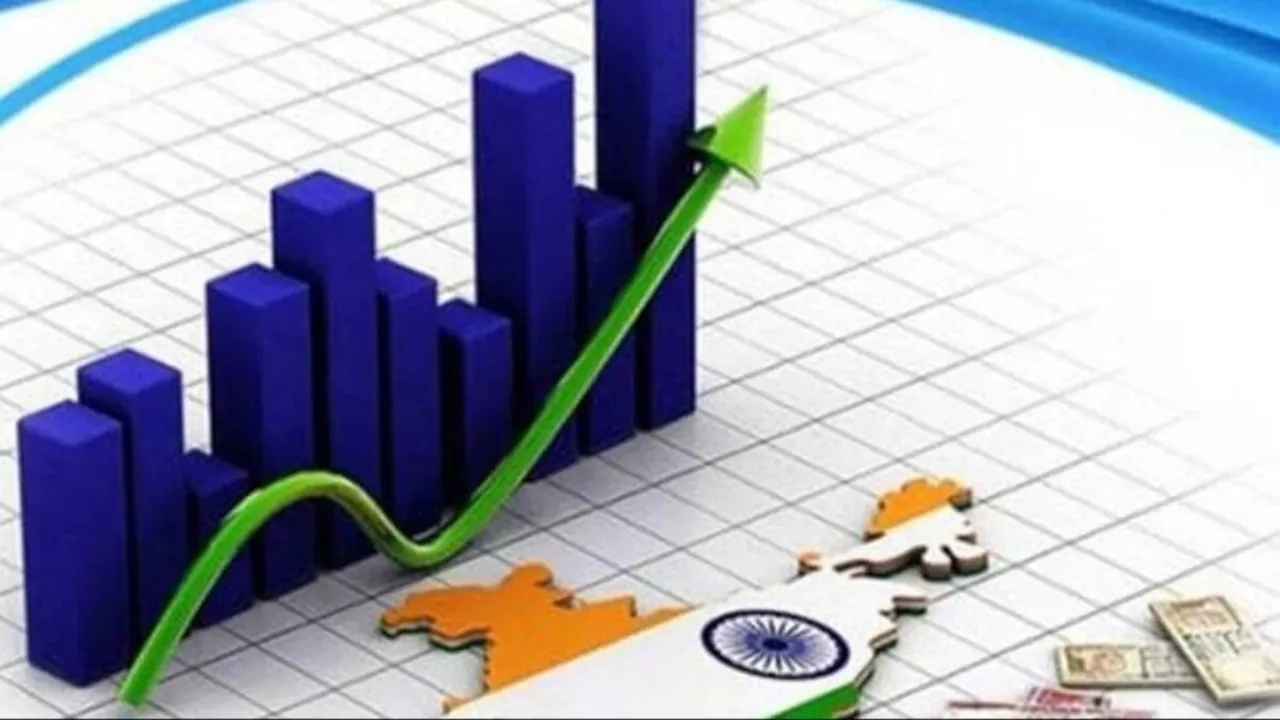


India has officially surpassed Japan to become the world’s fourth-largest economy in nominal GDP terms, marking a major milestone in the country’s economic journey. The achievement was highlighted in the government’s year-end economic review, which also projected that India is on course to overtake Germany and claim the third position globally in the coming years.
India’s GDP crosses $4.18 trillion
According to the review, India’s GDP stood at $4.18 trillion in 2025, pushing it ahead of Japan. Final confirmation will come with the release of updated figures by the International Monetary Fund in the first half of 2026.
The government said India could displace Germany from the third rank within the next 2.5 to 3 years, with GDP projected to reach $7.3 trillion by 2030, placing it behind only the United States and China.
Fastest-growing major economy
India has remained the world’s fastest-growing major economy for several years. The size of the economy has doubled over the last decade, driven largely by strong domestic demand and steady expansion across sectors.
IMF forecasts for 2026 estimate India’s GDP at $4.51 trillion, marginally higher than Japan’s projected $4.46 trillion, reinforcing India’s position as the fourth-largest economy.
High growth with easing inflation
The review described India’s current macroeconomic environment as a rare “goldilocks period” of high growth and low inflation. Real GDP expanded by 8.2% in the second quarter of FY 2025–26, up from 7.8% in the previous quarter, supported by robust industrial and services activity.
The Reserve Bank of India revised its GDP growth projection for FY 2025–26 to 7.3%, citing strong domestic demand, tax rationalisation, softer crude prices and sustained government capital expenditure.
Strong external position
India’s external sector also remains resilient. The current account deficit narrowed to 1.3% of GDP in Q2 FY 2025–26, aided by strong services exports and a 10.7% year-on-year rise in remittances.
Inflation moderated sharply through the year, with headline CPI falling to historic lows by October, mainly due to easing food prices. The RBI cut the repo rate cumulatively by 1.25%, balancing growth support with price stability.
Outlook remains buoyant
Despite global uncertainties and trade headwinds, the government said India’s growth outlook remains positive, backed by reforms and broad-based momentum across sectors. With continued stability, India appears firmly on track to cement its place among the world’s top three economies.